End of an Era: The Penny’s Retirement and Its Impact on American Currency
Published 10:30 am Monday, November 24, 2025
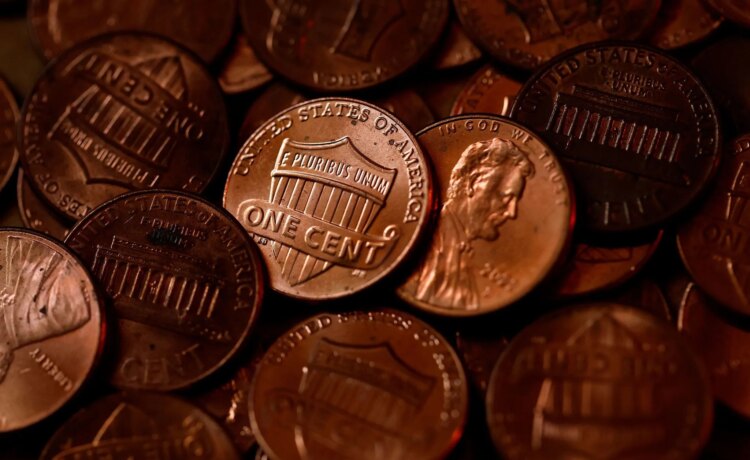
After more than 230 years of steady service, the humble one-cent piece is retiring—for now. The United States Mint pressed its final circulating penny on November 12, 2025.
While the penny remains legal tender, no new pennies will enter general circulation.
Why now?
The decision comes down to simple economics. Producing a penny now costs the government about 3.69 cents each—nearly four times its face value.
For years, the Mint has lost money minting the coin. According to the Treasury, this move is expected to save taxpayers roughly $56 million annually.
Add to that dwindling everyday use—many pennies just sit in jars or drawers rather than circulating.
 Loading …
What’s changing—and what isn’t
For residents of the Crossroads and across the country, the penny’s disappearance from production does not mean it’s banned. Existing pennies stay legal tender and you can still use them for purchases.
What does change
Businesses may need more flexibility making change, especially in cash transactions. Some retailers already began rounding cash totals to the nearest nickel in anticipation of this day.
The coin will still be minted for collectors and special sets—but not for general circulation.
Local impact in the Crossroads
For many small businesses here in the Crossroads, where cash change still plays a role, the end of penny production may eventually affect how they handle everyday transactions. Until now, pennies have been part of the change drawer, the “just-in-case” coin. With the supply of new pennies ending, over time the stock of pennies will naturally decline. Banks and shops may begin to request fewer pennies—which could mean fewer in circulation at local storefronts.
That being said, because billions of pennies already circulate (reports estimate around 300 billion in the U.S.) —any real change in everyday life won’t be immediate. The transition is expected to be gradual.
Why people will miss the penny
Beyond the monetary facts, the penny has had cultural significance. It’s featured in sayings (“a penny saved is a penny earned,” “penny-wise and pound-foolish”), in children’s piggy-banks, in coin-collection folders, even in the odd legacy challenge of “find a 1943 steel penny.”
Now that production has ceased, the penny moves from being “just a coin” to a piece of American numismatic and cultural history.
Collector value: What this means for coin enthusiasts
With the end of general penny production, the coin-collecting world has already stirred. Because the Penny will no longer be minted for circulation (only for collector/stakes), certain coins—including the very last ones struck as part of the transition—are gaining attention.
Historic value spikes: Experts believe that the final coins struck—especially those bearing a special mark (e.g., the omega symbol)—could fetch millions of dollars at auction. Some estimates put the value of the last few mintings in the $2 million – $5 million range.
Rare coins already worth thousands: Even aside from the very last pennies, many older pennies—such as early Lincoln cents, error coins, or rare mint marks—have long been valued well above face value.
What local collectors should know: If you or a Crossroads resident happen to hold pennies with special mint marks, older-date pennies in excellent condition, or coins struck for the final production run, they may be worth more than just one cent. That said, remember: value depends on authenticity, condition (“uncirculated”), provenance (proof that the coin is part of the final release), and how the market responds. One coin-expert cautioned that while the hype is high, some of the ultra-high estimates could be overblown.
Looking ahead
What happens next? Congress has yet to pass legislation formally abolishing the penny—only they can do that. For now, the coin remains but no longer grows in number.
Businesses and consumers alike should look ahead to how cash transactions might evolve: rounding practices, fewer pennies in circulation, maybe a shift in how we think of change. Some analysts even point to the nickel as the next coin that may face scrutiny due to its high production cost.
For our communities in the Crossroads, the change may be subtle at first—a few fewer pennies in the cash register, maybe a “no pennies please” sign at the counter—and perhaps some collectors will see what was once a coin worth one-cent become a much more valuable keepsake. What seemed like a minor denomination has just marked the end of an era.