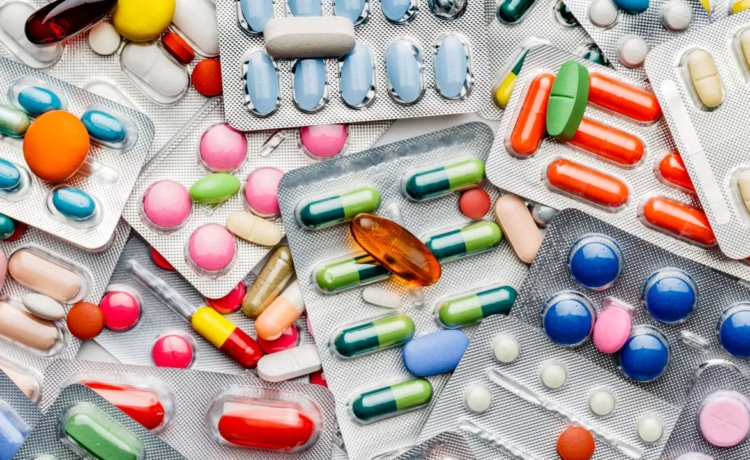
The United Kingdom and United States have struck a major pharmaceuticals deal with the US after President Donald Trump threatened to hike tariffs on branded drug imports as high as 100 per cent.
In an announcement on Monday, local time, US Trade Representative Jamieson Greer said both nations had reached an agreement over “negotiated outcome pricing for innovative pharmaceuticals”.
Under the deal, the UK will pay more for medicines through its National Health Service in return for a US guarantee import taxes on pharmaceuticals will remain at zero for three years.
Mr Greer said the agreement would “help drive investment and innovation in both countries”.
The US is the largest market for UK drug makers including GSK and AstraZeneca, and pharmaceuticals are one of Britain’s major exports to the country.
In the year to September, some $22.4 billion-worth of drugs were exported to the US from the UK, according to the British Department for Business and Trade.
The pharmaceuticals accounted for 17.4 per cent of all British goods exports over the period.
Reacting to the deal, UK Business and Trade Secretary Peter Kyle said it would guarantee “UK pharmaceutical exports – worth at least £5bn a year – will enter the US tariff free, protecting jobs, boosting investment and paving the way for the UK to become a global hub for life sciences”.
Meanwhile, US Health Secretary Robert F Kennedy Jr repeated past claims US citizens “should not pay the world’s highest drug costs for medicines they helped fund”.
“This agreement with the United Kingdom strengthens the global environment for innovative medicines and brings long-overdue balance to US-UK pharmaceutical trade,” he added.
Secretary Kennedy’s words reflected arguments used by President Trump, who has repeatedly raised the spectre of massive tariffs on pharmaceutical imports.
In September, the President announced drug companies would see their exports hit with a 100 per cent tariff, beginning October 1, unless they were building a factory in the US.
“The reason for this is the large scale ‘FLOODING’ of these products into the United States by other outside Countries,” he wrote in a social media post at the time.
While the UK had previously agreed a trade deal with the US, which removed some trade barriers and reduced tariffs on British exports to 10 per cent, pharmaceuticals were not covered by the agreement.
Separately, Britain has recently been at odds with the pharmaceutical industry over what companies claim is a challenging operating environment.
Some major firms have cancelled or paused investment in the UK as a result, including AstraZeneca – the largest firm on the London Stock Exchange by market value.
Downing Street will be hoping the new deal helps alleviate some of that friction.
With Reuters.