Space technology underpins climate monitoring, agriculture and communications, but dedicated impact funds remain rare. Should impact investors look to space to protect life on Earth and progress the UN’s Sustainable Development Goals?
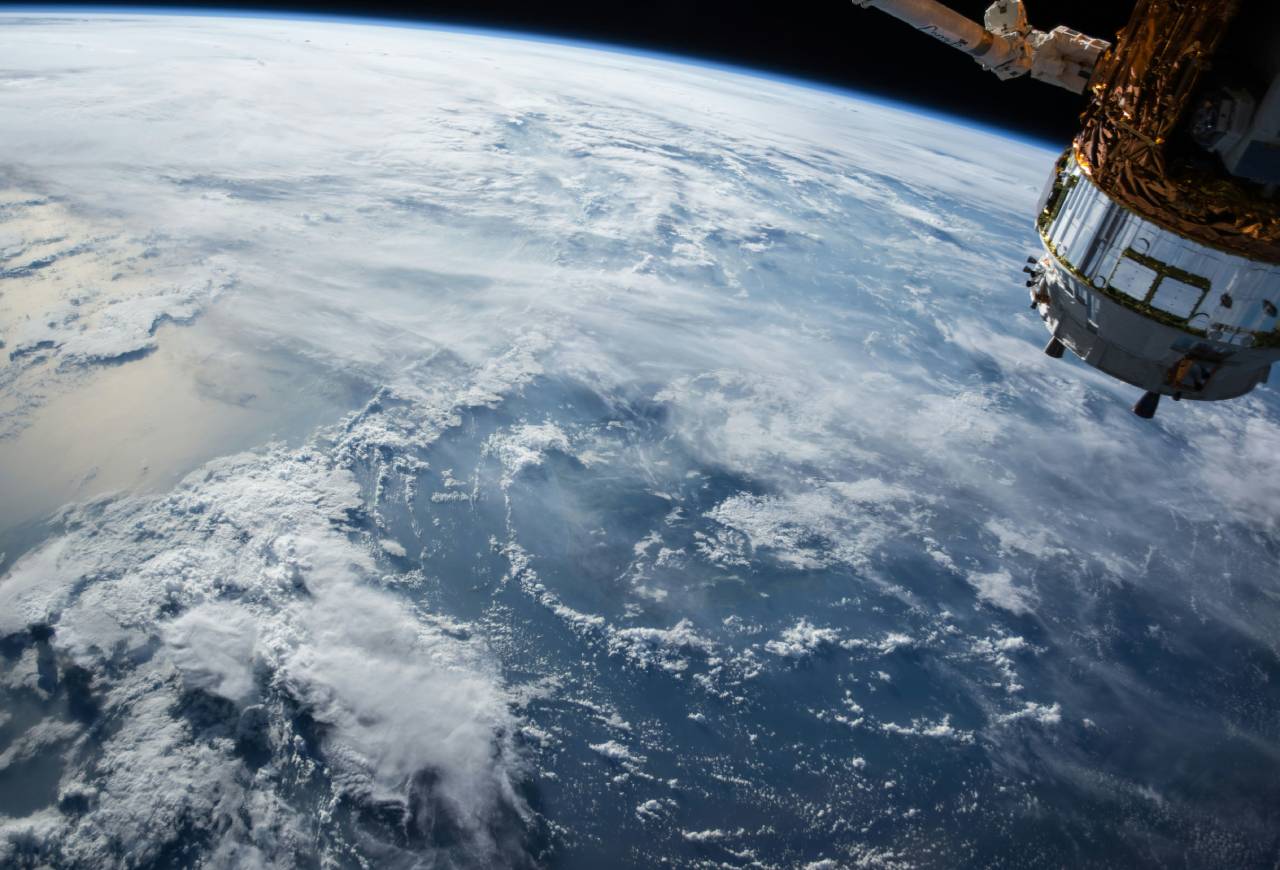
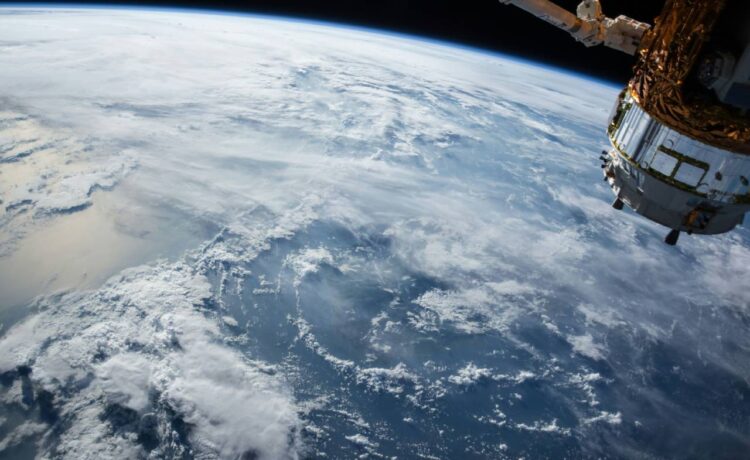
There is a growing number of specialised investment funds investing in space, including into sustainability-linked themes. However, a generic search for dedicated space impact funds draws a blank. Yet without the 15,900 or so operational satellites currently in Earth’s orbit – new payloads are launched daily – achieving the UN’s Sustainable Development Goals (SDGs) would be significantly more challenging. Impact Investor spoke to specialists and investors in the space sector to ask whether space could be the next frontier of impact investing.
Ever since Sputnik 1, the world’s first satellite, was launched into space by the Soviet Union in 1957, the number of artificial objects launched into the Earth’s orbit has grown exponentially. Satellites, in particular, have dominated the number of active payloads sent into space and revolutionised our ability to communicate and better understand life on Earth, underpinning many of the services that humanity relies on daily.
“They’ve helped us connect the unconnected, deliver education, information for health systems, navigation, defence etc,” says Andrew Faiola, commercial director for Astroscale, an in-orbit servicing company, which is developing technology for the removal of space debris as well as the life extension and inspection of space objects used in civil, defence, and commercial space missions.
“With the various applications they provide, you can actually drive right back to all the SDGs,” he adds, giving the example of climate change mitigation, with over 50% of all climate change indicators only measurable from space. Another example is farming. Faiola explains that without the data gathered from space, large-scale precision agriculture which has helped sustain a growing world population would be incredibly difficult.
“It’s helped to circumvent the Malthusian trap. With access to different types of Earth observation technologies, we can measure (from space) the water levels in the ground or the reflectivity of leaves to understand if they are healthy or not,” he says, explaining that with this information to hand farmers have also been able to reduce the amount of water used for irrigation as well as the level of fertiliser required, helping to decrease toxic run-off.
However, humanity’s reliance on the data gathered from satellites is increasingly under threat from the exponential growth in space debris congesting the Earth’s orbit.
Space debris: a sustainability challenge
According to figures from the European Space Agency (ESA), – last updated at the end of July this year – there are around 46420 objects in the Earth’s orbit regularly tracked by space surveillance networks. On top of this, there are an estimated 1.2 million space debris objects greater than 1 centimetre, which the ESA says is “large enough to be capable of causing catastrophic damage.” The vast majority of this debris can be found in Low Earth Orbit (LEO) and this has increased exponentially over the last decade due to commercial satellite constellations, such as Elon Musk’s Starlink.
“The most immediate sustainability challenge in space is orbital congestion and debris, particularly in LEO. Thousands of active satellites are now being joined by large constellations, while decades of legacy missions have left behind defunct satellites, rocket stages and millions of debris fragments. Even a small object travelling at orbital velocity can destroy an operational spacecraft,” explains Ted Elvhage, a founding partner at Expansion Ventures, a pan-European seed stage fund based in France, Luxembourg and Sweden, which backs European space and defence founders.
A recent report by the Saudi Arabia Centre for Space Futures and the World Economic Forum highlights the escalating risk to society from orbital debris collisions and estimates the economic impact over the decade to 2035, to be in the region of $25.8bn (€22.1bn) and $42.3bn.
Elvhage agrees that the cost of inaction is potentially severe. “A cascading collision scenario—often referred to as the Kessler Syndrome—could make portions of valuable orbital regimes difficult or impossible to use for extended periods,” he says, adding that analysis by NASA suggests that, in some cases, debris-remediation activities could generate economic benefits that outweigh costs within just a decade.
For Mike Collett, founder and managing partner of Promus Ventures, which manages a Luxembourg-based fund investing in early-stage space-related companies globally, the outlook for managing space debris is less catastrophic. He says satellite operators have, to date, managed collision avoidance well and he sees the issue as “a live operational cost rather than a doomsday scenario,”, saying that “the job is simply to keep the most valuable orbits as clear as possible.”
Faiola says whilst removing debris is vital, sustainability in space is also about extending the life of satellites and spacecraft. “Our technology enables spacecraft to move very close and to a dock with other spacecraft or satellites in order to inspect, repair, refuel or extend their operational life,” he says explaining the aim is to extend the concept of the circular economy to the space sector.
“We’re using that capability to help others act more responsibly in space. Ultimately, we would like companies to look at their business case differently, so that they can still continue to thrive and be profitable, but by utilising space in a more sustainable way,” he says.
A governance issue
According to Collett the engineering for debris removal is also maturing quickly. “There are companies now that can already fly right up to a derelict object and inspect it. Actually capturing one and deorbiting it is the next step. And because it’s a shared environment, with 90-plus nations operating in space, it works best when everyone adopts sensible standards together. Agreeing on what this looks like is never easy, but the conversations continue,” he says.
Faiola also highlights the need for international cooperation and a global response to address space debris. “There’s some governance on a national level but there is very little penalty for non-compliance,” he asserts, explaining that space has a free-rider problem, with little incentive for companies to clear up defunct space objects and debris, a textbook ‘tragedy of the commons’.
“Whilst I’m always careful about saying we need more regulation, we do need better regulation that incentivises the right behaviour,” he says, adding that the UK, for example, has strong regulations around space and whilst it could always do more, it is also reluctant to move too far, too fast for fear of companies moving their spacecraft to more lenient jurisdictions.
Opportunities for investment
Elvhage says his team views space sustainability through two complementary lenses: ‘sustainability in space’, by backing companies and technologies helping to preserve the orbital environment, including through space situational awareness and space traffic management, among others, and ‘sustainability on Earth enabled through space’. The latter includes space technologies that enable precision agriculture, climate monitoring, forest and biodiversity monitoring, water management, disaster response and carbon and emissions monitoring.
“We believe one of the strongest investment theses in space over the next decade will be technologies that simultaneously improve the sustainability of orbital operations while generating measurable sustainability benefits on Earth,” he says.
While historically many impact investors have focused on terrestrial impact themes, with space often viewed as too remote from measurable societal outcomes, according to Elvhage that perception is changing. He believes there is a growing role for pension funds, family offices, sustainability-focused institutional investors, strategic corporate investors and Article 8 and 9 investment vehicles.
“We already see pure sustainability and impact funds following on to some of our current investments as they consider them to be ‘green investments’. This is a very strong signal to the investor community,” he says, adding that you could argue that ensuring long-term access to space infrastructure is becoming an important impact objective in its own right.
Collett also argues that investment into space sustainability is a “natural fit” for impact investors. “Pension funds and family offices are already inching in,” he says, quoting J.P. Morgan’s 2026 family-office survey, which reveals that 14% now flag space as a priority theme, with allocations sitting at around 1% of portfolios.
“My advice to an impact investor is to back companies whose core business is inherently sustainable, rather than treating sustainability as a bolt-on. On this one, the returns and the impact are the same bet,” he adds.
Elvage concludes by explaining that a useful way to think about space is “no longer as a niche sector”. “It is critical infrastructure. Sustainable management of that infrastructure is increasingly aligned with the objectives of both traditional venture capital and impact investing,” he adds.