The Iranian rial’s accelerating collapse is driving up the cost of imports, production, and food while weakening demand and pushing businesses into economic paralysis.
The Iranian regime’s currency crisis is entering another dangerous phase as the value of the rial continues to collapse and the U.S. dollar climbs to new records. The rapid depreciation of the national currency is no longer merely a problem for currency traders or importers. It is increasingly becoming one of the main engines of inflation, directly affecting household purchasing power, production, employment, and the overall functioning of Iran’s economy.
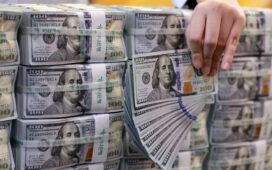
The dollar has moved beyond the 220,000-toman threshold, fluctuating sharply within a matter of hours. At one point, it reached approximately 228,000 tomans, illustrating the speed at which the currency crisis is unfolding.
But the significance of these figures goes beyond the exchange rate itself.
According to economic analysis presented by Dr. Mohammad-Hossein Tsouji, professor of electronic engineering, a member of the New York Academy of Sciences and a member of the National Council of Resistance of Iran, the continuing rise of the dollar is effectively a measure of the collapse in the value of Iran’s national currency.
The consequences are spreading throughout virtually every part of the economy.
The Dollar’s Rise Is a Measure of the Rial’s Collapse
A recurring feature of Iran’s currency crisis is that when the dollar rises sharply, it rarely returns fully to its previous level.
Even when the exchange rate retreats temporarily, the decline is generally insufficient to reverse the price increases that have already occurred. This creates a ratchet effect: each new currency shock establishes a higher price level throughout the economy.
The result is a steady erosion of the rial’s purchasing power.
For ordinary Iranians, the exchange rate is therefore not an abstract financial indicator. It determines the cost of food, medicine, household goods, transportation, housing-related expenses, and countless other necessities.
As the rial loses value, imported goods and imported inputs become more expensive. But the impact does not stop at products that are directly imported.
Why a Higher Dollar Raises Prices Across the Economy
A substantial portion of Iran’s production system depends directly or indirectly on imported materials, components, machinery, medicines, and other inputs.
When the rial depreciates, the cost of these inputs increases.
That creates a chain reaction:
A weaker rial → more expensive imports → higher production costs → higher consumer prices → lower purchasing power → weaker demand → reduced production and investment.
The effect can therefore spread through the entire economy.
Manufacturers facing higher costs must either increase prices or absorb losses. If they increase prices, consumers buy less. If they absorb the additional costs, their profit margins shrink, leaving them with fewer resources for investment and expansion.
Neither outcome provides a path toward economic recovery.
The impact is particularly severe for food products. According to the analysis presented in the interview, even a 20 percent increase in the exchange rate could translate into price increases of roughly 20 to 35 percent for many consumer goods, while the impact on food prices can exceed 30 percent.
For Iranian families already struggling with inflation, such increases can rapidly turn basic necessities into unaffordable goods.
Purchasing Power Is Being Destroyed
The most immediate consequence of the currency collapse is the destruction of real incomes.
Wages and salaries do not increase at the same speed as prices.
When inflation rises by 40 percent while salaries increase by only 20 percent, workers effectively lose a significant portion of their purchasing power even though their nominal income has increased.
This dynamic affects government employees, workers, pensioners, shopkeepers, and other sections of society.
The problem becomes cumulative. Every new currency depreciation pushes prices higher, while incomes remain behind. Households respond by cutting consumption, postponing purchases, reducing the quality or quantity of food they buy, and abandoning non-essential expenditures.
The result is not simply greater poverty. It is a contraction in economic demand.
Falling Demand Is Paralyzing Production
When households lose purchasing power, businesses lose customers.
This creates another dangerous feedback loop.
Lower purchasing power leads to lower demand. Lower demand reduces sales. Falling sales discourage investment and can force businesses to reduce production, employment, or operating hours.
The consequences are increasingly visible in Iran’s markets.
Some merchants are reportedly reluctant to sell their existing inventory because they fear that replacing it will cost substantially more the following day.
A shopkeeper who sells goods today at yesterday’s price may find that the revenue received is insufficient to purchase the same goods again tomorrow.
This creates an extraordinary situation in which businesses can have merchandise available but still hesitate to sell it.
The market effectively begins to freeze.
The Government’s Inflationary Response
The currency crisis also places enormous pressure on the Iranian regime itself.
As government finances deteriorate and economic pressures intensify, the authorities face growing demands for subsidies, salaries, public services, and other expenditures.
One potential response is further monetary expansion—effectively increasing the money supply without a corresponding increase in economic output.
But creating more money in an already inflationary economy can further weaken the currency and accelerate price increases.
This creates another vicious cycle:
Currency depreciation fuels inflation; inflation reduces purchasing power; weaker purchasing power reduces demand; economic contraction increases fiscal pressure; and attempts to cover that pressure through monetary expansion can further fuel inflation and currency depreciation.
Instead of resolving the underlying crisis, such policies can deepen it.
A Currency Crisis Becoming an Economic Crisis
The significance of the dollar’s rise therefore cannot be measured simply by comparing one exchange-rate figure with another.
The exchange rate has become a barometer of the broader deterioration of Iran’s economy.
In the period discussed in the interview, the dollar had risen from approximately 160,000 tomans to around 228,000 tomans within roughly three months—an increase of approximately 40 percent.
Such a rapid depreciation places enormous pressure on every sector dependent on imported inputs and on every household whose income is denominated in rials.
It also undermines economic predictability.
Businesses cannot reliably determine the replacement cost of their inventory. Producers cannot easily calculate future production expenses. Consumers cannot know how much their basic purchases will cost from one week to the next.
An economy cannot function normally when prices and replacement costs are constantly moving beyond the ability of businesses and households to anticipate them.
The Human Cost of Economic Paralysis
Behind every exchange-rate figure are millions of people whose living standards are being steadily eroded.
For ordinary Iranians, the collapse of the rial means that the same salary buys less food, fewer medicines, fewer household necessities, and fewer services.
For businesses, it means uncertainty over costs, declining demand, shrinking margins, and the growing risk of being unable to replace inventory.
For workers, it means wages that lose value before they can keep pace with inflation.
And for the broader economy, it means declining investment, weaker production, and an increasingly fragile financial system.
The central problem is therefore not simply that the dollar has reached another record level. It is that the Iranian regime’s economic policies have allowed currency depreciation and inflation to become mutually reinforcing forces.
Unless the underlying causes of the economic crisis are addressed, each new currency shock risks producing another wave of price increases that will never be fully reversed.
For Iran’s population, the result is a relentless deterioration in living standards. For the economy, it is a dangerous transition from chronic inflation toward deeper stagnation and paralysis.