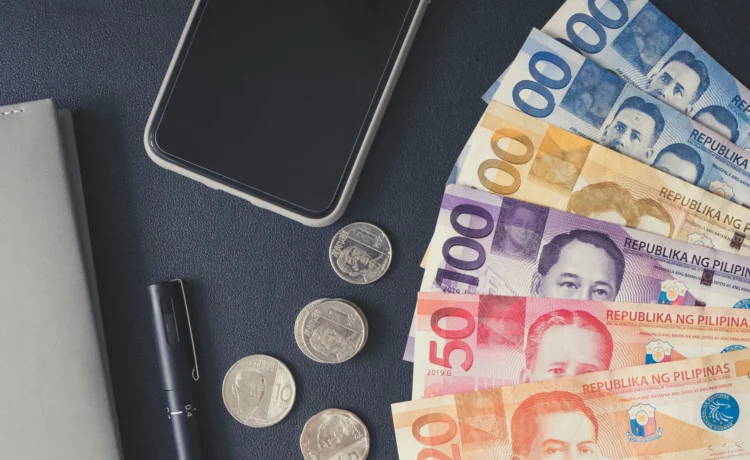
Strategists at JPMorgan Chase and BOA see the Philippine currency extending its decline to as low as 65 per greenback by the middle of next year
Published Mon, Sep 7, 2026 · 07:00 PM
[MANILA] The Philippine peso just can’t catch a break.
In a quarter when all its emerging-market Asian peers advanced against the US dollar, the peso fell. It’s down 6.2 per cent this year, and is the region’s worst-performing currency.
There’s a reason for the peso’s woes: no other country is hurting more from the spike in oil prices. Unlike peers that can rely on manufacturing or commodity exports to bring in dollars to cushion the blow, the Philippines’ reliance on the service industries has seen its trade deficit widen by nearly a third this year, while inflation has surged to more than twice the official target. Foreign reserves have dwindled as a result.
President Ferdinand Marcos Jr and Bangko Sentral ng Pilipinas (BSP) governor Eli Remolona have said that it’s futile to fight the peso’s weakness by drawing down foreign reserves.
Now, strategists at JPMorgan Chase & Co and Bank of America (BOA) see the currency extending its decline to as low as 65 per dollar by the middle of next year. The pair fell to a new record-low of 62.77 on Monday (Sep 7).
“The peso’s weakness reflects a combination of factors: the structural balance-of-payments deficit from weak exports relative to strong import demand, risk-off sentiment favouring the dollar, softer domestic sentiment, and expectations of further peso depreciation,” said Domini Velasquez, chief economist at China Banking Corp.
With the oil imports bill ballooning, Manila’s trade gap widened about 29 per cent to US$37 billion in the first seven months of this year. As a result, its foreign reserves have fallen about 9 per cent to US$103 billion from a record high in February, tying the hands of the central bank.
At a Senate hearing last month, Remolona was candid about how vulnerable the peso remained. Any attempt to guide the currency back to below 60 risks depleting the nation’s reserves and dollars, he told the senators. Instead, the central bank will focus on tackling sharp currency swings, he added.
The remarks were seen as contributing to the peso’s tumble to record lows over the next four days.
SEE ALSO

Such open admissions “will encourage people to speculate more because they know you won’t bet on the reserves which are dwindling”, said Diwa Guinigundo, a former BSP deputy governor for the monetary and economic sector, who’s now a principal adviser at think-tank GlobalSource Partners.
Contrast that with India and Indonesia, which have also seen their currencies hurt by the higher oil prices, but were able to mount aggressive defences with their reserves. The former has more than US$700 billion, while the latter has US$145 billion.
India has also undertaken a raft of measures to attract dollars and shore up the rupee, including mobilsing a target-beating US$127 billion from its diaspora. Indonesia, too, has aggressively raised interest rates to make its bonds more attractive to foreign investors and bolster the rupiah.
With three straight rate hikes failing to tame stubbornly high inflation and the odds of a US rate increase growing, the pressure is on the BSP to keep tightening.
On Monday, Finance Secretary Frederick Go said that monetary authorities intervene to smooth volatility in the peso, whether it is strengthening or weakening. “What we’re more concerned about is the speed at which it moves,” he told Bloomberg Television in an interview.
Go, a member of the policy-making Monetary Board, also said the Philippines is very much ahead of the curve in using monetary tools” to manage inflation.
The hit from higher energy prices also has been evident in the most recent data. The economy expanded a slower-than-expected 2.3 per cent in the second quarter, compared with India’s 7.8 per cent and Indonesia’s 5.3 per cent. Consumer prices rose 6.1 per cent in August, well above the BSP’s 3 per cent target.
“The Philippines is an outlier,” said Angelo Taningco, chief economist at Security Bank Corp. “The country’s growth differential and inflation differential have become more pronounced, so the peso is getting penalised.”
To be sure, a seasonal pickup in fourth-quarter remittances from millions of Filipinos working overseas may provide some cushion to the peso, but not enough to reverse the trend, analysts said.
A resurgent oil further clouds the growth outlook, making it more difficult for Marcos to tackle the high cost of living. The current account deficit has widened to “levels that are harder to fund via capital flows”, said Abhay Gupta, emerging market rates and FX strategist at BOA Securities.
BOA sees the peso weakening to 63 per dollar by the end of 2026 before falling further to 65 by June next year. Such a sustained peso depreciation will make it harder for borrowers with foreign-currency debt to repay. The government is rethinking a plan to sell five-year jumbo bonds due to the weak peso and rising interest rates, according to National Treasurer Sharon Almanza.
“The broader macro backdrop for the Philippines has not been supportive either, with a wider fiscal deficit, slow growth and political noise, adding to the headwinds for the peso,” Gupta added. BLOOMBERG