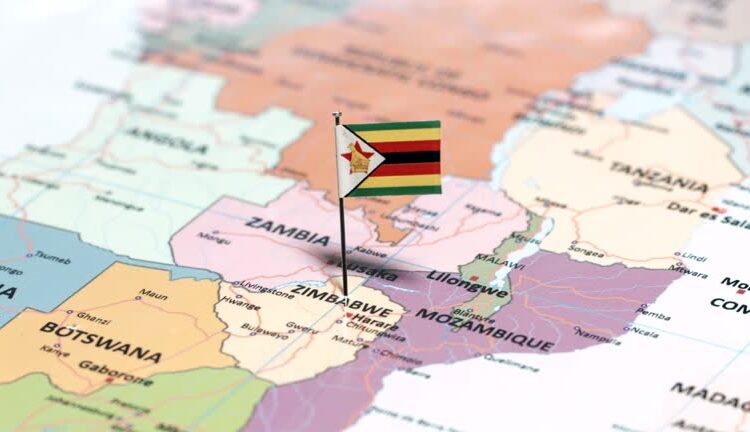
The following is an in-depth analysis of the fintech and wider digital economic development of African nation Zimbabwe.
Few countries have had a more complicated relationship with money than Zimbabwe. Hyperinflation destroyed confidence in the Zimbabwean dollar in the 2000s. Foreign currencies subsequently became commonplace. A new local currency returned, inflation accelerated again and, in April 2024, Zimbabwe introduced yet another currency: the Zimbabwe Gold, or ZiG.
The US dollar nevertheless remains deeply embedded in everyday commerce. Against that background, something less dramatic has been happening. Zimbabweans have become remarkably accustomed to moving money electronically.
Mobile wallets, bank transfers and digital payments are embedded across the economy, while this year the Reserve Bank of Zimbabwe (RBZ) is pushing interoperability through new QR-payment standards. Cryptocurrency businesses are also entering a formal regulatory framework for the first time.
Zimbabwe’s fintech story is consequently unusual. Digital finance has not developed because the monetary system has been predictable. In many respects, it has developed because it has not been.
Gold, agriculture and a recovering economy
Zimbabwe’s economy remains built around mining, agriculture, manufacturing, tourism and services. Gold is particularly important, alongside platinum-group metals, lithium, tobacco and other agricultural exports.
Harare is the country’s main financial and commercial centre, with institutions including CBZ Bank, Stanbic Bank Zimbabwe, FBC Bank and Ecobank Zimbabwe.
Economic conditions have improved considerably since the drought-affected performance of 2024. The International Monetary Fund (IMF) estimates that real gross domestic product (GDP) expanded by 8.3 per cent last year and projects growth of around five per cent this year, supported by agriculture, mining and favourable gold prices. Inflation is expected to average approximately 5.1 per cent during this year.
That represents an important improvement. Yet Zimbabwe’s history means restoring confidence in the domestic currency remains considerably harder than simply reducing inflation for several months.
The ZiG sits alongside the dollar
The ZiG was introduced in April 2024, replacing the Zimbabwean dollar and being backed by foreign-currency and precious-metal reserves held by the RBZ. Its introduction represented another attempt to create a stable domestic currency after decades of monetary disruption. Zimbabwe nevertheless remains a multicurrency economy.
The US dollar continues to play an important role in wages, savings and everyday transactions, meaning payment companies effectively operate within an economy where customers may need to deal with both local and foreign currency.
That creates a distinctive environment for fintech. Digital financial providers are not merely trying to make payments more convenient. They operate within a financial system where the currency in which consumers choose to hold money can itself become a financial decision.
Mobile money dominates transaction volumes
Zimbabwe’s digital-payments infrastructure is already substantial. The RBZ reported 234.7 million electronic transactions during the first quarter of 2026, with a combined value of ZiG612billion (around $1.7billion).
Mobile money overwhelmingly dominated by volume. Around 208.8 million mobile-money transactions were recorded during the quarter, representing approximately 87 per cent of electronic-payment transaction volumes. Their combined value reached ZiG76.2billion ($211million).
Those figures demonstrate how far digital finance has moved into everyday life. The best-known name remains EcoCash.
Originally launched by Econet Wireless Zimbabwe, EcoCash became one of Africa’s most recognisable mobile-money platforms, enabling customers to transfer funds, make payments and access other financial services without relying entirely on conventional banking infrastructure. Other providers and bank-led platforms have subsequently expanded the market.
A fast-food loyalty product became a financial business

One of Zimbabwe’s more unusual fintech stories is InnBucks. The service originated around Simbisa Brands’ restaurant network before evolving into a much broader financial platform.
InnBucks now offers a digital wallet accessible through its application and USSD, while customers can receive US-dollar salaries directly into their wallets and withdraw funds through its network. It has also expanded into lending.
This illustrates how fintech can emerge from unexpected parts of the economy. A company does not necessarily need to begin as a bank or telecommunications provider. An established merchant network can become financial infrastructure too.
2026 is becoming the year of the QR code
One of the most important regulatory changes this year concerns interoperability. This past March, the RBZ finalised national QR Code Payment Guidelines. Payment providers and participating banks are required to align their applications, merchant services and processing infrastructure with common technical standards.
More importantly, the central bank specifically requires QR payments to work seamlessly across banks, mobile-money operators and payment service providers, rather than developing as isolated closed-loop networks.
That could be significant for merchants. A small business should eventually be able to display a QR code without worrying whether every customer uses the same bank or mobile wallet. For Zimbabwe, the next stage of digital payments is therefore less about creating more wallets and more about making existing platforms communicate with one another.
Crypto finally gets rules
Zimbabwe’s difficult monetary history has also made cryptocurrency particularly interesting. For years, digital assets existed in an uncertain regulatory position. Financial institutions were effectively prevented from facilitating cryptocurrency trading following central-bank intervention in 2018, although peer-to-peer activity continued.
That changed in June this year. Zimbabwe introduced its first dedicated cryptocurrency regulations, requiring crypto businesses to register annually with the Financial Intelligence Unit. Operating without registration is now an offence.
The framework is intended to bring anti-money-laundering, fraud prevention and formal oversight to a market that had largely operated informally.
For a country where confidence in conventional currency has repeatedly been tested, the attraction of alternative digital assets is understandable. Regulation represents recognition that crypto activity is unlikely simply to disappear.
Financial inclusion moves to the next stage
The government is also putting digital finance within its wider development agenda. Zimbabwe’s 2026 Budget Strategy Paper identifies strengthening digital financial infrastructure as a policy priority, particularly to expand mobile banking, electronic payments and fintech platforms into remote and underserved communities.
The government is also supporting implementation of the Financial Sector Development Strategy alongside financial-literacy initiatives targeting greater economic participation.
Meanwhile, the RBZ continues to operate its Fintech Regulatory Sandbox, allowing companies with developed financial innovations to test them within a controlled regulatory environment. This is particularly important as fintech moves beyond mobile payments into lending, digital assets and more sophisticated financial services.
Looking ahead
Zimbabwe’s fintech story cannot be separated from its monetary history. Repeated currency crises weakened confidence in traditional money, while economic instability encouraged consumers and businesses to become adaptable in how they pay, save and transfer value.
That adaptability has helped make mobile money mainstream. In 2026, the focus is shifting. QR interoperability should make digital payments easier across competing platforms, cryptocurrency is entering a formal regulatory framework and the government wants digital finance to reach more underserved communities.
Zimbabwe’s greatest fintech challenge, however, remains something technology cannot solve alone: trust. The country already knows how to digitise money. The harder task is ensuring Zimbabweans remain confident in the money being digitised.