The Iran conflict has exposed more than another vulnerability in the global oil system. It has revealed two deeper illusions at the center of contemporary energy power: the illusion of control and the illusion of capacity. Both arise from the continued importance of crude oil and refined petroleum products to modern economies, and the dominant role of the US dollar in the financial system through which much of that energy is traded.
The Illusion of Control
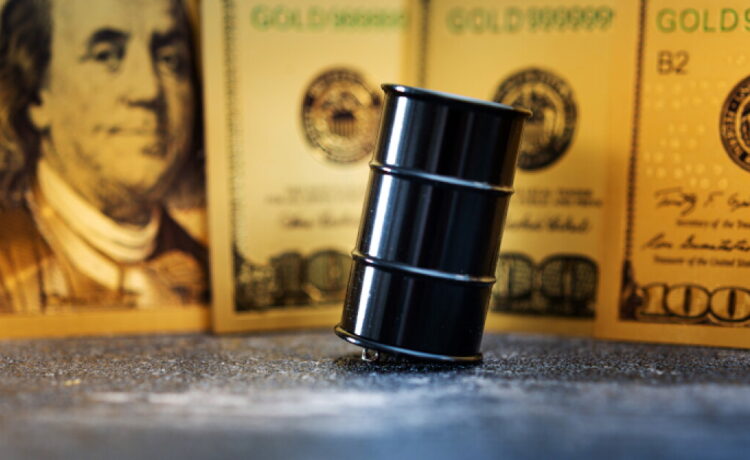
Since much international trade in crude oil and refined petroleum products is priced, financed or settled through the dollar, the US occupies an exceptional position in that trade. Dollar dominance gives it influence within parts of the financial architecture through which energy is traded.
Yet the US launched military operations against Iran alongside Israel, and the consequences of that decision have now exposed the limit of that financial influence. When physical oil supply is constrained, crude oil and refined product prices can rise sharply in US dollars. Those increases do not stop at the American border. They return to the United States through higher fuel prices, production costs and inflationary pressure.
The US occupies a privileged position within the monetary architecture through which international energy is traded, yet it remains subject to the economic consequences of disruption within the material system that architecture serves.
The illusion therefore lies in confusing monetary influence with resilience, when the state exercising that influence remains internally vulnerable to the consequences of disruption.
The Illusion of Capacity
The second illusion is that conditional access to globally traded energy amounts to capacity a state possesses. It does not.
Australia makes this visible. It consumes large quantities of diesel while depending substantially upon foreign refining, international shipping and imported refined products. During normal conditions, this access creates the appearance of energy security. But the refineries are elsewhere.
Australia does not possess the capacity to supply its own liquid fuel needs. It possesses the capacity to purchase access to the capacities of others. It is purchasing capacity, conditional upon functioning international markets, shipping and trade finance networks and, where transactions are dollar-denominated, exposure to the dollar exchange rate and dollar-based financial infrastructure.
The same structure constrains producing states in reverse. A country may possess surplus crude, yet converting that surplus into usable international revenue commonly exposes it to a trading and financing system in which the US dollar remains dominant. The producer’s capacity to realize value from its own resource is therefore affected by a dollar-centered financial architecture it does not control, particularly where transactions rely on dollar clearing, correspondent banking or other financial networks that can also become instruments of geopolitical leverage.
The underlying capacity — extraction, refining and shipping — is physically real. But its international commercial use still depends on financial, trading and logistical infrastructure.
The illusion is therefore twofold. Importing states mistake market-mediated access for capacity they possess. Exporting states mistake physical production for revenue capacity they independently control.
Bitcoin as a Test of the Argument
What happens if the monetary instrument belongs to no state?
Bitcoin serves as a relevant — if imperfect — test because it has one key characteristic: No participating state issues the monetary unit. The point here is not that Bitcoin currently provides a practical replacement for the dollar in global oil markets but that it offers an existing example through which to examine what changes when the settlement asset itself has no sovereign issuer.
I contend that a Bitcoin-based energy market could weaken one important source of both illusions: the sovereign monetary privilege embedded in a settlement architecture organized around the currency of a single state. There is, however, an important distinction between energy being priced in Bitcoin and merely settled in Bitcoin. If oil remained priced in dollars but payment was made in Bitcoin, the dollar would retain its role as the unit of account.
The US could no longer confuse control of the monetary instrument with resilience because it would no longer issue that instrument. Its vulnerability to material energy disruption would stand independently of the monetary privilege it previously possessed.
The illusion of capacity would become harder to sustain. Neither buyer nor seller would issue the monetary unit used for the transaction. They would instead negotiate more directly from the capacities they possess, the purchasing power they command and the dependencies they confront. That would not eliminate state power from the transaction: Governments could still exercise influence through regulation, sanctions, ports, shipping, insurance, exchanges, custody and access to domestic financial systems.
What would become more visible is material power: the geopolitical leverage that rests on a state’s capacity to produce, secure, transport, refine, purchase or withhold energy under constraint.
Material Power
For the US, Bitcoin would remove the monetary advantage associated with having its sovereign currency at the center of international energy trade. The US would nevertheless retain substantial material advantages, including its position as the world’s largest crude oil producer and its extensive domestic refining and energy infrastructure.
China presents a different balance of strengths and vulnerabilities. Its immense refining capacity would not, by itself, provide geopolitical leverage. A settlement system less centered on sovereign currencies would not remove the fundamental fact that it remains heavily dependent on imported crude to sustain one of the world’s largest industrial economies. Its refining scale, purchasing power and industrial capacity would remain important sources of influence, but so would its dependence on imported crude.
Saudi Arabia presents a different possibility. It possesses substantial crude production as well as refining capacity. Its crude-production capacity, spare capacity, export infrastructure and role in balancing petroleum markets would remain sources of geopolitical leverage even if the settlement unit changed, although financial access, investment and customer relationships would continue to matter.
For Australia, its purchasing capacity does not constitute geopolitical power in liquid fuels. Australia remains substantially dependent on capacities possessed elsewhere: foreign refining and international liquid-fuel supply routes.
Power Without the Illusions
Bitcoin would create serious practical problems, including volatility, liquidity, regulation and integration with the extensive trade-finance infrastructure on which global oil trading depends. This argument does not establish that Bitcoin could replace the dollar in international oil trade.
If crude oil and refined petroleum products are indispensable commodities upon which modern states depend, why should their international pricing and settlement be organized through the national currency of any one of those states, when war can expose that state itself to the material consequences of the trade?
The Iran conflict has exposed the illusion of control: Monetary privilege does not produce resilience when the state exercising it remains vulnerable to the material consequences of disruption.
This is not an argument that Bitcoin could immediately replace the dollar in oil trade, nor that it would solve energy scarcity or geopolitical inequality. It is an argument that the settlement unit is not neutral. It can distribute leverage, conditions access, and can obscure the distinction between the ability to transact and the capacity to act.
Power is not control over the currency of exchange. Power is the capacity to act when the conditions of action are constrained. Whether Bitcoin could ever meet the practical requirements of global oil trade remains open; the distinction between monetary privilege and material power does not.
Alberto R. Melgoza, PhD, is an Australia-based oil and gas professional and independent writer on energy security, industrial capacity and geopolitical risk. The views expressed in this article are those of the author.