(Yicai) Dec. 8 — China’s foreign exchange reserves soared to the highest since December 2015 last month, with the country’s central bank increasing its gold reserves for the 13th consecutive month.
China’s forex reserves rose by USD3 billion to USD3.3464 trillion as of Nov. 30 from Oct. 31, influenced by the combined effect of asset price changes and exchange rate fluctuations, the State Administration of Foreign Exchange announced yesterday.
“The forex reserves remained relatively stable in November because the US dollar index changed little in the period, and global financial assets experienced mixed gains and losses, with limited overall volatility,” said Wang Qing, chief macroeconomic analyst at Golden Credit Rating International.
The US dollar index fell 0.3 percent in November, driven by rising expectations for a Federal Reserve interest rate cut in December and a higher probability of a near-term rate hike by the Bank of Japan. Wang believes this led to an appreciation of non-US dollar assets within China’s foreign reserves, slightly boosting their overall value.
Rising expectations for a Fed rate cut also pushed down US Treasury yields, causing prices to rise, along with the month-end valuation of the forex reserves.
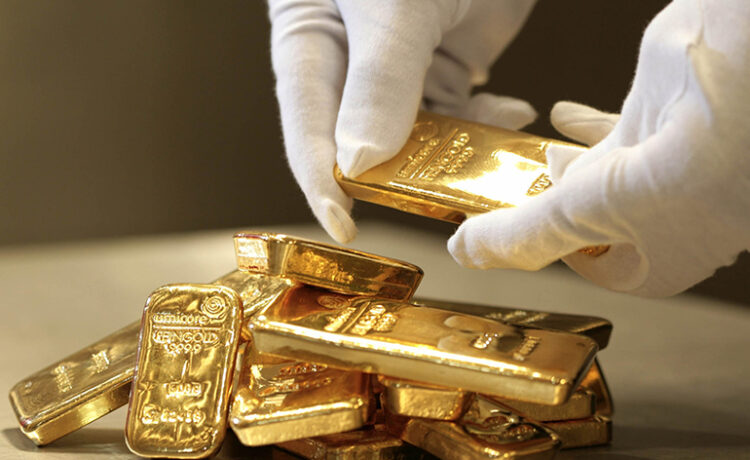
The People’s Bank of China raised its gold holdings by 30,000 ounces to 74.12 million ounces last month from October, the smallest increase since November last year. Gold prices have continued to surge rapidly due to global geopolitical risks despite rising expectations for a Fed rate cut.
The fundamental support for gold’s long-term rise has not changed, said Wen Bin, chief economist at China Minsheng Bank. With the continuous erosion of the US dollar’s creditworthiness and recurring geopolitical risks, central banks and exchange-traded funds are still ‘voting with their feet,’ selling US Treasuries to buy gold.
International gold prices will more likely rise than fall for a considerable period, Wang predicted. “This means that the necessity of suspending gold purchases from a cost-control perspective has diminished, while that of increasing gold holdings to optimize the structure of international reserves has risen.”
The World Gold Council identified in a recent report three scenarios for gold prices next year.
If falling interest rates and a weaker US dollar are accompanied by rising market risk aversion, they will create a continuously favorable environment for gold. In this scenario, gold prices could rise 5 percent to 15 percent next year from current levels.
If US Treasury yields fall, geopolitical tensions escalate, and safe-haven demand remains high, they would provide firm support for gold prices, driving them up. In this scenario, gold prices could rise 15 percent to 30 percent next year from current levels.
If US Treasury yields rise, the US dollar strengthens, and the risk appetite improves, they would put significant pressure on gold, leading to a sharp decline in investor interest. In this scenario, gold prices could drop by 5 percent to 20 percent next year from current levels.
Editor: Futura Costaglione