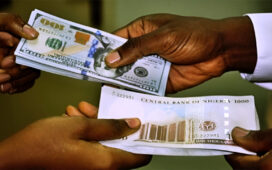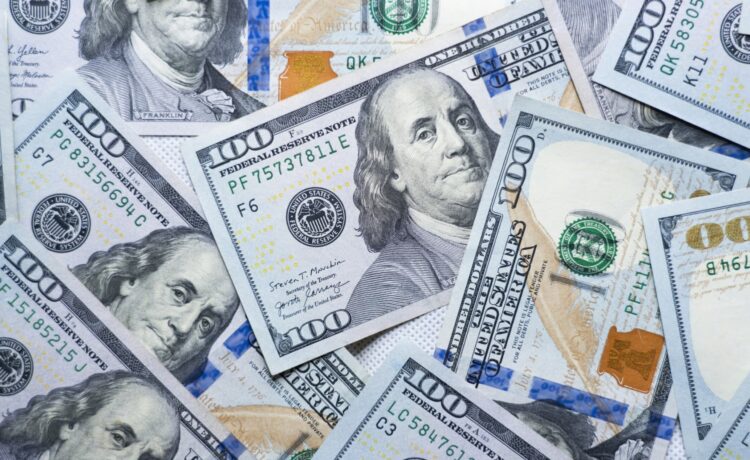
The dollar was steady on Monday, while the yen flirted with the crucial 160 per dollar level as nervous investors took stock of the escalating Iran war.
Yaorusheng | Moment | Getty Images
There was a fragile calm across currency markets on Thursday as traders kept their eyes fixed on whether the ceasefire between the U.S. and Iran would hold, a day after its announcement sent the dollar tumbling across the board.
The deal appeared to be on thin ice, as Israel continued its parallel war against the Iran-aligned militia Hezbollah in Lebanon, while Tehran accused both Israel and the U.S. of violating the agreement and said that proceeding with peace talks would be “unreasonable.”
The Strait of Hormuz also remained shut to vessels sailing without a permit and shippers said they needed more clarity before resuming transit, sending oil prices higher.
U.S. President Donald Trump said all of its ships, aircraft, and military personnel would stay in place in and around Iran until it fully complied with a deal.
The uncertainty left currency markets on edge.
The euro was flat at $1.1661. It gained 0.6% on Wednesday, but retreated late in the day having touched a one-month high of $1.1721 earlier in the session.
It was a similar story for the pound and Japanese yen. Sterling was flat at $1.3393, after gaining 0.77% on Wednesday, but retreating from as high as $1.348.
The Japanese currency was slightly softer with the dollar up 0.2% at 158.9 yen, having briefly dropped below 158 on Wednesday.
With the Strait of Hormuz closed, “the entire ceasefire remains tenuous,” said Derek Halpenny head of research global markets EMEA at MUFG. But, he added, “while the U.S. dollar has rebounded, the moves in general have been modest.”
He said the fact that further talks scheduled in Pakistan were still going ahead was keeping any retracement of Wednesday’s moves in check.
There are also a few bits of economic data in the mix around the world, but they are playing second fiddle to war headlines.
Japan’s consumer confidence worsened in March for the first time in three months, a government survey showed on Thursday, adding to a recent string of data pointing to the potential economic hit from the Middle East war, which would complicate the BOJ’s rate-hike decision. The yen showed little reaction to the data.
Speaking in parliament, BOJ Governor Kazuo Ueda said real interest rates are clearly negative and keeping the country’s financial conditions accommodative.
The U.S. is set to release February personal spending and the PCE data on Thursday, though as this covers the period before the war, it is unlikely to have a major effect on markets.
Other currencies were also broadly steady. The Swiss franc was flat at 0.7913 francs per dollar and 0.9228 per euro.
The Australian dollar dropped 0.3% to $0.7024.