Lily Huynh/ The Cougar
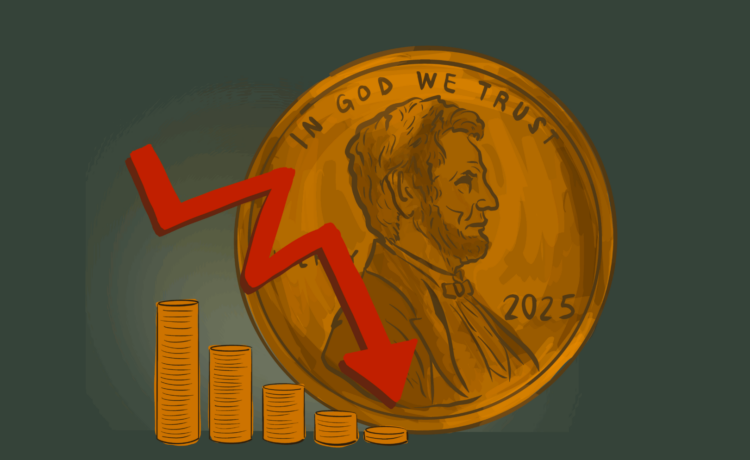
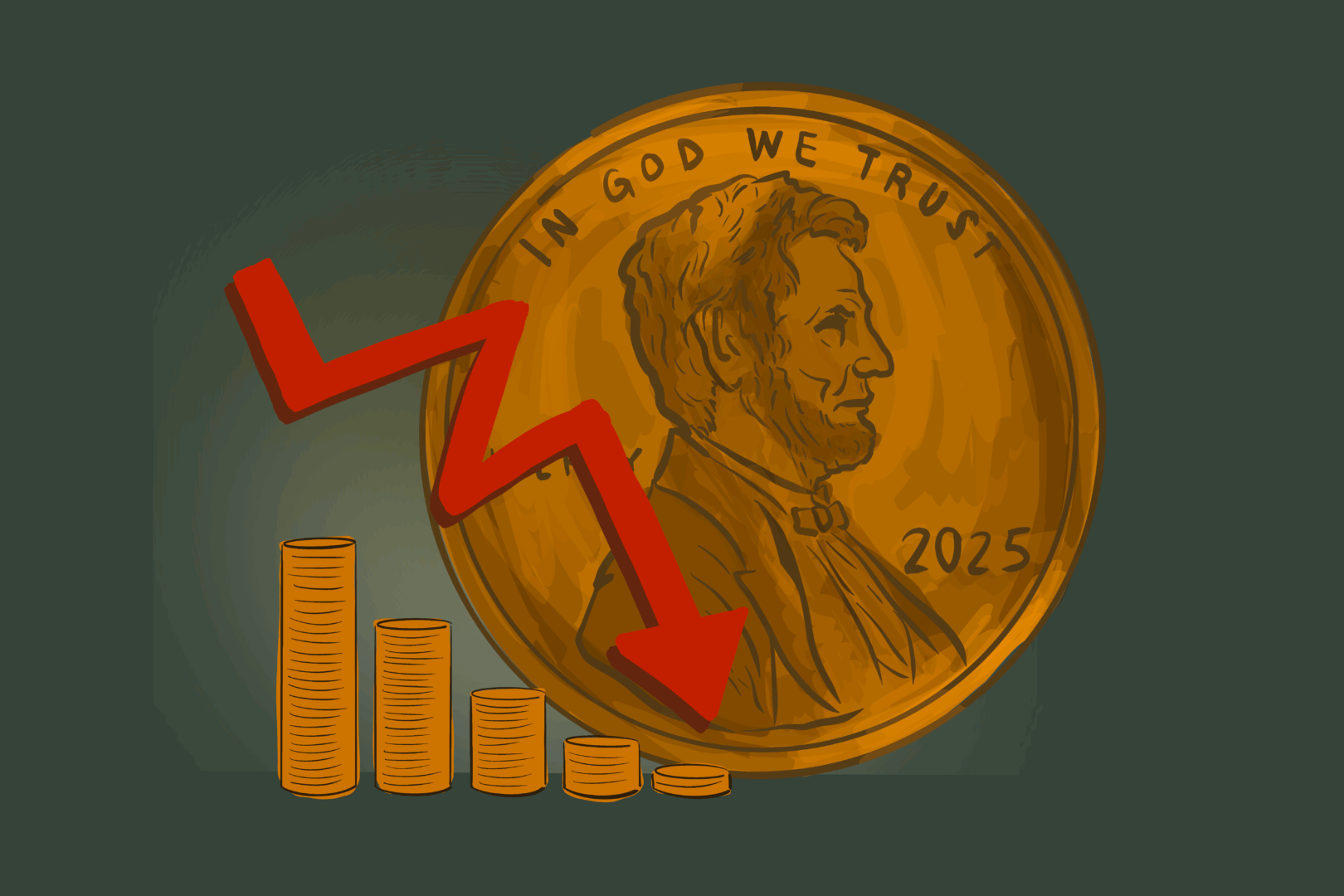
In a generation where quarter zip jackets and six-seven are the topic of discussion, it is quite easy for pernicious information to be disregarded. The US government is meant to stop producing new pennies for circulation by early 2026.
The US Treasury states that the penny will remain legal tender for transactions, but the cost of producing a penny has increased by 2.27 cents per penny.
In an economy where the lowest denomination of currency has lost its value, society can feel a disconnect between what was and what is.
That is, if society has not already been desensitized and groomed to this transition. My concern lies not simply in the elimination of the penny but in the erasure of tangible assets.
100 pennies
A coin’s typical lifespan is approximately 30 years. In the past 30 years, darkroom printing has been replaced by digital cameras, print media has gone or is going completely online and street performance and folk art are facing a decline.
It sounds like these art forms have died when, in practicality, they’ve shifted for convenience and mass production.
Convenience and mass production, however, devalue skill, craft time and uniqueness. Why learn calligraphy when you can download a font? What’s the value in learning to play an instrument when digital auto-software can replicate any sound?
In a capitalistic society, mass production defeats tradition and isolates creation into brands, industries and algorithms. As a result, handcrafted furniture, woodwork and textiles grow more expensive because capitalism inflates the cost of anything produced in limited supply.
What should be most concerning about this version of capitalism is that it dissolves community traditions into profit, and with that, the art loses its roots.
20 nickels
In a society that is always rushing and constantly overworked and underpaid, it seems irrational to stop and handwrite multiple signatures when you could just type them into a font and paste them.
If you had to take your time flipping through every page that required a signature, you’d be more inclined to read before consenting.
The shift to digital paperwork is intentional; the fewer barriers a system has, the less likely users are to slow down and read the details. Similarly, tap-to-pay is another example of convenience serving capitalism. The faster the friction disappears, the easier it becomes to spend without reflection.
When you place a dollar bill in a child’s hand, they cling to it because its value is tangible. They can picture the toy it might become because they can grasp its meaning. But transfer that value into an Apple Pay wallet, and watch as the connection weakens.
This is because digital money lacks the physical cues that signal worth. Without any cues from our five senses, our brains may struggle to register value. Spending becomes limitless, and physical wallets hold no weight if not just to collect more credit and debit cards.
10 dimes
As we become desensitized to convenient digitization, there is a growing disconnect that reflects across generational lines. Older generations who grew up feeling the daily weight of the dollar and the sound of coins from the bank teller may find the abstraction of money to be disorienting.
As time moves forward, the younger generations who were taught to count through physical money may find this tradition fading as it will become a purely abstract exercise.
The next most alarming concern of all, however, is rounding up or down for cash-paying customers. Forbes explains that rounding down would only apply to purchases ending in one or two cents.
However, anything above two cents would make cash-paying customers disadvantaged, as their transactions would be rounded up to the nearest five cents.
“The National Association of Convenience Stores also suggested that rounding for cash customers could violate the terms of the Supplemental Nutrition Assistance Program,” said Forbes.
Not to mention that the calculation of sales tax is not definitive, as companies are confused about the calculation of sales tax and whether it should be regarded before or after the rounding.
Four quarters
When tangible assets like the penny, textiles and apprenticeships lose their value or disappear completely, society should ask how grounded they truly are in the material reality that keeps us connected to value.
Capitalism disguises the digitization and ultimate death of human experiences in the name of convenience and efficiency. But let us not forget how real it feels to finish handwriting an essay or hearing the slight imperfections that make music human.
The small rewards of seeing a photo take shape in a darkroom, waiting for bread to rise or watching paint slowly dry capture the essence of the human experience, which is anchored in patience and intent.
It is crucial to remain human in a capitalistic state that values profit over art and dollars over pennies. Be careful in becoming complacent because it takes a hundred humble pennies to make a dollar’s worth.