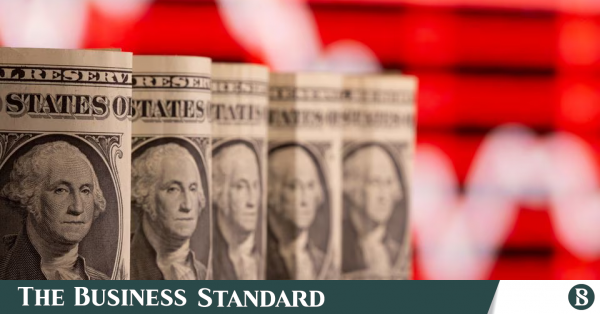
For decades, the US dollar has been at the centre of global trade and finance. It is the currency behind most oil transactions, most foreign reserves and much of international trade. Around 80% of global oil trade is still settled in dollars, a dominance built over decades of economic and political influence.
But that dominance is starting to face a quiet pressure from different directions. Not through sudden collapse but through small shifts in how countries trade, settle payments, and respond to geopolitical tensions.
What is emerging is not the end of dollar dominance. It is the beginning of a phase that is more uncertain.

This uncertainty is being driven by a mix of factors, including the growing use of alternative currencies in energy trade, efforts by rival powers to reduce reliance on the dollar, and the expanding use of US financial sanctions. These shifts are not yet replacing the dollar, but they are beginning to challenge its position.
The change is most visible where geopolitics meets global trade. The US-Israel war on Iran, combined with years of sanctions, has pushed Tehran to find new ways to control trade flows and reduce dependence on the dollar. Strategic chokepoints are no longer just about energy supply but are becoming part of a wider financial contest.
A shift in the Strait of Hormuz
The Strait of Hormuz has always been one of the world’s most sensitive waterways. Nearly one-fifth of global oil and gas supplies pass through this narrow channel.
Now, it is also becoming a space where currency politics is beginning to shift.
According to Al Jazeera, Iran has started charging some transit fees for vessels passing through the strait in Chinese Yuan instead of US dollars. The number of such transactions is still limited, but the message is clear. Even in a system long dominated by the dollar, alternatives are beginning to appear.
The move also reflects Iran’s broader effort to work around US sanctions while deepening financial ties with China.
Pressure on the petrodollar system
The global oil trade has been closely tied to the US dollar since the 1970s, when oil sales were effectively locked into dollar pricing. This system, often called the petrodollar arrangement, helped cement dollar dominance for decades.
But that system is now facing growing pressure.
As reported by the largest newspaper in South Korea, The Chosun Daily, countries accounting for more than 40% of global oil production are now exploring ways to reduce dependence on the dollar. Some are experimenting with alternative currencies, while others are building new trade arrangements outside traditional financial channels.
Iran has been among the most active in this regard. Years of sanctions have forced it to develop alternative payment methods, including the use of the Yuan in energy-related transactions.
Since the late 1970s and more intensively over the past two decades, Iran has faced repeated waves of US-led financial sanctions targeting its oil exports, banking system and access to global payment networks. These restrictions deepened during disputes over its nuclear programme, effectively limiting its ability to trade in dollars and pushing it to develop alternative financial channels.
There are also signs that even small charges in the Strait of Hormuz are being done through non-dollar payments, a symbolic but notable change in how trade flows are structured.
If such shifts increase, they could gradually weaken the long-standing cycle where oil earnings are recycled back into US financial markets.
China’s growing role
China is at the centre of many of these changes, even if quietly.
It is already the largest buyer of Iranian oil, accounting for more than 80% of Iran’s exports, according to Al Jazeera. Much of this trade is conducted outside traditional dollar channels and is increasingly linked to Yuan-based settlements.
In return, Iran imports large volumes of Chinese machinery, industrial goods and technology. Over time, this has created a trade system that relies less on Western financial networks.
But the Yuan still has limits. It is not freely convertible, and global trust in China’s financial system remains cautious. Despite this, the currency’s use in trade is slowly expanding.
At the same time, the same report said that the US dollar still dominates global reserves, holding about 57% of foreign exchange holdings, compared to roughly 20% by the euro and only about 2% by the Yuan.
The gap shows that while change is happening, it is still early and uneven.
A slow and uneven shift
Most experts do not see this as a sudden shift away from the dollar. Instead, they describe it as a slow process where small changes gradually build up over time.
Economist Dan Steinbock has described this as a case of “gradual erosion rather than abrupt substitution,” suggesting that the dollar’s dominance is being chipped away in specific sectors rather than replaced outright.
Only about 3.7% of global cross-border transactions are now settled in Yuan, although that number has grown significantly over the past decade, Al Jazeera reported.
Each increase may look small on its own, but together they show a slow diversification of global payments.
This is not a replacement for the dollar. It is a gradual widening of the system around it.
Lessons from the past
There is a historical context for this kind of shift.
The British pound once held the same position the dollar holds today. Its decline did not happen suddenly. It happened over decades, as global power and trade patterns shifted after major geopolitical events such as the Suez Crisis.
That history is now often used as a reference point when looking at the dollar’s long-term future.
Similar pressures are visible today. Rising debt levels in the United States, the growing influence of emerging economies, and increasing global fragmentation are all part of the broader picture.
Analysis highlighted by New York-based news portal National Today examines the parallels between the current dominance of the US dollar and the decline of Britain’s pound sterling as the world’s reserve currency in the mid-20th century.
It suggests that while the parallels are not exact, the US faces similar challenges in maintaining its financial dominance. Key factors include the US economy’s relative decline compared to emerging powers, the country’s transition from creditor to debtor status, and the erosion of trust in the dollar’s stability.
In the 1920s, New York surpassed London as the world’s primary financial centre. In 1931, Britain abandoned the gold standard, accelerating the collapse of the global monetary system. During World War II, Britain’s survival came to depend on US support, foreshadowing the shift in global power.
The paradox of uncertainty
There is also a contradiction at the heart of this shift.
In times of global crisis, the US dollar often becomes stronger. Investors move toward it as a safe and stable currency. That reinforces its position even when long-term challenges are building underneath.
At the same time, the repeated use of financial sanctions is encouraging some countries to look for alternatives.
As Alicia Garcia-Herrero, chief economist for the Asia Pacific at Natixis in Hong Kong, has noted, the use of the Yuan in limited trade contexts “adds incremental pressure and normalises alternatives in energy flows,” but is not yet enough to fundamentally de-dollarise the system.
Similarly, Kenneth Rogoff, an economics professor at Harvard University and former chief economist at the International Monetary Fund (IMF), has argued that growing reliance on sanctions could push countries to diversify away from the dollar to reduce exposure to US financial pressure.
The more the system is used as a tool of leverage, the stronger the incentive becomes to reduce dependence on it.
A system slowly developing
What is emerging is not a collapse of dollar dominance but a slow shift in how the global financial system operates.
The dollar is still the most powerful currency in the world. But it is no longer the only option in certain parts of global trade, especially in energy and sanction-sensitive economies.
The result is a more flexible and fragmented system where different currencies are used for different relationships and regions.
The era of dollar supremacy is not ending. But it is no longer as stable or uncontested as it once appeared.