With food prices on the rise, dollar stores have played an increasingly important role in food retail, especially for low-income Americans and those living in areas with limited access to healthy foods.
Wenhui Feng, an assistant professor of public health in the University of Rhode Island College of Health Sciences, is leading an interdisciplinary team of researchers on a three-year study of the impact dollar stores have on food purchases.
The study is funded by a $1 million grant from the U.S. Department of Agriculture’s National Institute of Food and Agriculture.
“Some people find dollar stores to be a convenient place to get food items, especially for those living in areas far from traditional grocery stores,” said Feng. “However, others worry that dollar stores may cause harm because they do not offer the healthiest food options.”
While many industries struggled in 2020 and 2021 due to the impact of the coronavirus pandemic and difficult financial circumstances, dollar stores experienced significant growth. According to the data service company Statista, there were more than 39,000 dollar stores in the U.S. in 2025 — an increase of 4,700 since 2021. Dollar General accounted for the highest number of stores in 2025, with 20,959 — more than Dollar Tree and Family Dollar combined. Groceries accounted for more than 80 percent of Dollar General’s sales in 2025.
“We want to learn how some consumers incorporate this emerging retail type into their household food purchases,” said Feng.
Researchers will conduct interviews and focus groups with dollar store shoppers and community stakeholders in Minnesota and Louisiana to learn about their perceptions and motivations to fulfill their households’ dietary requirements; use machine learning cluster analysis to characterize patterns in consumer food purchases, evaluate the healthfulness of each type of food purchase pattern, and identify strategies consumers employ to maintain a nutritious diet utilizing dollar stores food retailers; and develop educational resources to help low-income Americans achieve food and nutrition security to improve and sustain health.
“With insights gained through data collection and speaking with consumers, we will develop tools to help consumers stretch their food budget utilizing dollar stores as food retailers,” said Feng.

The Dollar General store in Chamblissburg, Virginia. (Image by Ryan Tipps, AGDAILY)
Health concerns
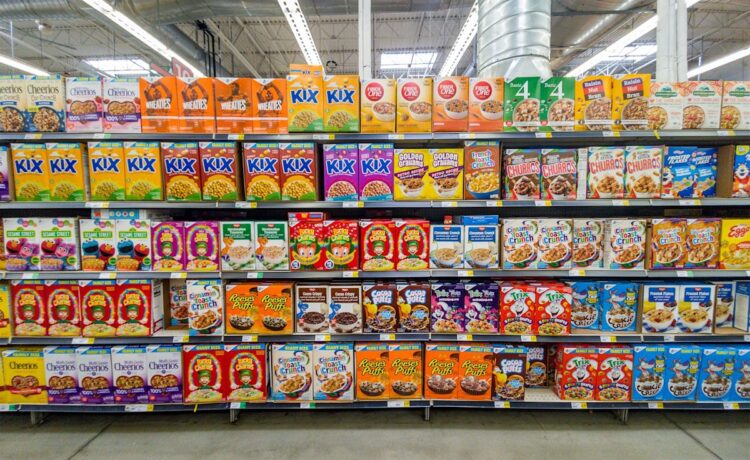
The proliferation of dollar stores has raised concerns for the diet and nutrition of shoppers who frequent these discount variety stores. The stores tend to sell shelf-stable items, including sugar-sweetened beverages, salty snacks, canned goods, and cereals, with limited protein options and a lack of fresh produce. This past fall, Feng published research on the healthfulness of foods purchased at dollar stores in an issue of the Journal of the Academy of Nutrition and Dietetics.
For the current study, the research team will explore opportunities for nutritional improvement and intervention.
“Our goal is to create a holistic and community-driven approach for dollar store shoppers to fulfill their household’s need for healthy foods, make healthier food choices, and ultimately contribute to reducing or eliminating nutrition insecurity,” said Feng.
The researchers will implement a pilot initiative to utilize the educational resource toolkit with shoppers and other stakeholders in two communities in Minnesota and two in Louisiana to improve their understanding of nutrition, food affordability, and healthy shopping strategies. This may include workshops, community outreach programs, and cooking demonstrations, all in collaboration with local organizations.

Image by Khairil Azhar Junos, Shutterstock
Communities most impacted
Dollar stores have added a new dimension to food systems in all communities, but rural communities and lower-income communities with racial/ethnic minority households are especially impacted.
“Dollar store shopper demographics skew toward rural households, People of Color, and lower income households,” said Feng. “The data we collect should help provide a well-rounded understanding of the dollar store phenomena.”
Feng led a study that was published in the American Journal of Public Health in 2023 on dollar stores and food access for rural households in the United States. From 2008-2020, dollar stores were the fastest-growing food-retail channel in rural areas, increasing their share of household food purchases by 102.9 percent. The study noted that in communities where other food storefronts are much farther away, dollar stores may be the only option for food access.
The primary concern expressed by public health advocates with dollar stores being the most convenient or affordable option in rural or lower-income communities is that dollar stores sell mostly packaged foods that are higher in calories and lower in nutrients.
“If there is knowledge we can gain from our research that will help us promote healthy eating with limited resources, we want to share it,” said Feng.
Feng’s collaborators include Sean Cash, an associate professor at Tufts University; Abby Gold, a health and nutrition specialist at the University of Minnesota; Denise Holston, an associate professor and nutrition specialist at Louisiana State University; and Qingxiao Li, an assistant professor of agriculture economics and agribusiness at LSU.
The post Assessing the fastest-growing food retailers: Dollar stores appeared first on AGDAILY.