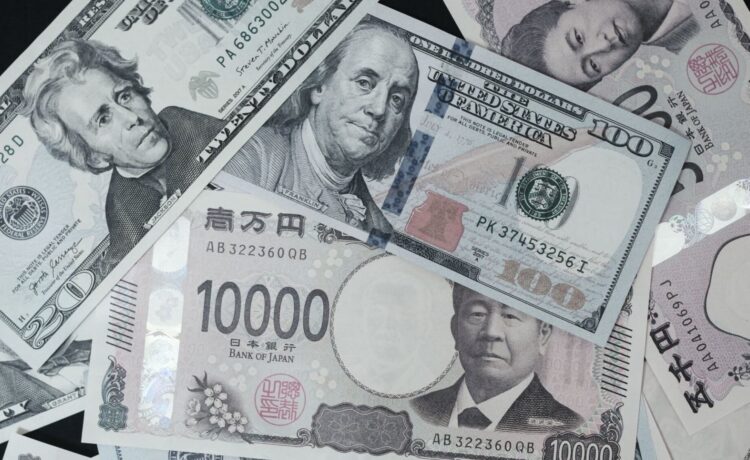
The dollar held steady near a two-week high on Monday as markets ramped up bets on a rate hike after hawkish remarks by Federal Reserve Chair Kevin Warsh, while the yen slipped back through the closely watched 160-per-dollar level.
Bloomberg | Bloomberg | Getty Images
The dollar edged lower on Monday as traders waited on key U.S. jobs data due later this week, after hawkish remarks from Federal Reserve Chairman Kevin Warsh on Friday renewed bets on a September interest rate hike.
Traders will be focused on jobs and inflation data for August that is due before the Fed’s September 15-16 meeting for clues on whether a hike is likely.
The U.S. central bank will “have work to do” if policymakers do not get the confidence they need that inflation is heading down to 2%, Warsh said on Friday, in his clearest indication yet that further tightening may be needed to curb price pressure.
“Warsh’s prepared remarks seemed designed to lift rate-hike expectations, rebalance the September debate towards the hawks and rebuild his inflation-fighting credibility,” said Elwin de Groot, head of macro strategy at Rabobank.
Fed funds futures traders are now pricing in 64% odds of a September rate hike, up from around 35% before Warsh’s comments on Friday.
This week’s jobs report for August is expected to show that employers added 55,000 jobs during the month, according to the median estimate of economists polled by Reuters. It comes after July’s report showed that employers unexpectedly cut jobs that month.
“If we get an outright decline in jobs, I don’t see how the Fed can raise interest rates. I don’t think that they’ve ever raised interest rates after the economy had back-to-back job losses,” said Marc Chandler, chief market strategist at Bannockburn Global Forex.
August’s producer price inflation report is due on September 10 and consumer price inflation for the month is scheduled for September 11.
The euro rose 0.12% at $1.1598, while sterling strengthened 0.07% to $1.3544. Both currencies remained on track for a second consecutive month of gains.
The dollar index, which measures the U.S. currency against six major peers, was down 0.14% to 99.54 after hitting 99.73 on Friday, its strongest since August 17.
The index remains on track for a second consecutive monthly decline after U.S. Treasury bond-buyback plans earlier in the month revived debasement trades.
Elsewhere, renewed tensions in the Gulf drove oil prices higher, with Brent crude futures last up more than 3%.
U.S. forces struck Iran’s Larak Island on Sunday, a U.S. official said, marking the first known American strikes on Iran since late July.
Yen weakness, G20 meeting
Focus will turn to a U.S.-hosted meeting of G20 finance ministers and central bank governors on Monday and Tuesday. Markets will watch for signs of coordinated efforts to sever ties with Iran, as well as measures aimed at easing concerns over rising U.S. debt and bond yields.
A persistently weak yen will also remain front of mind, with the dollar’s renewed strength adding pressure on the Japanese currency after it surrendered much of the gains made following July’s intervention.
The Japanese yen strengthened 0.17% to 159.79 per dollar, after sliding below 160 per dollar on Friday.
U.S. Treasury Secretary Scott Bessent said on Sunday that recent yen moves had been “pretty well contained” and that he expected Bank of Japan Governor Kazuo Ueda to “do the right thing” on monetary policy.
“Historically, interventions have only held when fundamentals moved in the same direction,” said Carlos Casanova, UBP’s senior economist for Asia. “The yen remains under pressure from a still-wide rate gap, negative real rates and the Bank of Japan’s cautious pace” of rate movement.