Eichengreen’s book goes all the way back to the first coins to be used internationally, the Athenian “owls”. The weight, fineness and design remained the same for centuries, helping to build confidence in the currency. Athens was a commercial hub and led the Delian League of Greek city-states.
The Roman denarius served as international currency even beyond the extensive Roman empire. It reached its maximum extent around 117 CE.
Then, by the fifth century CE, the Byzantine gold solidus was used for trade from Britain to India.
During the Renaissance, the Florentine gold florin flourished as Florence became the European centre of banking and finance. The florin’s appearance and gold content was unchanged for three centuries, a key factor in maintaining confidence in a currency.
The Spanish real became the first truly global currency. As eight of the coins amounted to one peso, they were known as “pieces of eight”. Later, Dutch guilders bloomed as Amsterdam became the hub of global foreign exchange markets and the Dutch East India Company expanded its operations.
The British pound sterling took over the role in the 18th century as the sun rose on the British Empire and London grew as a financial centre.
The nations issuing these currencies shared common characteristics that gave foreign traders confidence in the coins. They tended to be large hubs for international commerce, were politically stable and economically advanced and often had colonies.
Emergence of the US dollar as the global currency
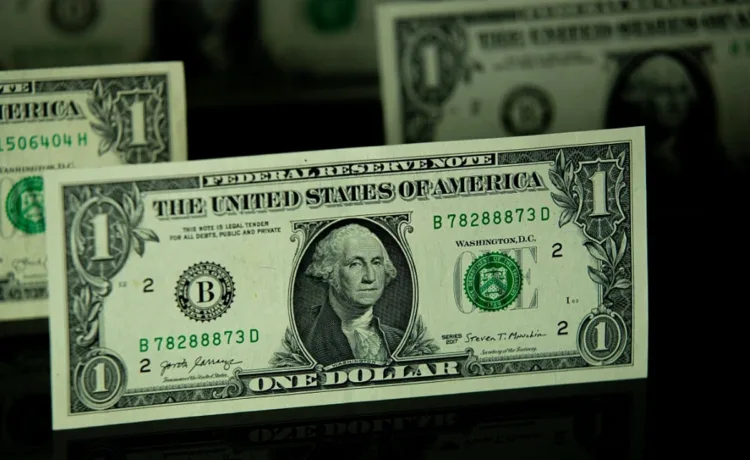
Eichengreen describes how the international usage of the US dollar spread once the US central bank was established in 1913, the US economy grew, and the UK was weakened by the first world war
The Allied powers met at Bretton Woods in the US in 1944 to plan the post-WWII international financial system. They agreed on an indirect gold standard. The gold price would be fixed in US dollars. Other currencies would then be pegged to the dollar, reinforcing its role as the dominant currency.