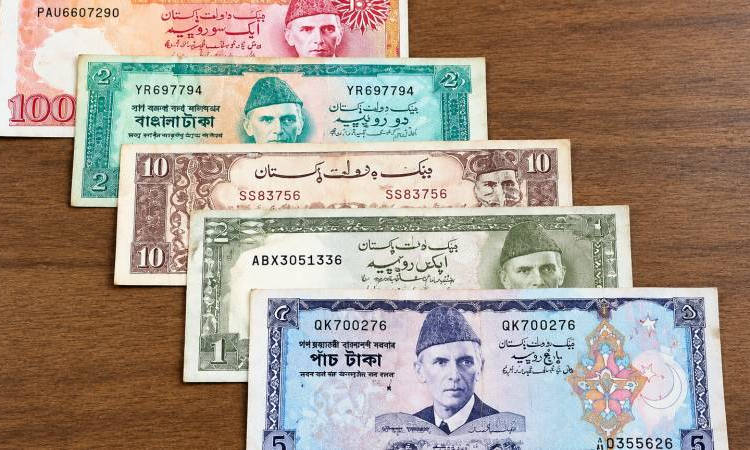
A banknote is created to move. It passes through thousands of hands, buys food, pays wages, settles a debt and eventually disappears from circulation. But sometimes, decades later, the same piece of paper becomes something else entirely: a historical record. For collectors, old currency is not simply obsolete money. It is a physical connection to political change, changing identities, economic history and everyday life.
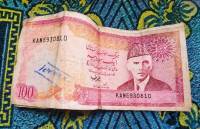
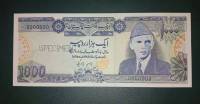
Some examples make that connection immediately visible. Among the historical pieces, I have encountered through Asian Art Gallery in Lahore are older Pakistani banknotes carrying Bengali script, worn currency notes bearing the portrait of Muhammad Ali Jinnah, early coins with elaborate inscriptions, and a specimen-style note with distinctive serial markings. Each tells a different part of the story of the region.
Pakistan’s monetary history began under extraordinary circumstances. When Pakistan came into being in August 1947, it did not immediately have a fully independent currency system. The Reserve Bank of India continued to serve as the common monetary authority for a transitional period, while Indian banknotes were modified for circulation in Pakistan. The State Bank of Pakistan was established in 1948, after which Pakistan gradually developed its own banknotes and coins. The earliest notes are therefore particularly fascinating because they capture a country in the process of becoming.
The State Bank of Pakistan’s own historical collection records how the first generation of Pakistani banknotes was produced in English, Urdu and Bengali. This multilingual character reflected the geographical and demographic reality of Pakistan at the time, when East and West Pakistan were separated by more than a thousand miles of Indian territory. Today, a note carrying Bengali script can be startling to younger Pakistanis. For a collector, however, it is a reminder that currency can preserve a chapter of history long after political circumstances have changed.
The photographs accompanying this article offer a glimpse of that history. One shows an older 50-denomination note containing Bengali writing alongside Urdu and other elements of the design. Another is an older red-toned banknote featuring Muhammad Ali Jinnah. A third photograph shows a small group of historical coins, while the fourth shows a specimen-style Pakistani banknote. Their precise dates, varieties and authenticity are matters that should be established through proper numismatic examination rather than assumed from appearance alone.
A banknote can lead to a discussion about Partition, a Bengali inscription can open a conversation about the history of East and West Pakistan, and a coin can connect modern Pakistan to centuries of monetary traditions. The objects are small; the history inside them is not.
The history of Pakistani currency is full of such transitions. The State Bank’s historical account records that a new series featuring Jinnah’s portrait began with the 100-rupee note in 1957. A 50-rupee denomination followed in 1964, and additional denominations were introduced over subsequent years. The designs changed as Pakistan’s political and economic circumstances changed. Then came 1971.
The political crisis and subsequent separation of East Pakistan had direct consequences for the country’s currency. Bengali text disappeared from later Pakistani issues, while designs associated with East Pakistan were no longer appropriate for the currency of the country that remained. This is where collecting becomes more than an exercise in accumulation.
A collector has to look beyond the face value printed on a note and ask questions: When was it issued? Who signed it? Where was it printed? What languages does it contain? What historical event explains its design? Why was the design later changed?The same is true of coins. Among the pieces encountered through my work are older coins whose inscriptions and shapes look very different from the coins people use today. The evolution of Pakistani coinage reflects another major transformation. Pakistan initially retained the traditional rupee-anna-paisa system after independence, before adopting decimal coinage in 1961, with the rupee divided into 100 paisas.
A small coin can therefore tell a surprisingly large story. Its script, denomination, metal, shape and imagery can reveal something about the period in which it was produced. Some coins carry inscriptions that connect them to earlier traditions of Islamic and South Asian coinage. Others document the establishment of Pakistan’s own monetary identity.
This long history places Pakistan’s currency within a much broader story of the subcontinent. The State Bank Museum’s collection stretches from ancient and Islamic coinage through the Mughal, Sikh, British Indian and Pakistani periods. Its Currency Gallery similarly presents Pakistani banknotes from the country’s early years to the present, demonstrating how money can reflect the culture and history of the society that uses it. That is perhaps why old currency has such an unusual ability to trigger memories.
Someone who sees an old note may remember the price of a bus ticket, a childhood sweet shop or a relative who used to keep money in a particular pocket. Someone too young to remember the note may instead see it as an introduction to a different Pakistan. The collector stands somewhere between these two perspectives.
There is the emotional value of the object, but there is also a responsibility to understand it accurately. An old banknote should not automatically be described as rare or valuable simply because it is old. Condition, authenticity, scarcity, historical significance, serial numbers, signatures and other characteristics can all influence its importance to collectors.
The same principle applies to antiques. An old watch, book, painting, piece of furniture or household object can preserve evidence of how previous generations lived. But collecting should also involve respect for provenance and cultural heritage. The objective should not simply be to remove old objects from their historical context and attach a price to them. Preservation requires knowledge. This is particularly important in Lahore, a city whose history is visible in its architecture, museums, bazaars, libraries and private collections. Many historical objects survive not in formal institutions but in homes and private hands. Their survival sometimes depends on someone recognizing their significance before they are discarded, damaged or forgotten.
The State Bank of Pakistan itself describes its museum as an institution intended to preserve cultural heritage and educate the public, particularly younger generations, about the history of money and Pakistan’s monetary development. Private collectors can contribute to that wider culture of curiosity, provided collecting is approached responsibly. For me, that is the most rewarding part of working with old currency and antiques at Asian Art Gallery. The object is only the beginning of the story.
A banknote can lead to a discussion about Partition. A Bengali inscription can open a conversation about the history of East and West Pakistan. A change in denomination can reveal an economic transition. A coin can connect modern Pakistan to centuries of monetary traditions that existed before the country itself. The objects are small. The history inside them is not. In an increasingly digital world, where money itself is becoming less physical, perhaps there is another reason to preserve these pieces of paper and metal. They allow us to hold history in our hands.
Photographs from Asian Art Gallery
Historical Pakistani currency featuring Bengali script, illustrating the multilingual character of Pakistan’s early banknote issues.
An older Pakistani banknote featuring Muhammad Ali Jinnah, preserved as part of a private collection.
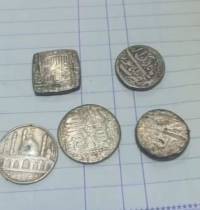
A selection of historical coins, illustrating the varied forms and inscriptions found in South Asian and Pakistani coinage.
A specimen-style Pakistani banknote with distinctive serial markings, illustrating the design and presentation of historical currency.
Editorial source notes
· State Bank of Pakistan Museum, Pakistani Banknotes: historical development of Pakistan’s banknotes.
· State Bank of Pakistan, RuPay Ko Pehchano: historical information on Pakistan’s currency and coinage.
· State Bank of Pakistan Museum, The Collections: background on the museum’s coin and currency collections.