
Paying you back
The most common reason a fund holds cash is to meet redemptions. If an investor wants to exit, the fund must pay them without being forced to sell stocks. Having a small cash buffer allows it to handle day-to-day outflows smoothly without disrupting the rest of the portfolio.
Waiting to deploy
When a fund receives large inflows, after a new fund offer or a surge in investments in existing funds, its manager does not invest it all at once. Doing so, especially in mid- and small-cap stocks where trading volumes are thinner, can move prices unfavourably. The fund gradually builds positions over days or weeks.
Deliberate reserve
A fund manager may also hold cash tactically—ready to be deployed when a good buying opportunity emerges. If a stock that the manager wants to buy is currently overvalued, the manager waits. This kind of intentional cash holding can be a sign of patience and discipline, not a lack of conviction.
Bearish stance
Sometimes, high cash levels reflect the manager’s view on the market. If a manager believes equity valuations are stretched or a correction is around the corner, they may deliberately reduce stock exposure and hold more cash. It can work well if the market does fall; however, if it rises instead, the fund ends up missing out on gains.
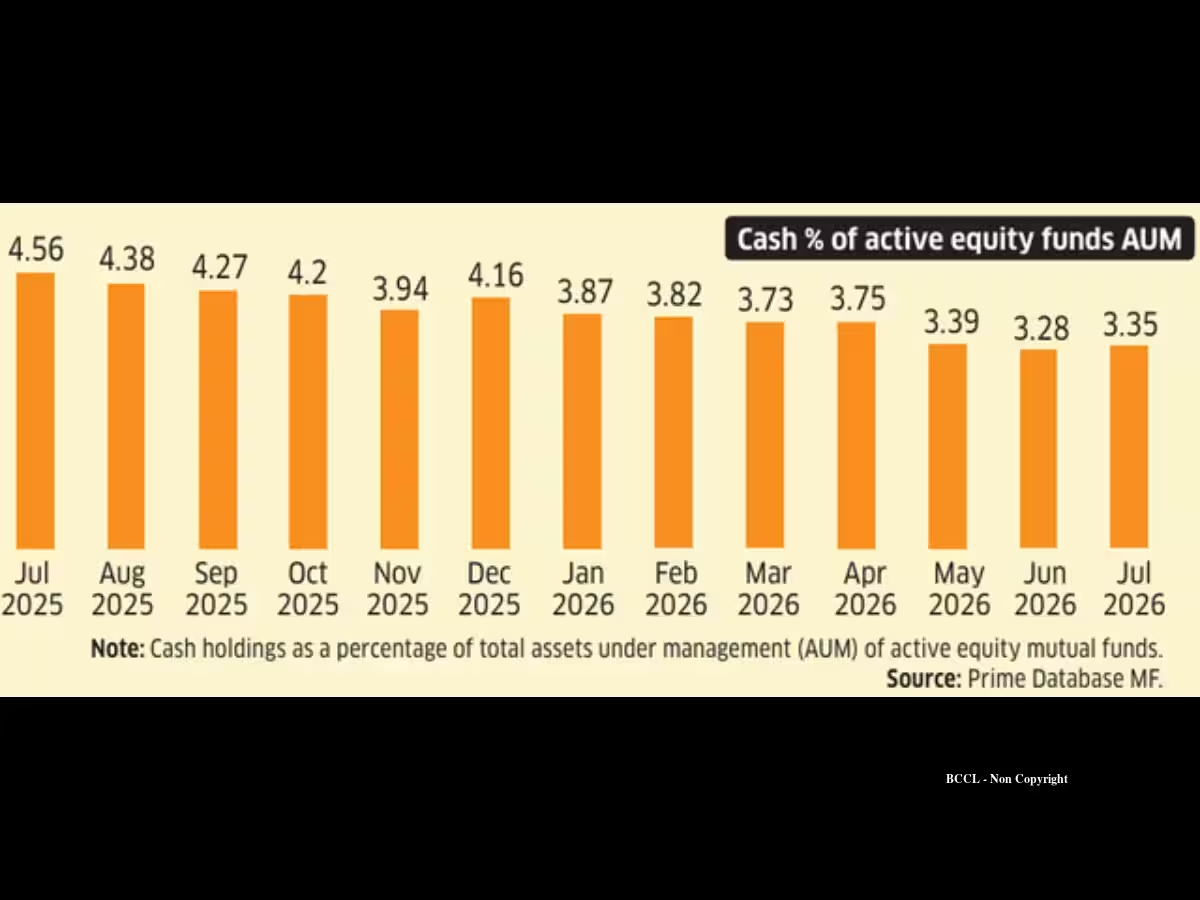
Cash holdings of equity funds
The drag problem
Cash earns very little compared to equities. While the equity portion of a fund could potentially earn 12–15% over time, the cash portion may earn about 5–6%, the rate available on liquid or overnight instruments. When a fund holds 10-15% or more in cash, this difference quietly eats into overall returns, a phenomenon called cash drag. In a strong bull market, a fund sitting on excess cash will consistently lag its benchmark for reasons unrelated to stock selection.
Should you worry?
A cash level of 2–5% is common for many equity funds. A level of 10–15% or higher warrants a closer look. Check why: is it because the manager turned cautious, or because a large inflow is being deployed? If a fund has been sitting on high cash for several months without a market correction to justify it, and has underperformed its benchmark in the process, that is worth flagging. The factsheet cash levels, tracked over time, tell this story clearly.