This article first appeared in Wealth, The Edge Malaysia Weekly on August 24, 2026 – August 30, 2026
Malaysian investors may soon be able to trade Hong Kong exchange-traded funds (ETFs) and real estate investment trusts (REITs) on the local bourse in ringgit, without currency conversion, and in board lots of 100 units. They may also be able to participate in the initial public offerings (IPOs) of companies seeking a dual listing in Hong Kong and Malaysia.
This a result of the memorandum of understanding (MOU) signed between the Securities Commission Malaysia (SC) and the Securities and Futures Commission of Hong Kong (SFC) in late July on the cross-listing of ETFs and REITs between both jurisdictions.
The landmark MOU also facilitates a simplified dual-IPO listing framework between the two jurisdictions, which will take effect in September.
Industry players in both jurisdictions, including representatives of trade associations, fund managers and digital brokers, welcome the move, but say that execution remains crucial.
Its impact on retail investors may be relatively muted as they can already access the Hong Kong market via digital brokers. However, it could alter the playbook of asset managers with ambitions to expand in ETFs, as well as companies and investment bankers seeking capital from Hong Kong and China.
On the cross-listing of ETFs, industry representatives of both jurisdictions say they are looking forward to more collaboration among their members.
Paula Ip, CEO of the Hong Kong Investment Funds Association (HKIFA), expects its members to actively look into opportunities for collaboration with regional partners, including Malaysia, to scale up fund connectivity and broaden investment opportunities across Asia.
In an email interview with Wealth, she says Hong Kong fund managers would want to ride the momentum seen in the city’s ETF market in recent years. As at end-June, there were 250 exchange-traded products (ETPs) listed on the Hong Kong Stock Exchange (HKEX), including 221 ETFs and 29 leveraged and inverse products.
Hong Kong’s ETP market has total assets under management (AUM) of about US$94 billion (RM380.9 billion), having grown at a compound annual growth rate of over 20% in the past five years.
Meanwhile, average daily turnover in Hong Kong ETFs reached a record high of HK$63.5 billion (RM32.8 billion) in June.
“The growth of ETFs is part of a broader global trend, with increasing investor demand for transparent, cost-efficient and accessible investment solutions,” Ip says.
HKIFA sees significant potential in the ETF market and established a task force earlier this year to explore ways to support the growth of Hong Kong’s ETF ecosystem, she adds.
“At this stage, the initiative is a positive early step towards greater regional connectivity … HKIFA welcomes ongoing collaboration and dialogue with Malaysian stakeholders and will continue to engage with members and relevant parties as the initiative develops,” Ip says.
Established in 1986, HKIFA is a non-profit industry body representing Hong Kong’s fund management industry.
On the local front, Kaleon Leong, CEO of the Federation of Investment Managers Malaysia (FIMM), says the initiative has the potential to broaden the range of investment products available in the Malaysian market.
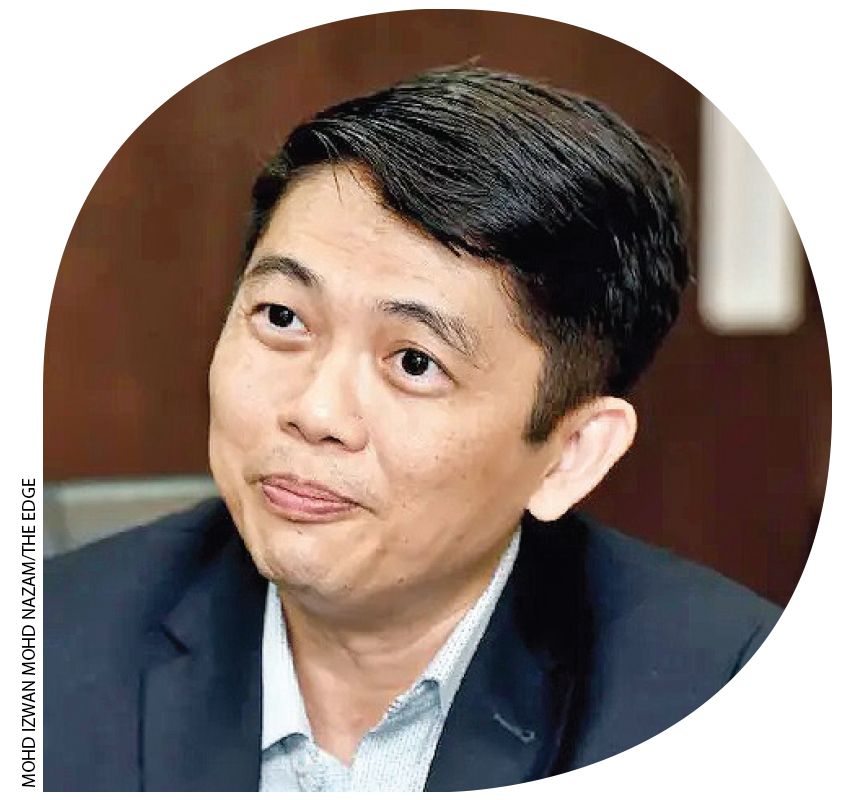
It provides investors with greater choice and enables them to better diversify their portfolios, according to their investment objectives and risk appetite.” – Kaleon Leong, FIMM
“It provides investors with greater choice and enables them to better diversify their portfolios, according to their investment objectives and risk appetite,” he says.
On a broader level, the initiative encourages product innovation and the exchange of expertise. It also supports the aspirations of the Capital Market Masterplan 2026 to 2030 to position Malaysia as a regional investment management centre.
“FIMM members are likely to see the MOU as creating additional product and market-access opportunities rather than simply diverting [trade] flows away from existing channels,” he adds.
Direct access without currency conversion
For retail investors, the impact of the cross-listing of ETFs and REITs under the MOU could be small, as digital brokers Moomoo, M+ Global and Webull already provide a means to trade the Hong Kong market.
The key difference is that Malaysian investors can now trade those products on the local bourse without needing to convert their ringgit into Hong Kong dollars, and during Bursa Malaysia’s operating hours, which they are already familiar with.
“For many retail investors, investing is not only about the expected returns but familiarity and confidence. A ringgit-denominated investment eliminates foreign exchange considerations and allows them to invest within a regulatory and settlement framework that they already understand,” says Lim Chia Wei, managing director at Malacca Securities, which operates M+ Global.
Dennis Jee, acting CEO of Moomoo Malaysia, says the initiative complements rather than competes with or cannibalises what the platform has already built.
He says direct HKEX access remains relevant to investors seeking the full breadth of Hong Kong-listed securities and direct price discovery, while the Bursa-listed products appeal to investors who prefer ringgit trading, Bursa trading hours and familiar domestic market infrastructure.
“Greater accessibility will be made available for less-experienced investors who may not yet be comfortable trading directly in an overseas market,” Jee says.
In its email reply to Wealth, the SC confirms that the standard board lot of 100 units will also apply when ETFs, REITs and stocks are cross- or dual-listed on the local bourse, and that holdings will be reflected in investors’ CDS accounts and statements.
“Trades will be cleared and settled through Bursa Malaysia’s existing market infrastructure. At the same time, the underlying ETF, REIT or shares will remain subject to the regulatory oversight and continuing obligations of its home market, with arrangements in place to ensure Malaysian investors receive timely disclosures and information.”
While not giving specific statistics, Jee says Malaysian investors have been increasingly confident about diversifying into overseas markets, such as Hong Kong.
One of the most popular counters traded by Moomoo Malaysia’s clients is the CSOP SK Hynix Daily Max (2x) Leveraged Product, which aims to deliver twice the daily move of SK Hynix’s Korea-listed shares.
Other popular counters are Xiaomi Corp, Semiconductor Manufacturing International Corp, Alibaba Group Holding Ltd and BYD Co Ltd. The SFC’s website also shows 11 REITs listed on the HKEX, all of which can be traded through digital brokers.
Changing rule book for ETF providers and investment bankers
For Malaysian fund houses directly involved in manufacturing ETFs, the MOU could open doors to business expansion and provide opportunities to reinvigorate the local ETF scene.
Kenanga Investors Bhd (KIB), through its ETF arm Eq8 Capital Sdn Bhd, is a prominent player in the local market. It manages seven locally listed ETFs — more than half of the 13 ETFs listed on Bursa, according to the exchange’s website.
Its CEO and executive director Datuk Ismitz Matthew De Alwis says Malaysian ETFs can potentially evolve from domestically distributed products into regionally accessible ones under the initiative.
However, local players need to take the right approach by offering Hong Kong investors products they do not already have easy access to, such as shariah-compliant products and those that provide meaningful exposure to Asean markets.
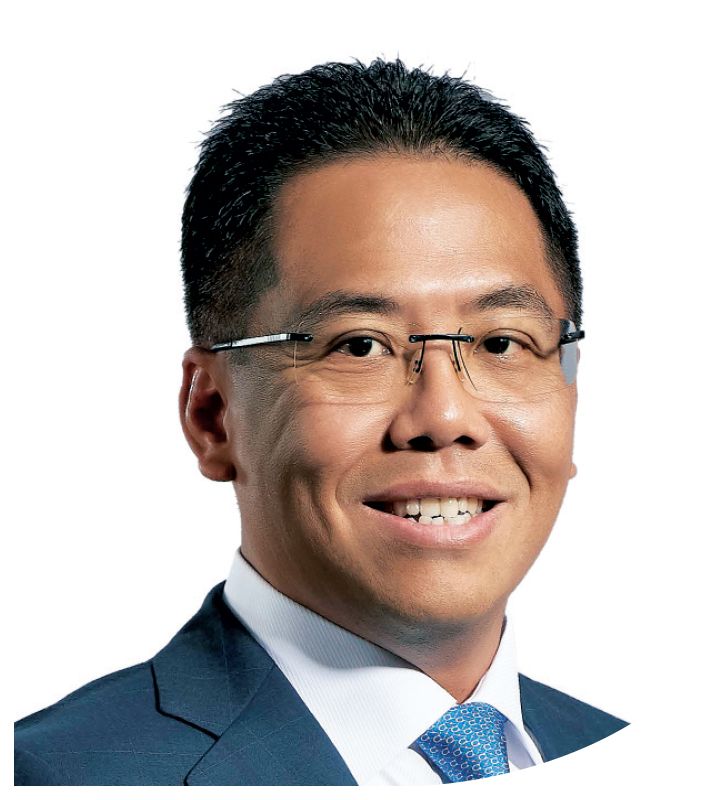
“We believe Malaysia is particularly well positioned to develop strategies that complement Hong Kong’s strong China focus with diversification into Asean, shariah-compliant investments and purpose-driven opportunities.” – De Alwis, Kenanga
“We believe Malaysia is particularly well positioned to develop strategies that complement Hong Kong’s strong China focus with diversification into Asean, shariah-compliant investments and purpose-driven opportunities,” De Alwis says.
He notes that while Malaysian ETFs have generally been designed for the domestic market, the mutual recognition and cross-listing framework allows future products to be developed with regional distribution in mind.
Another opportunity is for fund houses to serve as local representatives, sub-advisers or product development collaborators for Hong Kong asset managers entering Malaysia.
“The biggest opportunity for local fund houses is therefore to view the framework not merely as a channel for bringing more foreign products into Malaysia, but as a two-way platform for regional expansion and collaboration,” he says.
CGS International Securities Malaysia (CGS Malaysia), which counts China Galaxy Securities (CGS) as a shareholder, is another firm that seems well positioned to ride the trend. Central Huijin Investment Ltd, a China state-owned investment company, is the de facto controlling shareholder of CGS.
CGS Malaysia offers a wide range of products and services, such as equities trading, futures and derivatives, wealth management, investment banking and shariah-compliant products.
Alan Inn, CGS Malaysia country head, says the firm’s client trading data shows Hong Kong ETFs are the second most traded ETF category after those of the US, accounting for a large proportion of ETF trading among its institutional and retail clients.
With the new development, he expects more Hong Kong-based fund managers to approach the local bourse with their products, providing Malaysian investors with more options and helping Bursa grow its ETF market.
“We have some plans. And we want to ensure those products are something that makes sense for investors from both Malaysia and Hong Kong,” he says.
“There may also be an angle in using ETFs to be wrapped as wealth management products. We are exploring a few new ideas. The new framework should bring in more players from Hong Kong [into Malaysia].”
Inn expects the firm to fire on all cylinders, including on the opportunities provided by the dual-IPO framework.
As its parent company CGS has offices and deep networks in China and Hong Kong, Inn says the firm can bring suitable Hong Kong companies to Bursa for a primary or secondary listing, including concurrent IPO listings.
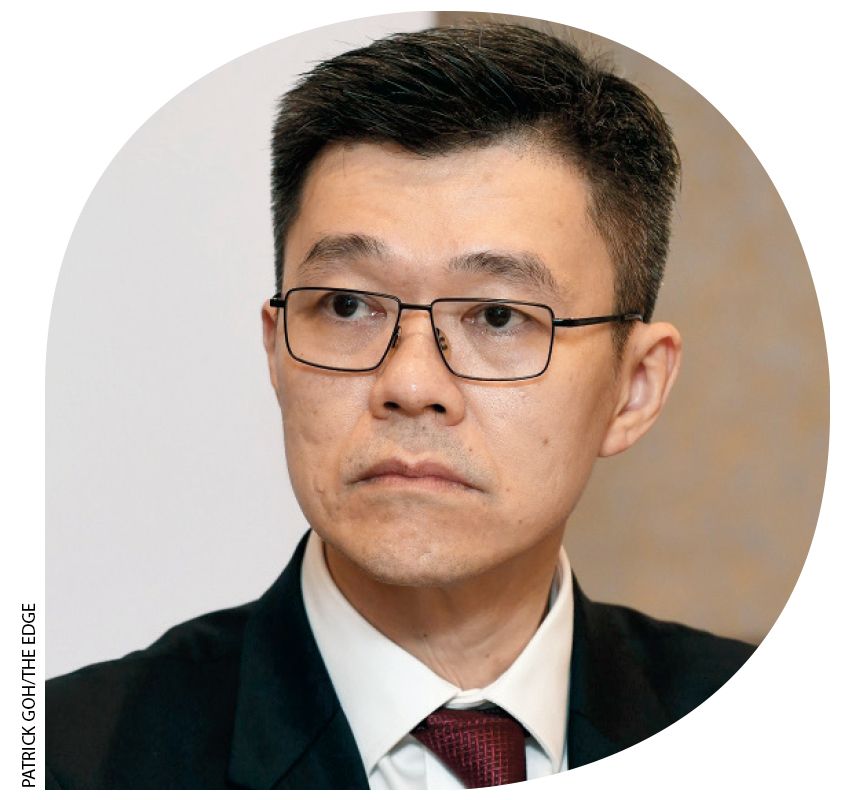
“In our view, the single prospectus for dual listings and the dual-flow provision — Bursa to HKEX and vice versa — are significant.” – Inn, CGS Malaysia
“In our view, the single prospectus for dual listings and the dual-flow provision — Bursa to HKEX and vice versa — are significant,” he says.
During the Think Business, Think Hong Kong symposium held on Aug 11 at the Shangri-La Hotel, HKEX CEO Bonnie Chan said the dual-IPO framework would allow Malaysian companies, especially those in the artificial intelligence sector that requires intensive capital, to tap the massive capital pool of the Hong Kong and China markets.
She pointed out that these companies could continue to grow and expand beyond home soil, and would need to broaden their investor base. This is where HKEX, already the world’s top fundraising platform last year by total IPO proceeds, could come into play.
She added that if Asian countries worked together to create liquidity, it would make the region more vibrant and attract more capital globally.
Ng Zhu Hann, founder and CEO of Tradeview Capital, believes Hong Kong companies, especially the early movers, can also benefit from being publicly listed on Bursa under the dual-IPO framework.
“The initiative makes sense. Although Hong Kong is a bigger capital market, Malaysia gives them another pool of investors that would otherwise not participate in their IPOs. Early movers can also get market attention,” he says.
For instance, UMS Holdings Bhd (KL:UMS), an industrial hardware distributor that supplies mechanical power transmission systems, material handling equipment and spare parts, is dual-listed in Singapore and Malaysia. And it has done well, he notes.
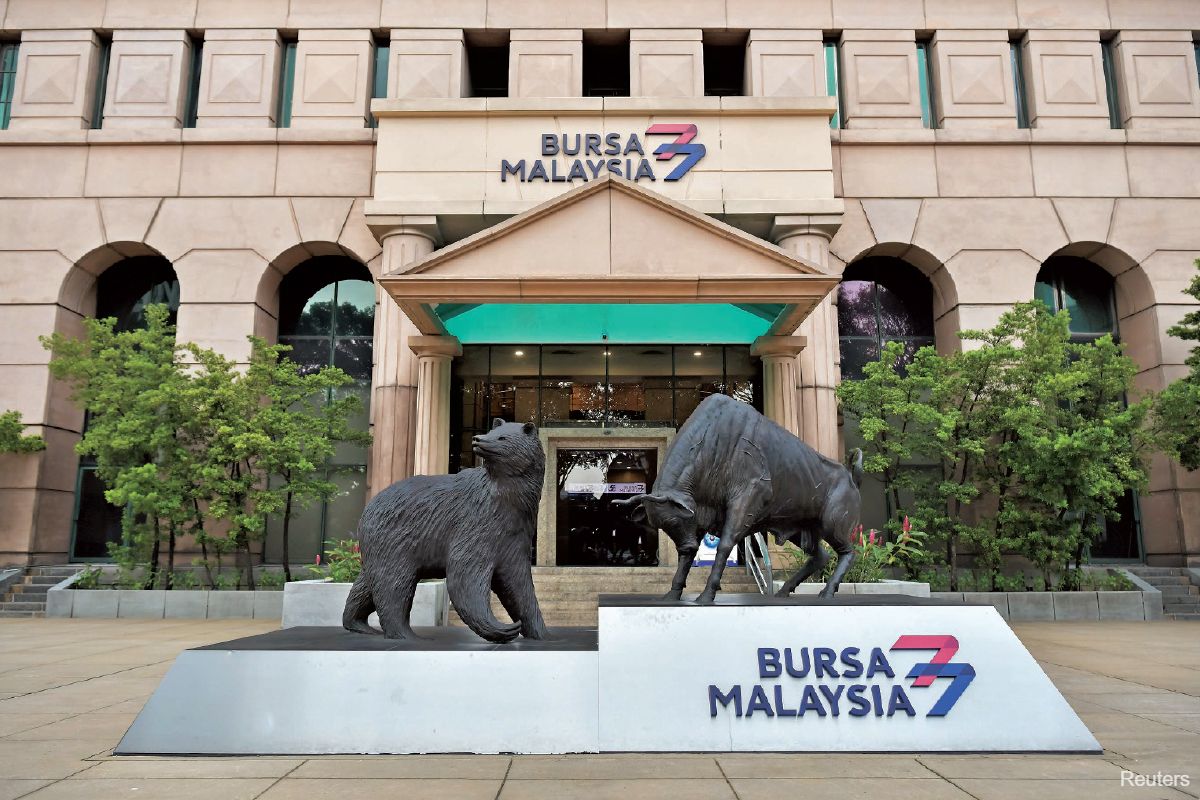
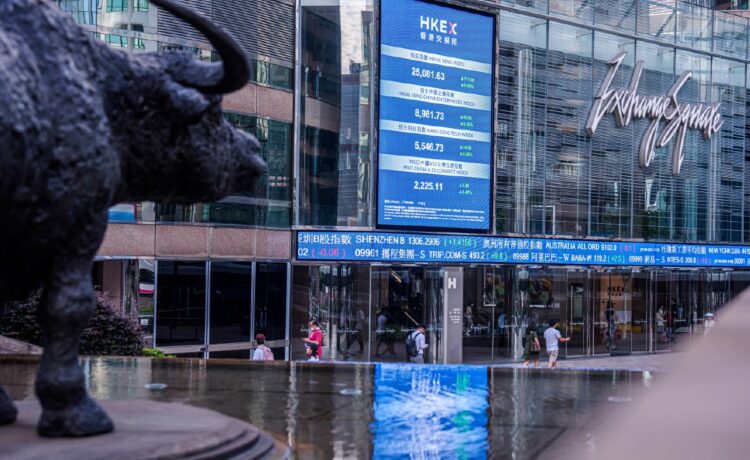
Malaysian investors can now trade the products on the local bourse without needing to convert their ringgit into Hong Kong dollars, and during Bursa Malaysia’s operating hours
Execution is key
Industry players emphasise that execution is vital to the success of the initiatives, especially in delivering value and meeting real market demand.
It is worth noting that Islamic collective investment schemes, or unit trust funds in local terms, have had a channel for distribution in both jurisdictions for almost three decades.
In November 2009, the SC and SFC announced the Declaration on Mutual Co-operation on Development of Islamic Capital Market and Islamic Collective Investment Schemes, which established a framework for the mutual recognition of Islamic collective investment schemes offered to the public in the respective markets, excluding hedge funds, wholesale funds and REITs.
However, no Hong Kong Islamic collective investment scheme has been launched in Malaysia since the inception of the arrangement, according to FIMM.
As at July 25, 2017, there were only two SFC-authorised Malaysian Islamic funds, namely Public Mutual’s Public Ittikal Fund and RHB Asset Management’s Islamic Regional Balanced Fund, according to an article by Fund Selector Asia, a digital media platform for wealth management and investment experts in Asia.
As at Aug 12 this year, the SFC’s official website shows no funds under the “Recognised Malaysian Funds” category.
An industry player cautions that the cross-listing of ETFs, if not well planned, could result in a longer list of products that are hardly traded by investors. The quality of companies that take the dual-IPO listing path, if any, is key to increasing the vibrancy of the local bourse.
Compared with Hong Kong’s ETP market of 250 products with an AUM of RM384 billion, Malaysia has only 13 ETFs listed on the local bourse, according to Bursa’s website.
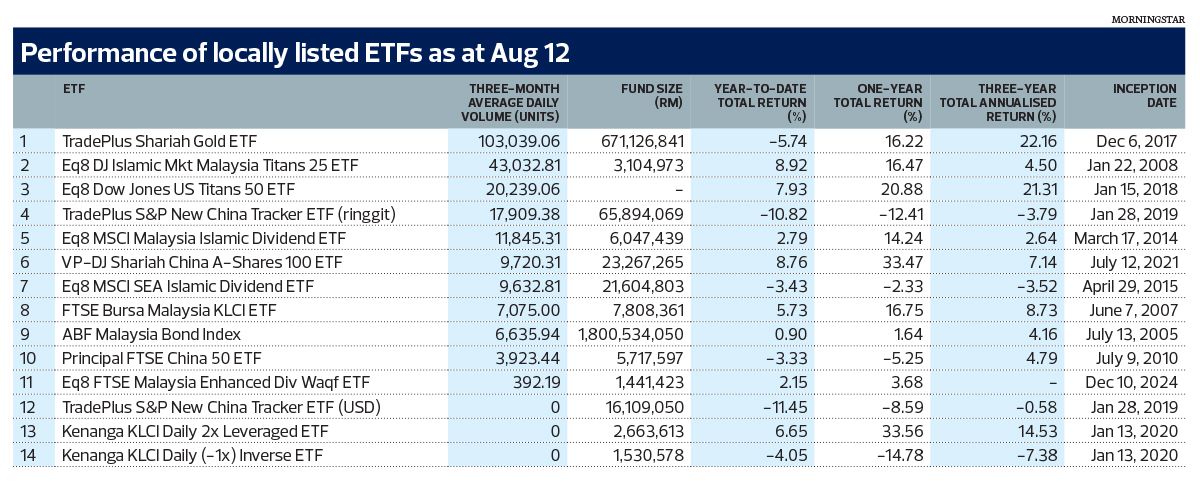
Data from global financial services and investment research firm Morningstar shows the combined AUM of the 13 ETFs was RM2.63 billion as at Aug 12, equivalent to just 0.68% of Hong Kong’s ETP market.
Among the 13 ETFs, the most actively traded was the TradePlus Shariah Gold ETF, which saw an average daily trading volume of 103,039 units in the past three months. For a simple comparison, Malayan Banking Bhd, one of the most actively traded counters on Bursa, has an average daily trading volume of over 12 million shares.
Meanwhile, despite riding on specific themes and strategies, the TradePlus S&P New China Tracker ETF, Kenanga KLCI Daily 2X Leveraged ETF and Kenanga KLCI Daily (-1X) Inverse ETF have not been traded in the past three months, according to Morningstar.
ABF Malaysia Bond Index Fund, an ETF under AmInvest that tracks the performance of ringgit-denominated government and quasi-government bonds issued in Malaysia, has the largest AUM at RM1.8 billion, or more than 68% of the entire ETF industry’s size. Its three-month average daily volume was 6,636 units.
De Alwis says the local ETF market has remained relatively small due to structural challenges, including limited retail awareness and institutional participation, a narrow product range and limited fund scale, as well as distribution and liquidity constraints.
An industry player, who does not want to be named, says it is crucial to ensure the value proposition and quality of the ETFs and companies being listed. For instance, he says despite the listing of over 150 companies in the last 2½ years, average daily volume (ADV) on the local bourse has not grown.
“Our ADV is down 19.2% year on year (y-o-y) and IPO market capitalisation has fallen 12.7% y-o-y from 2024, based on Bursa’s latest filing. We may end up with the same story for Bursa-listed ETFs if we do not focus on the quality of our listings.”
Save by subscribing to us for
your print and/or
digital copy.
P/S: The Edge is also available on
Apple’s App Store and
Android’s Google Play.