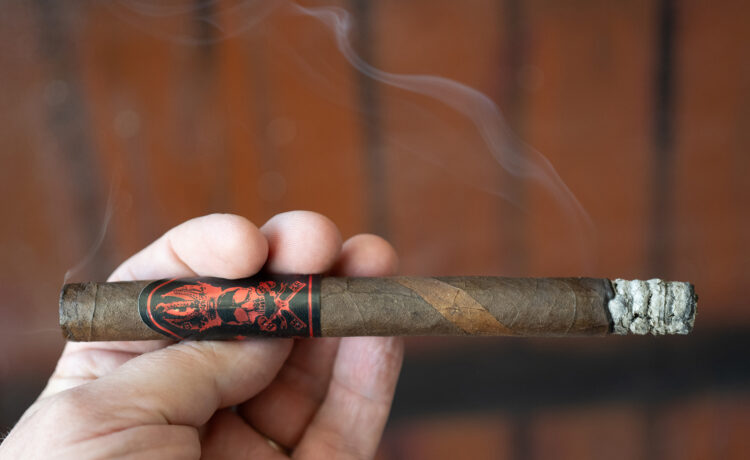
This year marks the 10th anniversary of Black Label Trading Co.’s Bishops Blend, and, as has become the custom, a special release has been created to commemorate the occasion. The Bishops Blend 2026 was shown off earlier this year during the 2026 PCA Convention & Trade Show and started shipping to retailers in July.
Blend-wise, the Bishops Blend 2026 is made with an Ecuadorian maduro wrapper—the same wrapper that is typically used for the Bishops Blend releases—combined with a Connecticut broadleaf wrapper, creating a unique look known as a barber pole because the two wrappers have an intertwined appearance that looks like a barber’s pole. Underneath is an Ecuadorian habano binder and Connecticut broadleaf, Nicaragua and Pennsylvania broadleaf fillers. The cigars are produced at Fábrica Oveja Negra in Nicaragua.
The Bishops Blend 2026 launched with three vitolas:
- Black Label Trading Co. Bishops Blend 2026 Robusto (5 x 48) — $13 (Box of 20, $260)
- Black Label Trading Co. Bishops Blend 2026 Corona Largo (6 1/4 x 46) — $13.50 (Box of 20, $270)
- Black Label Trading Co. Bishops Blend 2026 Lancero (7 x 42) — $14 (Box of 12, $168)
While 800 boxes of the Robusto and Corona Largo vitolas were released, only 650 boxes of the lancero were shipped to retailers.
“It’s been ten years since we introduced Bishops Blend, and it has grown into one of our most sought-after releases,” said James Brown, creator of Black Label Trading Co. and partner at Fábrica Oveja Negra, in a press release. “To celebrate this milestone, this year’s edition features a double-wrapper presentation, pairing the original Ecuadorian Maduro with Connecticut Broadleaf. The addition of Broadleaf in both the filler and wrapper further enhances the cigar’s rich, elegant, and complex character, taking it to an entirely new level. Smokers can expect the same bold profile that has defined Bishops Blend, highlighted by notes of anise, pepper, raisins, and a lingering sweet earthiness on the finish.”
- Cigar Reviewed: Black Label Trading Co. Bishops Blend 2026 Lancero
- Country of Origin: Nicaragua
- Factory: Fábrica Oveja Negra
- Wrapper: Ecuador (Maduro) & U.S.A. (Connecticut Broadleaf)
- Binder: Ecuador
- Filler: Nicaragua & U.S.A. (Connecticut Broadleaf, Pennsylvania Broadleaf)
- Length: 7 Inches
- Ring Gauge: 42
- Shape: Round
- MSRP: $14 (Box of 12, $168)
- Release Date: July 2026
- Number of Cigars Released: 650 Boxes of 12 Cigars (7,800 Total Cigars)
- Number of Cigars Smoked For Review: 3
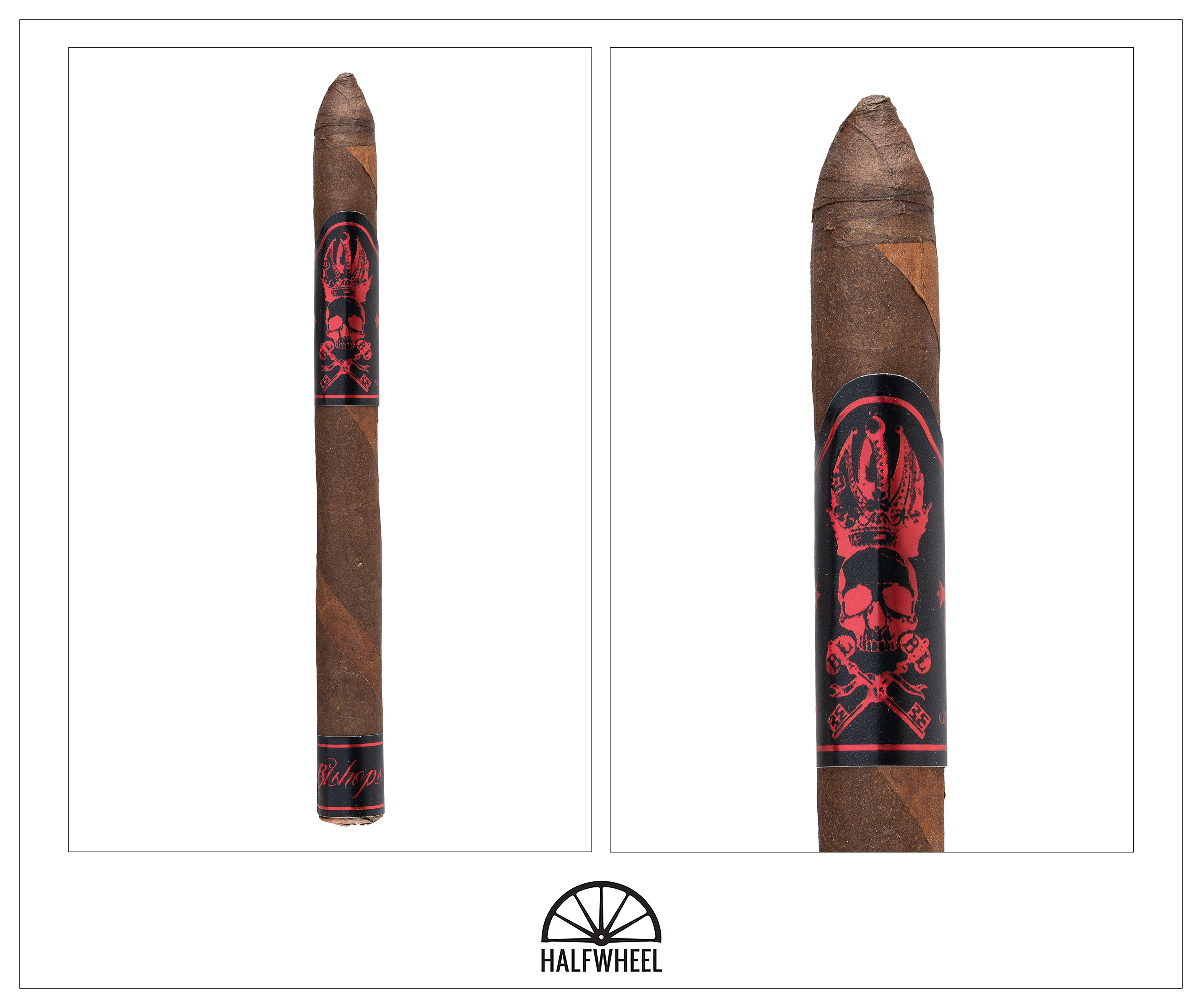
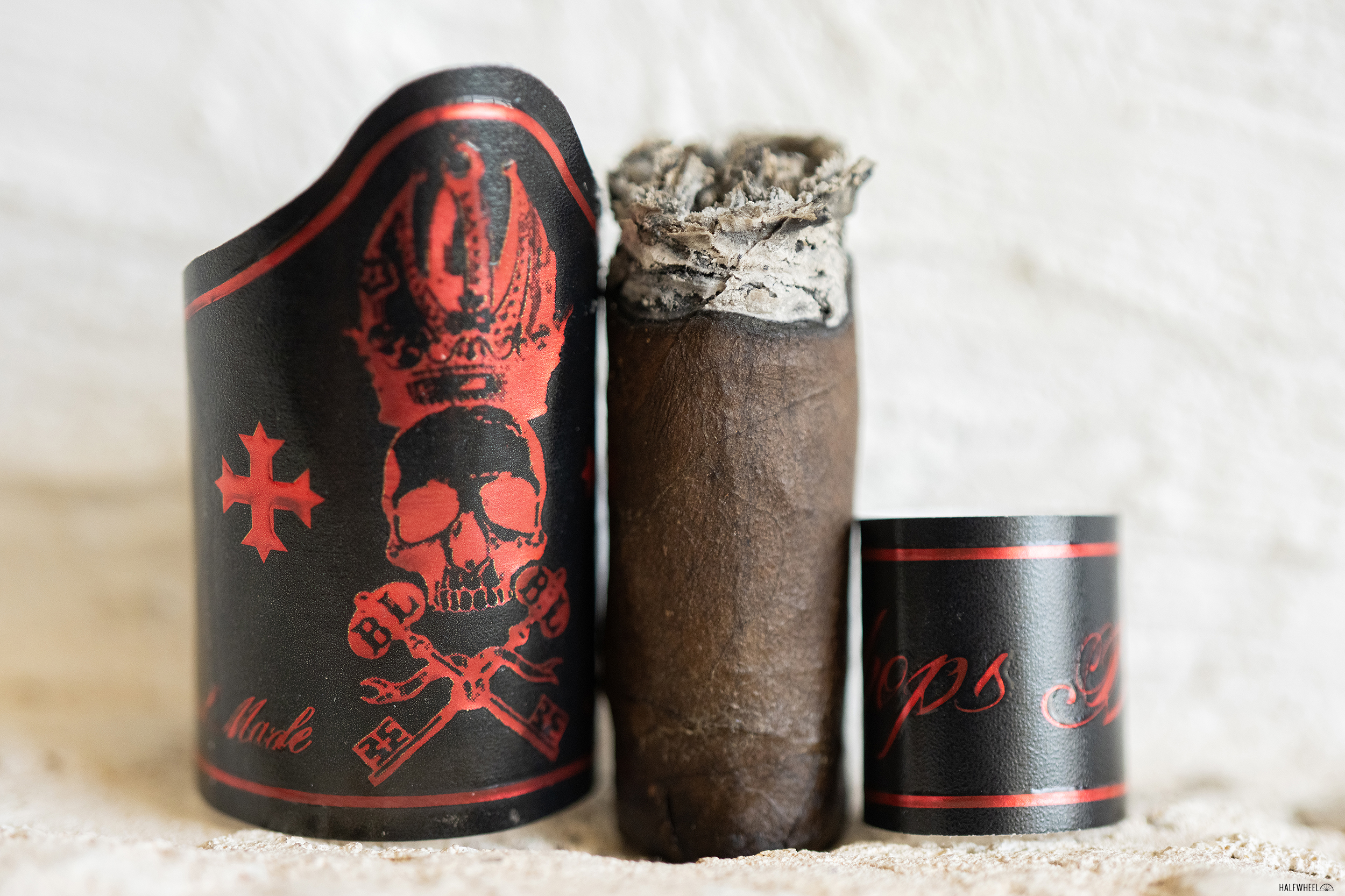
Visually, the Black Label Trading Co. Bishops Blend 2026 Lanceros is unique. The combination of closed foot, nipple cap and barber pole wrapper design is hard to miss, let alone on a lancero. Unlike some of the company’s releases, the alternating wrapper colors on these cigars are fairly easy to distinguish, and there are plenty of small bumps and protruding veins up and down each cigar. The first and second cigars each have a large soft spot in between the stripes of lighter tobacco in the middle of the cigars, and all three cigars are spongy when squeezed. An extremely sweet barnyard note leads the aromas coming from the wrappers, along with dry earth, barnyard, plastic, creamy leather, breadiness and light pepper. Because of the closed foot, there is not much difference compared to the wrapper, although I do detect a bit more pepper, slightly more distinct earth and some slight cinnamon. After straight cuts, all three cigars feature a notable blackberry sweetness—although there is plainly more of it on the first cigar—along with tea leaves, cedar, terroir, coffee grounds and baker’s spices.
Starting out, the three Black Label Trading Co. Bishops Blend 2026 Lanceros are very similar, with bitter espresso notes and a healthy amount of spice on my tongue. Flavors of anise and creamy oak quickly take over the top spots, followed by less aggressive flavors of dank earth, pencil lead, rich coffee beans, leather and a touch of citrus. The amount of spice on my tongue has increases for the first and third cigars—the second cigar has less, but it is still very much present—and all three cigars feature a brewed coffee note on the finish. On the first cigar, the blackberry sweetness from the cold draw carries over to the retrohale and combines with some aggressive black pepper, while the second and third cigars feature a combination of honey and black pepper. Flavor ends the first third at full, while both the body and strength hit a solid medium. There are zero issues with construction so far, as the burn lines, draw resistance, and smoke production all work in harmony.
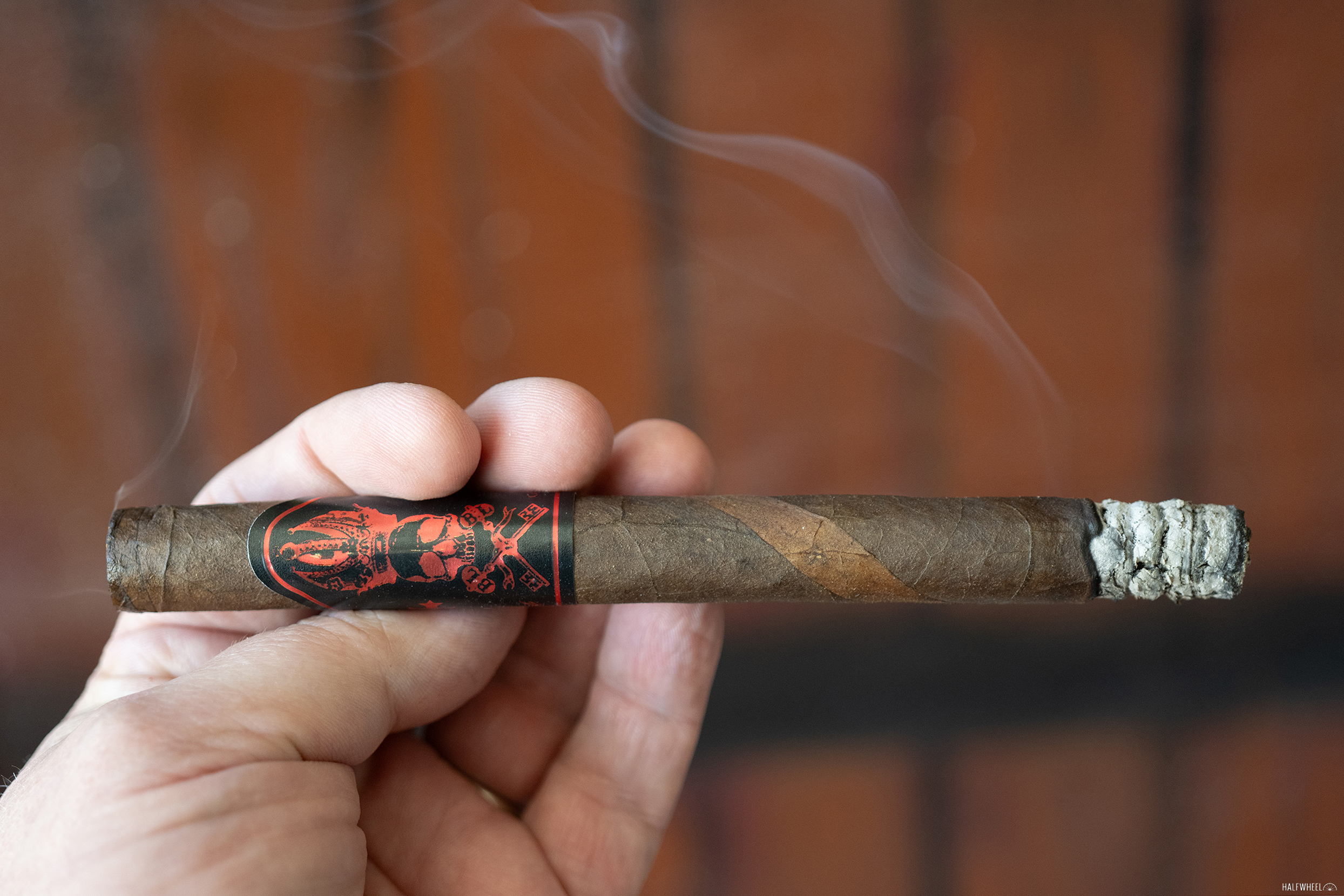
During the second third, the combination of oak and anise remains the dominant flavor in the profiles of the first two cigars, while the last cigar has shifted toward charred meatiness and sourdough bread. At various points, secondary flavors of cocoa nibs, gritty earth, cinnamon, chalk and sawdust flit in and out. While the brewed coffee note is still on the finish of the first and third cigars, the second cigar now features a mild floral note that reminds me of perfume. However, there are virtually no changes to the retrohales, meaning the first cigar continues to feature a strong blackberry sweetness and black pepper combination, while the second and third cigars feature the same honey and black pepper, albeit slightly less of the latter. Flavor remains at full, and the body remains at a solid medium, while the strength increases enough to hit medium-plus. The burn lines on all three cigars need attention from my lighter at least once—the first cigar needs two corrections—but the draw resistance and smoke production remain problem-free.
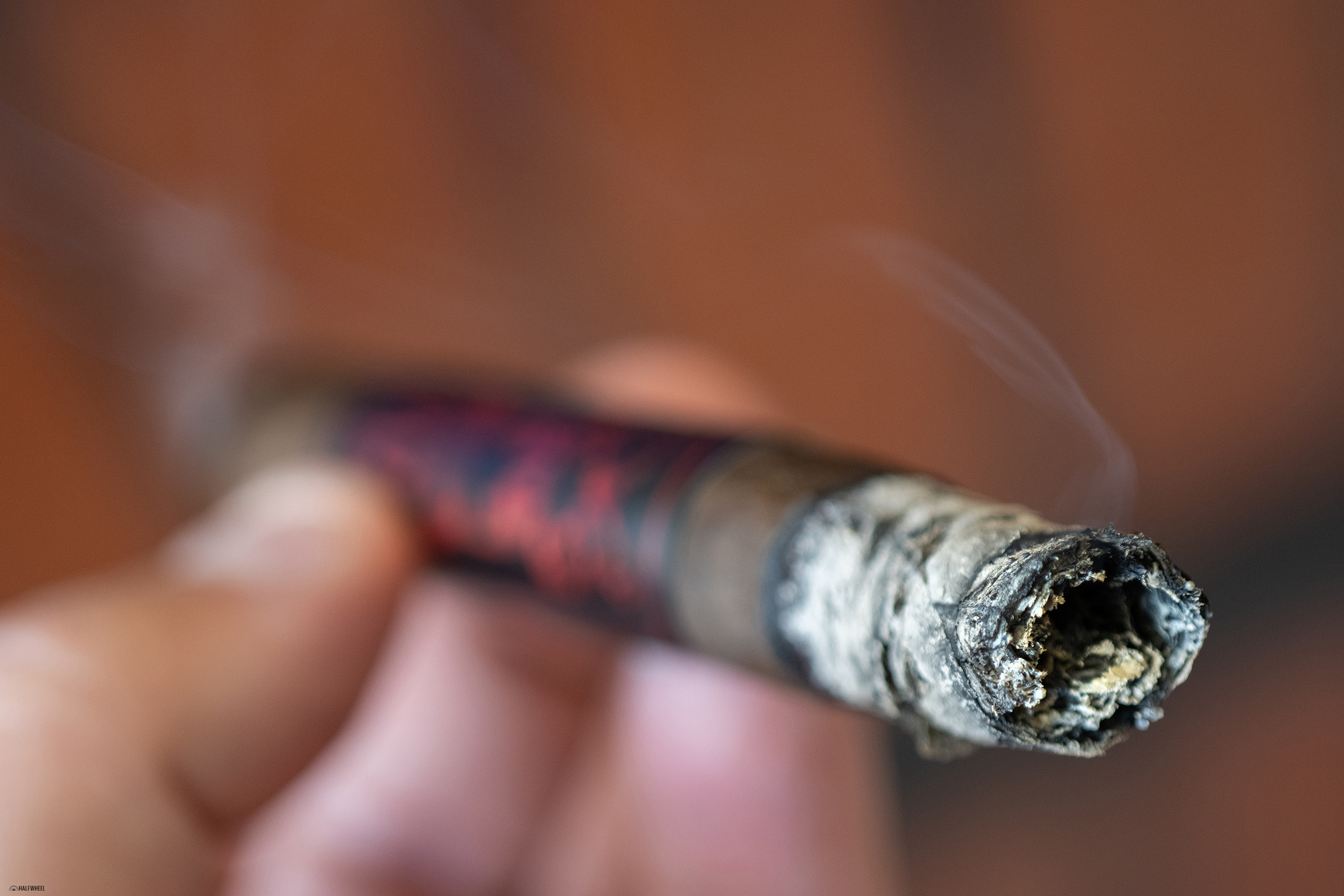
In almost all respects, the final third is a carbon copy of the second third: anise and creamy oak remain the top flavors in the profiles of the first and second cigars, and sourdough bread and charred meatiness continue to dominate the third cigar. There are also few changes on the retrohales, meaning blackberry sweetness and black pepper for the first cigar and a combination of honey and black pepper in the last two cigars. The perfumey floral note is still very noticeable on the finish of the second cigar, while the first and third cigars now feature more of a generic earth. Flavor ends the cigars at full, the body increases to a point just over medium and the strength bumps up to medium-full. Construction-wise, the only issues are minor burn corrections on the second and third cigars.
Final Notes
- Barber pole cigars are not exactly commonplace these days, and lancero barber pole cigars are even less common.
- I love the overall visual look of the combination of nipple cap, closed foot and barber pole wrapper.
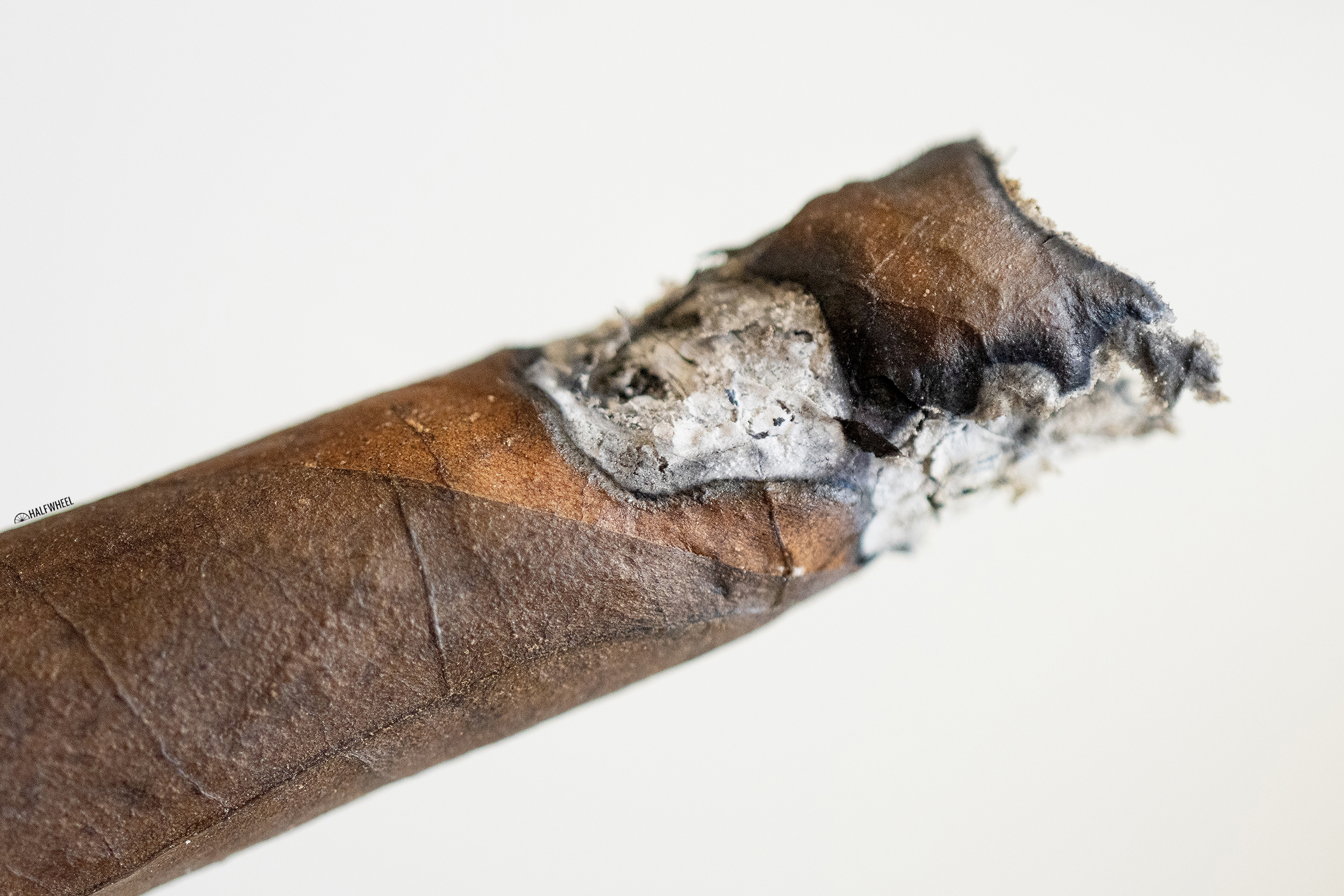
- While all three cigars had issues with their burn lines at multiple points, the second cigar, pictured above, was the worst.
- I have smoked numerous barber pole cigars from Black Label Trading Co. over the years have had burn issues similar to the above. To me, the problem seems to be that the strips of tobacco that the two wrappers do not burn at the same rate.
- The cigars for this review were purchased by halfwheel.

- These cigars are listed as being 7 x 42 vitolas. Above are the measurements we took when we measured them.
- The final smoking time averaged out to one hour and 43 minutes for all three cigars.
- If you would like to purchase any of the Bishops Blend 2026 Lancero cigars, site sponsors Atlantic Cigar Co. and Cigars Direct sell them on their respective websites.
88
Overall Score
Over the years, Black Label Trading Co. has released some bangers, and I am always thrilled when I see a new release from the company show up on my review list. The Bishops Blend 2026 is a great example of why that is the case: the cigar is bold but still approachable, strong but not overwhelming, complex but still grounded. In fact, each of the three cigars featured a unique aspect that set it apart from the others: a distinct blackberry sweetness on the retrohale of the first cigar, a floral note on the finish of the second, and a charred meatiness as one of the main flavors of the third. The largest problem I had with these cigars was the number of burn corrections that were needed, and while that quickly became annoying, it turned out to be a small price to pay for a blend this good.

Brooks Whittington
I have worn many hats in my life up to this point: I started out as a photojournalist for the Dallas Morning News and the Fort Worth Star-Telegram, then transitioned to photographing weddings—both internationally and in the U.S.—for more than a decade. After realizing that there was a need for a cigar website containing better photographs and more in-depth information about each release, I founded my first cigar blog, SmokingStogie, in 2008. SmokingStogie quickly became one of the more influential cigar blogs on the internet, known for reviewing preproduction, prerelease, rare, extremely hard-to-find and expensive cigars, and it was one of the predecessors to halfwheel, which I co-founded.