A Fort Bragg soldier is accused of using insider information to help him win a bet and net hundreds of thousands of dollars.
Gannon Ken Van Dyke made more than $400,000 on the prediction market site Polymarket. Van Dyke is a master sergeant, assigned to U.S. Army Special Operations command at Fort Bragg, who was part of the operation to capture Venezuelan President Nicolás Maduro in January.
Van Dyke’s story is a defining case of high-profile insider trading scandals scarring one of the newest hobbies for many Americans — prediction markets.
Because of his position and access to classified information, the U.S. Justice Department charged Van Dyke with unlawful use of confidential government information for personal gain.
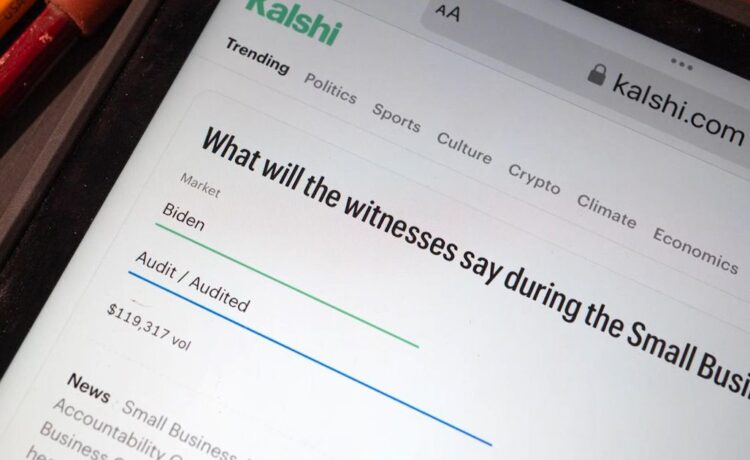
The emergence of sites like Polymarket and Kalshi have interested players betting on almost anything, creating the risk that individuals will trade on inside information to profit. Congress is currently weighing how to regulate this surging industry.
Prediction markets allow bettors to wager money on prospective events, which creates real-time odds on future events and shapes expectations for various outcomes. Most bets are placed on a ‘yes’ or ‘no’ basis, while some list out the most likely outcomes during widely-publicized political elections or NFL coaching searches.
RELATED: ‘Bet on the most wild things’: After sports gambling, prediction markets open door for all wagers
No rules prevent insider information used in prediction markets
But with the vast amount of bets being placed across dozens of interests, industries and happenings, how can the platforms ensure that no insider trading is going on? As of now, there aren’t really formal insider trading rules for prediction markets since they’re still a relatively new phenomenon.
“It just seems impossible because of the range of possible contracts that are out there,” said NC State finance professor Richard Warr.
Warr spoke with WRAL about the issues that surround the prediction markets and the government’s evolving ideas on what constitutes insider trading and unfair advantages. The prediction markets are regulated at the federal level by the Commodity Futures Trading Commission, as they function like financial contracts based on what occurs in the future. A breach of the contract is where legal action can enter the picture.
The markets are regulated differently from sportsbooks, which are usually overseen by state gaming commissions. Sportsbooks will set odds, take bets and make money off margins.
It’s a similar experience for users, but one difference is that insider trading for prediction markets falls into a legal gray area. One of the more notorious sports betting scandals in recent memory involved a sort of insider trading when NBA player Jontay Porter was found to have disclosed confidential health information to bettors and manipulated his own play during games to control the outcomes of prop bets.
RELATED: NC has collected $250M from sports betting. Where did it go?
Van Dyke’s ordeal isn’t the only publicly recognized case of insider action for military actions. A Fortune article notes that six Polymarket accounts placed bets that military action would begin hours before U.S. missiles struck Tehran on Feb. 28.
“One thing that is interesting is that the prediction markets themselves are becoming increasingly aware of the potential problem of insider trading, and that this could really hurt their ability to make money they need,” Warr said. “So there is some kind of self-regulation going on.”
“I will note that the one of the founders of the prediction markets actually is on the record of saying insider trading is a good thing in some cases, because it actually reveals information,” Warr said.
Warr gave a warning for anyone entering the prediction space with the idea of making big bucks.
“It’s a new product,” he said. “It looks interesting.
It looks kind of like it might be fun, but I’d be very cautious about kind
of wading into it with any large amount of money, because you
could lose a lot of money playing in this space.”
President Donald Trump, who is plenty familiar with casinos and betting, is on record as saying he’s not in favor of the expansion of prediction markets, adding that “the whole world, unfortunately, has become somewhat of a casino” on Thursday
Polymarket founder and CEO Shayne Coplan made a post on X saying in part he was “grateful” to the DOJ for publicly acknowledging the company’s cooperation on the Van Dyke case.
“Noise aside, the reality is we work proactively with all relevant authorities on any suspicious activity on our marketplace,” Coplan said. “We flagged this, referred it, and cooperated throughout the process.”