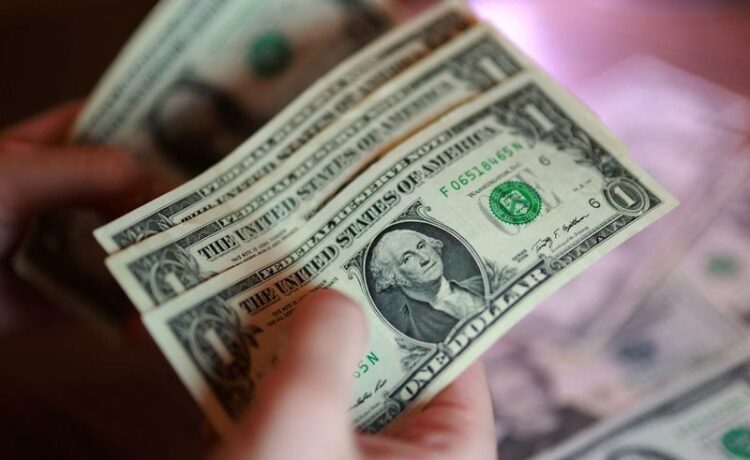
NEW YORK, April 27 (Reuters) – The U.S. dollar fell against major currencies on Monday as investors weighed a diplomatic impasse in U.S.-Iran negotiations and braced for a week packed with central bank decisions, including what is expected to be Federal Reserve Chair Jerome Powell’s final meeting at the helm.
Pakistan’s government, which has been mediating between Washington and Tehran since brokering a ceasefire earlier this month, stepped up efforts to revive talks after face-to-face negotiations collapsed last week. Iran made a fresh proposal on Monday to defer discussion of its nuclear programme until the broader conflict and Strait of Hormuz shipping disputes are resolved — a gambit unlikely to satisfy President Donald Trump, who has made nuclear disarmament the centrepiece of his demands.
“The war is really the only real story,” said Marc Chandler, chief market strategist at Bannockburn Global Forex.
“Five of the G10 central banks meet this week and none of them are expected to do anything. I think we went into the weekend optimistic because there were going to be talks between the U.S. and Iran. Those talks didn’t materialize. It looked like we were going to have risk off today. But then very early today, the Iranians made a new proposal and this gave the market a new sense of hope. So the dollar is under a little bit of pressure.”
The dollar index, which measures the greenback against six major peers, was down 0.37% at 98.27. It has gained for two consecutive months but is on track to decline in April. The dollar benefited in March from safe-haven flows as hostilities erupted, but shed most of those gains on hopes of a peace deal.
The U.S. dollar was flat at 0.78465 against the Swiss franc.
Brent crude futures rose 2.6% to $108 a barrel, with traders focused on the Strait of Hormuz, through which roughly a fifth of global oil and gas shipments normally pass.
POWELL ERA NEARS END AT FED
Federal Reserve policymakers gather in Washington this week for what may be Powell’s final meeting as Fed chair, with a rate decision due Wednesday. The central bank is widely expected to hold rates steady.
The path is now clearing for Powell’s successor. Senator Thom Tillis said on Sunday he is prepared to end his blockade of Fed chair nominee Kevin Warsh after the Justice Department dropped its criminal investigation of Powell.
With Tillis’ support, the Senate Banking Committee’s Republicans now have the majority they need to outvote unified Democratic opposition and advance Warsh’s nomination to the full Senate, where Republicans are expected to confirm him.
Warsh has signalled he would move quickly to implement changes at the Fed. Markets have begun pricing in a more aggressive cutting cycle under his potential leadership.
“The market went from pricing in four or five basis points of cuts this year and basically doubled it. We saw a big reaction in the U.S. 2-year yield before the weekend. I think the market is exaggerating the interest rate impact of Warsh,” Chandler said.
EURO TRADES HIGHER
The U.S. is less exposed to surging oil prices than the euro area or Japan, both of which are heavily dependent on energy imports. The euro traded higher on the day ahead of the European Central Bank’s policy meeting later this week, where rates are also expected to hold.
The euro was up 0.11% at $1.1733.
The Bank of Japan is expected to keep rates steady on Tuesday but signal readiness to hike as early as June. The Japanese yen rose 0.11% to 159.2 per dollar, hovering just below the 160 level that traders say could prompt Tokyo to intervene in currency markets.
The Bank of England and the Bank of Canada are also expected to stand pat this week, though analysts will be watching their commentary on the economic outlook closely given the ongoing conflict’s impact on energy and trade.
Sterling gained 0.16% to $1.3553, while the Canadian dollar strengthened 0.49% to C$1.362 per dollar.
(Reporting by Chibuike Oguh in New York; Editing by Hugh Lawson)
By Chibuike Oguh