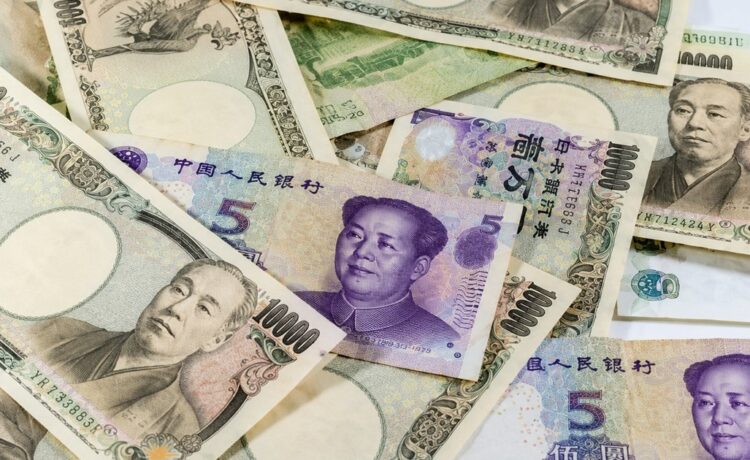
The yen weakened as much as 0.5% to 160.20 per dollar on Aug. 28, its lowest level in about a month, as Federal Reserve Chairman Kevin Warsh reiterated the central bank’s pledge to achieve 2% inflation.
The transfer was a re-test for Japanese authorities as the yen rallied significantly on July 31 on the back of coordinated intervention from Japan and the United States. Japan’s Finance Ministry stated it was aimed at putting an end to excess volatility and disorder in the currency, adding that it would not hesitate to intervene jointly in the future if such disorder persisted.
The intervention initially pushed the yen higher, but the currency has since surrendered much of that gain. The renewed weakness highlights the difficulty of changing the yen’s underlying direction through intervention alone when interest-rate and other economic pressures continue to favor the dollar.
Yen Gains Fade As Rate Gaps Persist
The Bank of Japan raised its policy rate to 1% in June and left it unchanged at its July meeting, while the Federal Reserve has maintained its federal funds target range at 3.5%-3.75%. That leaves a substantial interest-rate differential in favor of dollar assets.
The rate gap is important because it can support the yen carry trade, in which investors borrow in a lower-yielding currency and invest in assets offering higher returns. As long as the differential remains wide, investors have an incentive to maintain exposure to higher-yielding dollar assets.
Japan is heavily dependent on imported energy, meaning a weaker yen can increase the domestic cost of oil and other commodities when global prices are already elevated.
Yen Weakness Revives Intervention Concerns Again
Japan’s Finance Ministry has already made clear that it remains prepared to act. In its Aug. 3 statement on the July intervention, the ministry said it remained in close communication with the U.S. Treasury and “will not hesitate to conduct further joint intervention.”
Finance Minister Satsuki Katayama has also kept pressure on currency markets. At a recent G7 meeting, Katayama said Japan was “prepared to take decisive action on speculative moves” in foreign exchange markets.
Masahiko Loo, senior fixed income strategist at State Street Investment Management, said, “The key signal from last night’s move is that MOF remains uncomfortable with excessive yen weakness. The line in the sand is probably better viewed as a zone around 162-165 rather than a specific level.”
Markets Raise Bets On September BOJ
The central bank raised its policy rate to 1% in June and kept it at that level in July, with one board member voting for an increase to 1.25%.
On Aug. 27, market-based estimates cited by Investing.com put the probability of a 25-basis-point BOJ hike in September at about 87%, compared with roughly 23% before the July meeting.
Deputy Governor Ryozo Himino delivered a speech on Japan’s economy and monetary policy on Aug. 27, ahead of the September meeting. The BOJ’s official schedule confirms that the Sept. 17-18 meeting is the next monetary policy decision.
Sources familiar with the BOJ’s thinking told Reuters the central bank is set to raise rates as soon as September and is likely to hike more aggressively thereafter. One source stated, “An early rate hike has come into sight.”
Former BOJ board member Seiji Adachi, who served until March 2025, said in an interview that holding rates steady could reignite a yen sell-off, raising the risk of faster inflation from costly imports.
A higher BOJ policy rate could narrow the interest-rate gap with the United States and reduce some of the incentive to hold yen-funded positions. However, the effect on the exchange rate would depend on the size and timing of the move, as well as expectations for future U.S. monetary policy.
Weak Yen Raises Costs For Japanese Households
Exporters can benefit because overseas revenue translates into more yen, potentially supporting corporate earnings. At the same time, a weaker currency raises the yen cost of imported fuel, food, raw materials and other goods.
Japan’s unemployment rate fell to 2.4% in July from 2.5% in June, according to the Statistics Bureau, indicating continued strength in the labor market.
Tokyo’s August consumer price data were also released on Aug. 28, giving policymakers another indication of price pressures ahead of the September meeting.
In his Aug. 28 Jackson Hole speech, Warsh said the Fed’s 2% price-stability objective is a “firm, fixed target” and said inflation remained above that objective. The Fed’s preferred PCE inflation measure was running at 3.7% year over year, according to his remarks.
Even if the BOJ raises rates, the yen could remain under pressure if U.S. rates stay elevated or rise further.
Fed And BOJ Decisions Could Reshape Yen
The yen’s return above 160 has brought currency intervention back into focus, but the durability of any future move will depend on more than official purchases.
The key events will be the Federal Reserve’s September policy decision, the BOJ’s Sept. 17-18 meeting and incoming Japanese inflation and labor-market data.
For Japan, the central question is whether higher interest rates can narrow the U.S.-Japan yield gap enough to support the yen without placing excessive pressure on domestic economic activity.
Until that balance changes, intervention may be able to slow or reverse sharp moves in the yen temporarily, but the currency remains exposed to the broader interest-rate and inflation outlook.