Writer: Jaqueline Riley
His planned sixth series pairs acrylic with sand linked to ten countries, using bread, music, embroidery, coffee and storytelling to examine what families carry forward.
A fact-checked editorial preview based on the 2026 collection catalogue
A loaf of man’ouche before the city wakes. A semsemiah carried into a family gathering. A copper still releasing the scent of Taif roses. An elder holding a room of children with a story. Gabrielle Malak’s next collection begins with gestures small enough to miss and old enough to survive the people performing them.
According to a 2026 catalogue supplied by London Art Exchange, the Marseille-born painter is developing From Our Land, With Love, a ten-work series connected to Palestine, Egypt, Iran, Iraq, Morocco, Lebanon, the United Arab Emirates, Saudi Arabia, Bahrain and Qatar. Each proposed canvas measures 90 by 70 centimetres and combines acrylic with what the catalogue calls country-linked sand.
The idea is easy to pitch: ten countries, ten gestures, ten paintings. The execution is harder. Malak is not using monuments as shortcuts. The planned scenes turn instead on family rituals – a stitch taught, a recipe repeated, a song passed down, coffee poured for a guest. The collection is less a map than a family album, with each image organised around the moment knowledge changes hands.
BEYOND THE POSTCARD
London Art Exchange describes Malak as a French-Moroccan painter from Marseille. His recent public work has centred largely on women, memory and travel. Rêve d’Ete, his fifth series, was presented by the gallery at Soho Square in August 2025 as a set of portraits shaped by summer light and encounters across different cities.
From Our Land, With Love pulls the camera back. Faces remain, but the action between people becomes the subject. A grandmother is no longer simply a figure in a portrait. She is teaching, cooking, harvesting or listening. A child is not there to complete the composition. The child is the reason the scene exists.
That shift gives the project its best idea: culture is not an object a country owns. It is a habit people keep alive. Music has to be played. Bread has to be made. Embroidery has to be taught. A story requires both a speaker and somebody willing to listen.
THE GROUND BENEATH IT
The sand is the collection’s material wager. London Art Exchange says the material linked to each country will be documented from collection through to its use in the finished canvas. Those records have not been made public, so the precise source and chain of custody cannot yet be independently checked.
That paper trail is not administrative detail. If the land itself is entering the work, provenance becomes part of the meaning. The texture may catch light, thicken paint and break the smoothness of the surface. It also asks the viewer to accept a literal bond between image and place. Before release, that bond needs evidence as clear as the artistic claim.
Used well, the material can stop the project from floating into symbolism. Used loosely, it risks becoming a souvenir. The difference will be visible in the documentation, the captions and the care taken over how each sample was obtained.
TEN WORKS, THREE GENERATIONS
The Olive Remembers, the proposed Palestine work, brings three generations of women into a family celebration. Tatreez-inspired embroidery, dabkeh, olive branches and stone arches are meant to carry the scene. The point is not to stack recognisable symbols. It is to show how a pattern, dance or gesture survives because one person performs it in front of another.
Bread at Dawn moves to Lebanon, where a family prepares man’ouche in the early morning. The act is ordinary by design. Flour, heat and repetition do more work than a skyline ever could. Pearls of Song, set around Bahrain’s Fjiri music, takes the same approach to maritime history: the pearl is present, but voice, rhythm and community carry the memory.
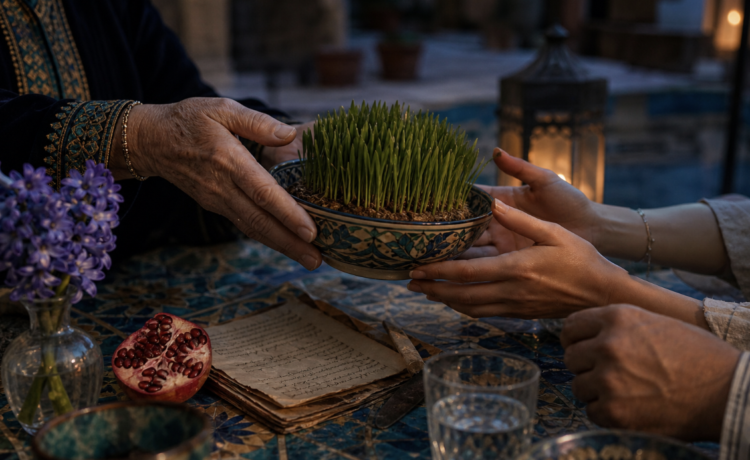
The remaining planned works move through Nowruz and the Persian garden in Iran; Iraqi Maqam beside the Tigris; Morocco’s Malhun sung poetry; Emirati coffee and Al Talli embroidery; the rose harvest in Taif; and storytelling inside a Qatari majlis. The repeated presence of children gives the series a clear visual grammar. Every scene asks the same question in a different room: who teaches the next person?
One detail already needs a closer cultural check. The proposed Egyptian composition, The Nile Sings, places a semsemiah player beside the Nile. UNESCO describes the instrument-making and playing tradition principally through communities in the Suez Canal and Red Sea regions of Egypt and Saudi Arabia. The relocation may be an artistic choice, but neither the catalogue nor future captions should present it as documentary geography without explanation.
WHO GETS TO TELL THE STORY?
Several practices referenced by the series appear on UNESCO’s Representative List of the Intangible Cultural Heritage of Humanity. They include Palestinian embroidery and dabkeh, Iraqi Maqam, Moroccan Malhun, Lebanese Al-Man’ouche, Emirati Al Talli, Taif rose practices, Bahraini Fjiri and the majlis. Semsemiah is a joint Egyptian-Saudi inscription. The majlis inscription is shared by Oman, Qatar, Saudi Arabia and the UAE. Nowruz and Arabic coffee also sit within multinational cultural records.
Those distinctions matter. Heritage does not always fit inside a modern border, and UNESCO’s recognition applies to the living practices – not to Malak’s paintings and not as an endorsement of the collection. The art still has to earn its authority through research, accuracy and the people it involves.
Malak’s French-Moroccan background gives The Riad Sings a direct personal line. The other nine paintings ask him to look beyond his own inheritance. London Art Exchange says it plans to work with videographers and online creators connected to each of the ten places. That could add local voices, but a promotional campaign is not the same thing as cultural consultation. Contributor names, research roles, filming dates and final credits have not yet been announced.
The credible version of the project brings those voices in before the paintings and captions are fixed, credits their knowledge and makes clear where interpretation begins. The weaker version uses local footage after the fact to decorate a finished campaign. The difference is not cosmetic. It decides whether the collection listens as carefully as it looks.
WHAT THE PUBLIC RECORD ACTUALLY SAYS
Malak’s career can be described without a fantasy price curve. His own website says he is exclusively represented by London Art Exchange. The gallery’s current Series 5 inventory labels six works sold and Amelia reserved. His Artsy profile contains works submitted by London Art Exchange, and the platform hosted a page for the 2025 Rêve d’Ete presentation.
These are public milestones, but they are first-party or gallery-supplied records. Buyer identities, transaction dates and sale prices are not disclosed. No verified public figures establish Malak’s total revenue, price growth or resale performance. There is therefore no responsible basis for presenting a market-growth graph as fact. The new series does not need one. Its case rests on the work, not an unsupported line moving up a chart.
THE WORK AHEAD
From Our Land, With Love remains a proposal in motion. Dollar Matters has previously examined how artists and galleries negotiate the timing and meaning of an art release. Finished images of the full series, sand records, local contributors and a release date have not yet been published. That leaves the project with something rare in a launch campaign: time to correct the weak points before they become permanent.
The strongest version will not ask viewers to identify a country in five seconds. It will ask whether the people who know these practices can recognise the care behind them. If the research is shared, the material trail is real and the human gestures stay at the centre, Malak’s sixth series can make a serious argument about inheritance without turning heritage into set dressing.
At its best, the collection will not treat land as a souvenir. It will treat it as a witness.
New artworks at La Maison Ani
Malak’s work is also moving into a hospitality setting.
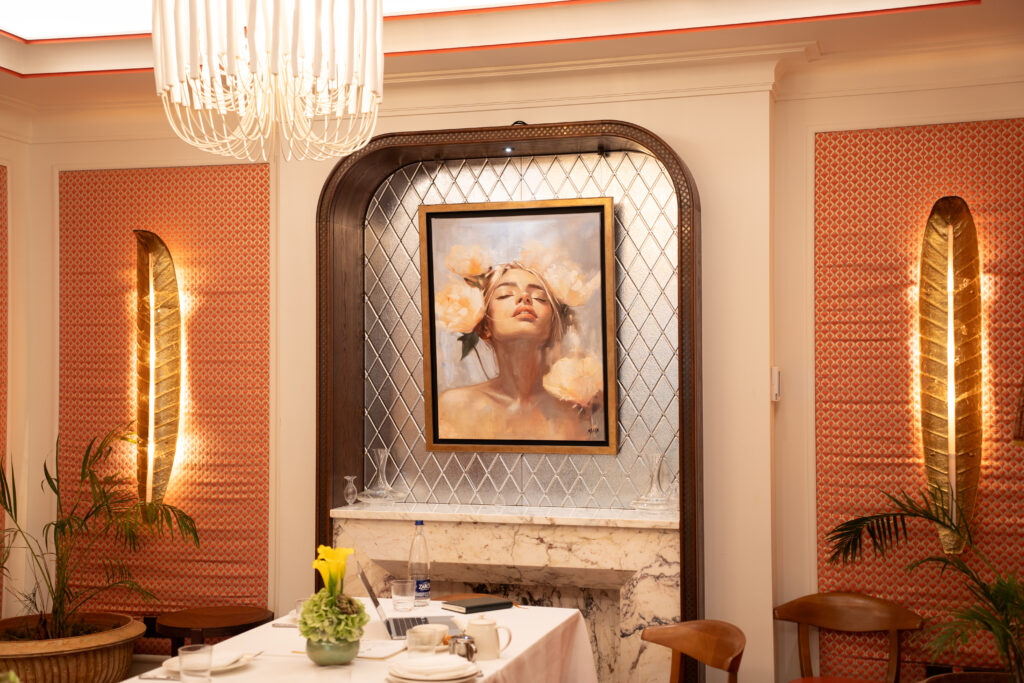
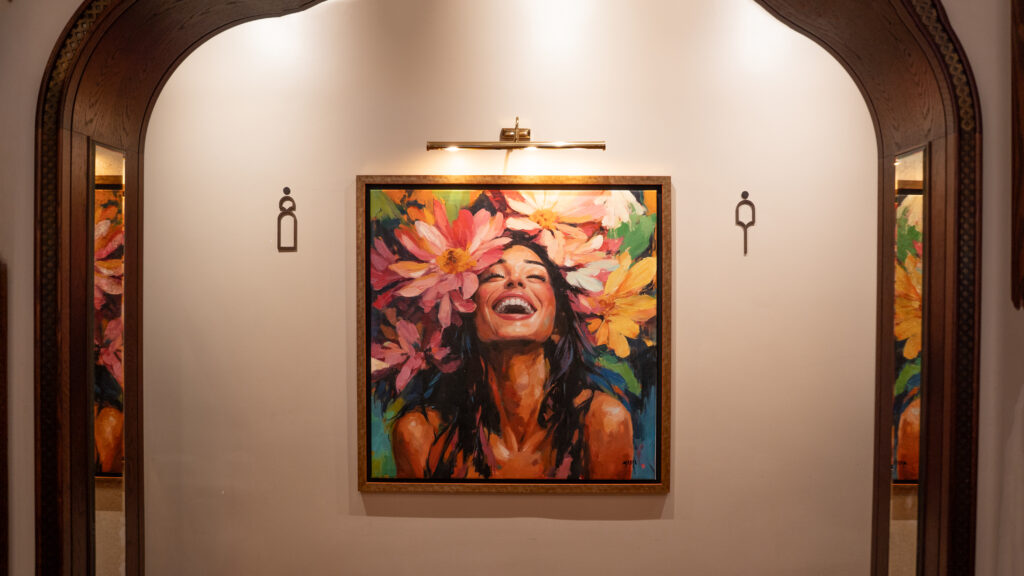
According to information supplied by London Art Exchange, new artworks by the artist are now displayed at La Maison Ani restaurant.
The placement gives visitors the chance to encounter Malak’s work outside a conventional gallery visit.
It also places the paintings within an environment built around food, gathering and hospitality. These subjects connect with several of the cultural practices explored in Series 6.
Further information about the individual artwork titles, installation dates and duration of the display can be added once confirmed by London Art Exchange or La Maison Ani.