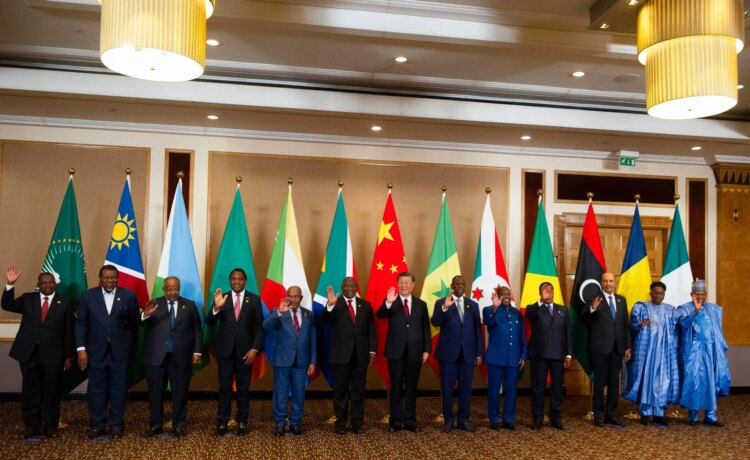
There is increased pressure from several nations to replace the U.S. dollar as the world’s reserve currency.
The U.S. has benefited from being the most dominant currency in the world since the end of World War II. A group of countries known as BRICS — which include Brazil, Russia, India, China and South Africa — has unsuccessfully worked for several years to create a new rival currency.
President-elect Donald Trump recently threatened the BRICS nations to “wave goodbye to America” if they create their own currency and face 100% tariffs.
Some analysts have argued threats, and Trump’s plans for tariffs, could lead to nations considering alternatives to the dollar — from other currencies to gold.
Question: Is the U.S. dollar in danger of being replaced as the world’s reserve currency?
Economists
Caroline Freund, UC San Diego School of Global Policy and Strategy
NO: The dollar is not at risk. International reserves, borrowing, and trade are all primarily in dollars because the dollar is a trusted source of value and U.S. capital markets are deep and open. Countries (BRICS — Brazil, Russia, India, China, South Africa, Iran, Egypt, Ethiopia and United Arab Emirates) talk about creating an alternate currency but they would need to build a trusted financial system first, which takes a long time. Inertia and coordination also matter. Who is going to switch when everyone else is using dollars?
Kelly Cunningham, San Diego Institute for Economic Research
YES: Foreign buyers of U.S. sovereign debt, wary of rapidly declining credit quality, already show notable declines for the dollar. Like the pound sterling before, unhinged profligacy over extended period of time is precursor to loss of status as reserve currency for international trade. The dollar is susceptible to losing position as reserve currency to any major trading nation that stops inflating its currency. Both currency regimes and asset bubbles decline gradually, then all at once.
James Hamilton, UC San Diego
NO: Five of the BRICS countries have capital controls, which are restrictions on the funds that individuals and firms can bring into or take out of the country. You can’t become a reserve currency unless capital can flow freely across your borders. The U.S. should not take our reserve currency status for granted. But for now, we are safe. You can’t beat something with nothing.
Norm Miller, University of San Diego
NO: The market will dictate whether the U.S. dollar continues to reign supreme as a reserve and international currency of choice, not some dictate or threats. High inflation countries utilize U.S. dollars and even cryptocurrencies precisely because these are more stable and less risky than their own currencies. The key to our dominance is a stable dollar with inflation in check, something that might be blown up if all the tariffs announced go into effect.
David Ely, San Diego State University
NO: While tariffs and other trade sanctions will cause the targeted countries to move to dollar alternatives, the dollar will likely remain the most important reserve currency. This is due to the size and strength of the U.S. economy, the large and liquid markets for U.S. government debt, a democratic government, and the widespread confidence that the dollar will retain its value. The dollar’s dominance may diminish, but no other currency has its advantages.
Ray Major, economist
NO: Currently, the strength of the U.S. economy will keep the dollar the dominant currency for reserves. The stability of the U.S. dollar and its universal acceptance will make it extremely difficult to displace. Pressures from countries outside the U.S. to move to an alternative reserve system will most likely not succeed. The most likely threat will come from advancements in digital currencies that could put the dollar’s dominance in real danger.
Executives
Phil Blair, Manpower
NO: The entire world is so dependent on the dollar I think the trend may be the other way. So many small and developing countries have very unstable currencies and need to show stability to encourage other countries to invest in their country. Giving up their financial independence and segueing, in some manner, to the dollar can make good long-term sense.
Gary London, London Moeder Advisors
NO: It’s about trust, admittedly in short supply around the globe. Yet, for the past 50 years the U.S. dollar has been used for almost 90% of foreign exchange transactions. The dollar is employed to price a wide variety of commodities on the global market, such as oil. Switching to the Chinese yuan, or anything else for that matter, is unlikely. Even banned Russia conducts creative workarounds to use U.S. dollars to attain goods.
Bob Rauch, R.A. Rauch & Associates
NO: The U.S. dollar remains the world’s primary reserve currency and remains deeply embedded in the global financial system. Central banks and financial institutions around the world hold vast quantities of U.S. dollars for trade, investment, and value. The dollar accounts for about 59% of global foreign exchange reserves, is highly liquid and stable. Further, a Trump presidency will increase U.S. geopolitical influence. Alternatives, like the euro or yuan, do not have support currently.
Austin Neudecker, Weave Growth
NO: The U.S. dollar will remain the global reserve currency for the next decade. It is too entrenched in international finance, business, and is adopted as the primary currency by a few countries to stabilize their economies. The proposed BRIC currency, if successfully launched, could challenge the dollar’s dominance in the longer term, but is unlikely to overtake the dollar unless our economy plunges into a horrible recession and BRICS countries become substantially more stable.
Chris Van Gorder, Scripps Health
NO: The U.S. economy remains the most important in the world, and post-COVID has been the most resilient. If the U.S. continues to have a free and open economy, if we grow and continue to lead in innovation, it is unlikely other currencies will overtake our position as the world’s reserve currency. Crypto may change in importance in the years to come, but it is too volatile today and acts more like a speculative investment.
Jamie Moraga, Franklin Revere
YES: While not imminent, it’s certainty a threat. With the U.S. dollar as the global standard, the U.S. can wield sanctions as a powerful foreign policy tool. Similar to U.S efforts to decrease foreign oil dependence, countries like China and Russia want to reduce their vulnerability to U.S. sanctions. By seeking alternatives, BRICS countries look to mitigate this risk while simultaneously weakening U.S. global influence and the dollar’s international standing.
Not participating this week:
Haney Hong, San Diego County Taxpayers Assoc.
Alan Gin, University of San Diego
Have an idea for an Econometer question? Email me at [email protected]. Follow me on Threads: @phillip020