
Choosing the best forex broker in 2026 takes more than comparing the lowest advertised spread or the longest list of currency pairs. Trading costs move returns, but regulation, market access, platform quality, research and the protections attached to an account carry just as much weight.
The same broker rarely offers the same service to every customer, which complicates any comparison from the outset. A trader in the UK can get different leverage, products, pricing and investor protection from one in Australia or the US, even when both accounts carry the same broker’s name.
This ranking compares seven major global brokers using official broker sites, regulatory databases, app stores and independent broker research, and it takes a slight turn from the top 10 brokers on the 2025 list FinanceFeeds published. The seven were chosen on how they performed across the same criteria, with the aim of surfacing a strong overall proposition instead of one standout feature.
How The Brokers Were Ranked
Each broker of 100 across five weighted categories, set out below with the share each one carries in the total.
Trading Costs (30%): Spreads, commissions, minimum funding, inactivity charges and other account costs. Advertised “from” spreads were kept separate from typical or average spreads, and temporary promotions were excluded so short-term offers could not skew the score.
Market Access (25%): The number of forex pairs, the wider asset range and the markets each broker reaches. A longer product list does not automatically score higher, since relevance and accessibility matter too.
Regulation And Trust (25%): Regulatory licences, the quality of the regulators, client-money arrangements, investor compensation schemes, corporate transparency and retail protections.
Platforms And User Experience (15%): Proprietary platforms, MetaTrader 4 and 5, TradingView, cTrader, API access, mobile apps and the wider account experience, weighing a genuinely useful environment over a long platform list.
Education And Research (25%): Courses, guides, webinars, market analysis, economic calendars and research for beginner and advanced traders.
Costs, market access and trust carry the greatest weight because they shape the quality and risk of an account most directly. Platform quality and education still count, without overriding major differences in pricing or investor protection.
The Seven Best Forex Brokers Of 2026
| Rank | Broker | Score | Best For |
| 1 | Interactive Brokers | 96.5/100 | Experienced traders and broad market access |
| 2 | IG | 95.5/100 | Best overall retail experience |
| 3 | CMC Markets | 94/100 | Forex range and platform quality |
| 4 | Pepperstone | 91.5/100 | Active and high-volume forex traders |
| 5 | Saxo | 91.5/100 | Sophisticated multi-asset traders |
| 6 | FOREX.com | 89.5/100 | Dedicated forex traders |
| 7 | OANDA | 86.5/100 | Beginners and smaller trade sizes |
The gaps between some scores stay narrow enough to keep in mind, with Pepperstone and Saxo both landing on 91.5, but Pepperstone gets there on trading costs and platform flexibility, while Saxo earns it on market breadth, research and investment infrastructure.
1. Interactive Brokers
Score: 96.5/100
Best For: Experienced traders and investors who want broad market access.
Founded from Thomas Peterffy’s market-making business in 1977, Interactive Brokers has spent almost five decades building an electronic brokerage aimed at sophisticated investors, active traders and institutions. The group began its current broker-dealer operation in 1993 and now has more than 5.18 million client accounts, $903.3 billion in client equity and $22.3 billion in equity capital, giving it considerably more scale than a typical retail forex specialist.
Main strengths: Broad asset selection, 100+ currency pairs, competitive FX pricing, professional tools, API access and a strong global regulatory footprint.
Main weakness: A difficult platform for beginners, spot-FX minimum trade sizes that can be less accessible than some CFD brokers, and no spot forex for US retail clients.
Why It Ranks First: Interactive Brokers offers the strongest overall combination of market access, pricing and professional infrastructure.
Key Details
- Regulation: Interactive Brokers operates through region-specific entities rather than one licence covering its entire global client base. Its regulatory network includes the SEC, FINRA, CFTC and NFA in the US, FCA in the UK, Central Bank of Ireland in Ireland, ASIC in Australia, CIRO in Canada, SFC in Hong Kong and MAS in Singapore. The exact investor protection depends on the entity holding the account, with US brokerage customers receiving SIPC protection subject to its limits and other jurisdictions applying their own client-asset and compensation rules.
- Clients: 5.185 million client accounts as of Q2 2026, with $903.3 billion in client equity and $22.3 billion in equity capital.
- Minimum deposit: $0 for a standard brokerage account, although minimum trade sizes and funding requirements can still vary by product and account type.
- Accounts: Individual, joint, trust, institutional and other specialist account structures are available, alongside paper-trading accounts. Account availability depends on the applicant’s circumstances and jurisdiction.
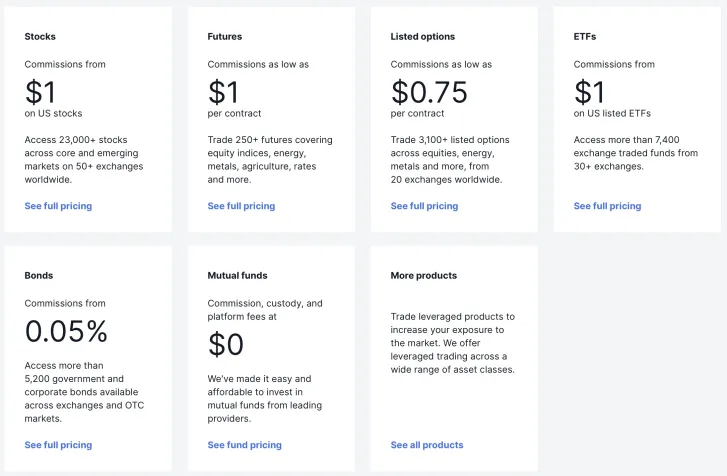
- Instruments: 100+ spot FX pairs traded as spot contracts, not CFDs, alongside stocks, ETFs, options, futures, bonds, mutual funds and other products across more than 170 market destinations.
- Crypto: Interactive Brokers now offers direct cryptocurrency trading in eligible markets alongside crypto ETPs, futures and futures options. Its 2026 offering includes Bitcoin, Ether, Solana and other digital assets, while its crypto futures range includes regulated contracts through venues such as CME and Coinbase Derivatives. These products do not all provide the same form of exposure, so availability and ownership depend on the specific product and jurisdiction.
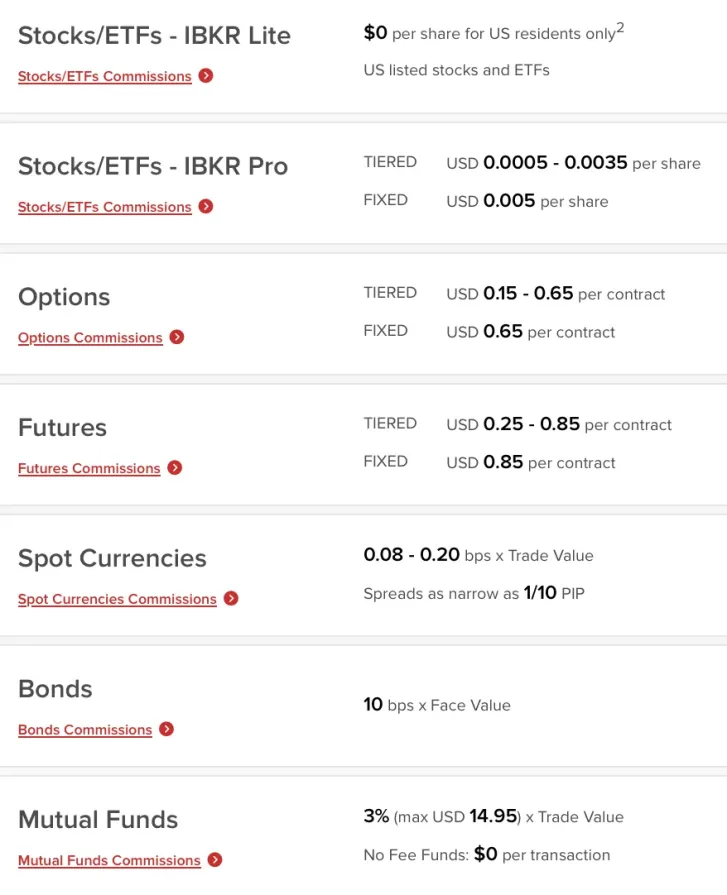
- Costs: FX commission starts at 0.20 basis points of trade value and falls at higher monthly volumes, with a $2 minimum per order. The final cost depends on trade size, currency pair and volume.
- Platforms: Trader Workstation, IBKR Desktop, GlobalTrader, Client Portal, API access and TradingView integration. It does not offer MT4, MT5 or cTrader.
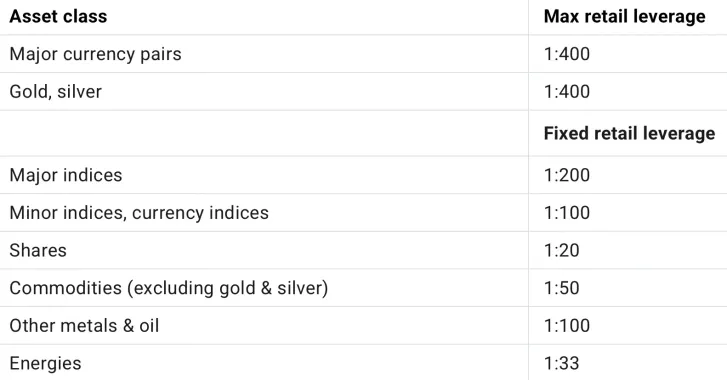
- Leverage: Leverage is jurisdiction and client-type dependent. Retail limits apply in regulated markets such as the UK, EU and Australia, while professional clients can qualify for higher limits.
2. IG Group
Score: 95.5/100
Best For: Traders looking for the strongest all-round retail broker.
Established in London in 1974, IG has spent more than 50 years building one of the most recognisable names in retail trading. The FTSE 250-listed group serves customers across major financial markets and reported 284,700 average monthly active organic customers during the seven months ended December 2025, excluding the contribution from its Freetrade acquisition.
Main strengths: Strong regulation, broad market access, proprietary platform, research, education, mobile trading and third-party integrations.
Main weakness: Standard pricing can run higher than specialist low-cost forex brokers.
Why It Ranks Second: IG offers one of the most complete retail packages, though Interactive Brokers edges it on professional market access and FX pricing.
Key Details
- Regulation: IG operates through different entities by region, including the Financial Conduct Authority (FCA), UK; Bundesanstalt für Finanzdienstleistungsaufsicht (BaFin), Germany; Australian Securities and Investments Commission (ASIC), Australia; Monetary Authority of Singapore (MAS), Singapore; Financial Markets Authority (FMA), New Zealand; Dubai Financial Services Authority (DFSA), UAE; and Bermuda Monetary Authority (BMA), Bermuda. The relevant entity determines the protection available to the customer.
- Clients: IG reported 284,700 average monthly active organic customers for the seven months ended December 2025. The figure measures customers who traded or held a position during a given month, rather than total registered accounts.
- Minimum deposit: There is no single group-wide minimum. The amount varies by country and funding method, with IG’s international comparison showing different minimums across markets.
- Accounts: Retail CFD and spread-betting accounts are available in eligible markets, alongside share-dealing and investment accounts in selected regions. Professional, DMA and demo arrangements are also available where permitted.
- Instruments: More than 17,000 markets are available through certain international offerings, covering forex, shares, indices, commodities, bonds, options and digital assets. Other regional offerings carry smaller product ranges.
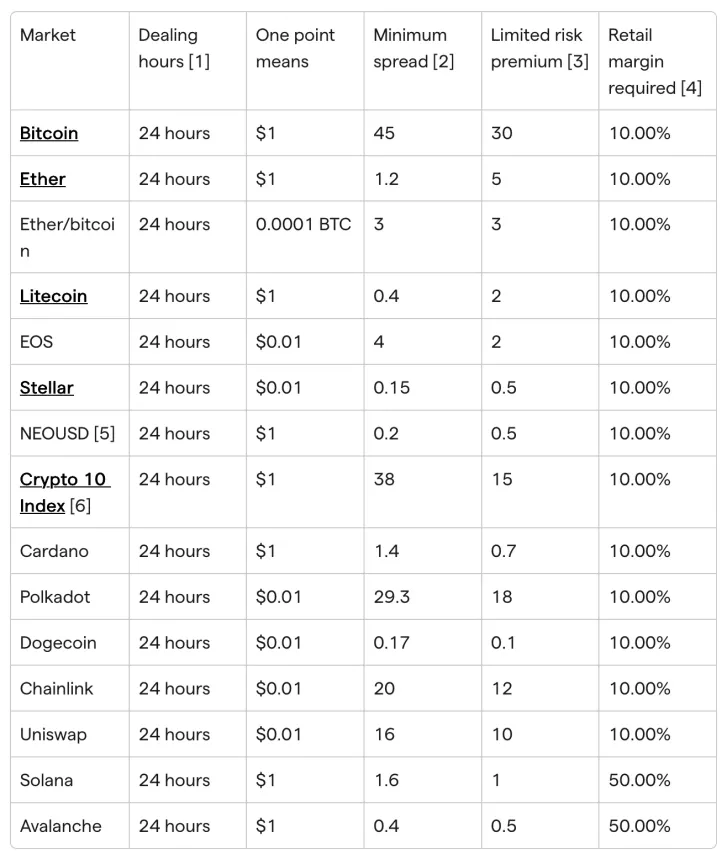
- Crypto: IG offers cryptocurrency CFDs in eligible markets, including Bitcoin, Ether, Litecoin, Cardano, Solana and other major tokens, as well as a Crypto 10 index. These are derivatives that provide price exposure without ownership of the underlying cryptocurrency. Singapore clients, for example, can trade Bitcoin CFDs through IG Asia, while the broker makes clear that the crypto assets themselves are not regulated by MAS. Crypto products and availability differ by entity.
- Costs: Standard CFD pricing is spread-based, with EUR/USD advertised from around 0.6 pips on certain accounts, while independently measured average pricing is higher. Forex Direct DMA pricing uses tighter spreads plus commission and is aimed at more active traders.
- Platforms: IG’s proprietary web and mobile platforms are supplemented by MT4, MT5, ProRealTime, L2 Dealer, TradingView and API access, depending on market and account.
- Leverage: Retail leverage varies by jurisdiction. FCA and other European-regulated retail clients face regulatory leverage caps, while US, professional and offshore arrangements can carry different limits.
3. CMC Markets
Score: 94/100
Best For: Traders who want a wide range of forex markets.
CMC Markets began in 1989, giving it more than 36 years of operating history by 2026. The London-listed group has evolved from a UK forex broker into a global multi-asset firm serving retail, professional and institutional clients, with more than 2 million unique users logging into CMC trading and investing platforms, including partner platforms, as of November 2025.
Main strengths: More than 300 forex pairs, strong proprietary platform, competitive active-trader pricing, broad CFD offering and extensive research.
Main weakness: A narrower third-party platform selection than some specialist brokers.
Why It Ranks Third: CMC Markets combines exceptional forex breadth with a strong proprietary platform and a competitive cost structure.
Key Details
- Regulation: CMC Markets operates through regional entities regulated by authorities including the FCA in the UK, BaFin in Germany, ASIC in Australia, CIRO in Canada, MAS in Singapore, FMA in New Zealand and DFSA in Dubai. CMC Markets UK plc, for example, is authorised by the FCA under reference 173730. Client-money arrangements and compensation protection depend on the contracting entity.
- Clients: CMC says more than 2 million traders and investors use its platforms worldwide, based on more than 2 million unique user logins across CMC’s trading and investing platforms, including partners, as of November 2025. This should not be treated as a count of unique active brokerage clients.
- Minimum deposit: $0 on the standard account in applicable markets, although funding and margin requirements can still vary by product and jurisdiction.
- Accounts: Standard CFD accounts, FX Active accounts for high-volume forex traders, professional CMC Pro arrangements and demo accounts are available, with eligibility varying by market. FX Active is specifically designed around tighter spreads and fixed commissions.
- Instruments: More than 21,000 financial instruments on the broader platform, including 300+ FX pairs through CMC’s proprietary platform and 175+ through MT4.
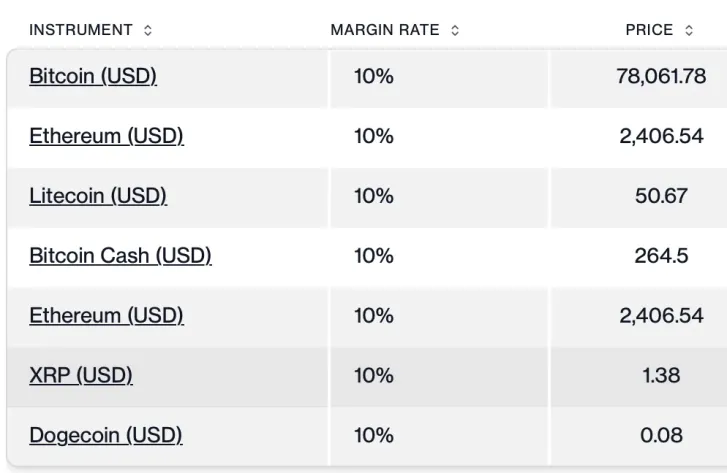
- Crypto: CMC offers crypto exposure through derivatives in eligible markets, including assets such as Bitcoin, Ether and Solana, with additional crypto products and crypto-related instruments varying by platform and jurisdiction. The exposure is generally derivative-based, so traders do not receive ownership of the underlying cryptocurrency through a CFD.
- Costs: FX Active offers spreads from 0.0 pips on six major currency pairs, including EUR/USD, GBP/USD and USD/JPY, with a fixed commission of $2.50 per $100,000 notional value per side. Minimum spreads are not the same as typical spreads and can widen in changing market conditions.
- Platforms: Next Generation, MT4, MT5 and TradingView are available across selected markets. Platform and product availability varies by account and jurisdiction.
- Leverage: Retail leverage follows local regulatory rules. UK and European retail clients face lower leverage limits, while some other jurisdictions permit higher leverage.
4. Pepperstone
Score: 91.5/100
Best For: Active forex traders, scalpers and algorithmic traders.
Founded in Melbourne in 2010, Pepperstone has spent more than 15 years building a reputation as a specialist forex and CFD broker focused on execution, pricing and platform flexibility. The group reported more than 900,000 traders across 150 countries and more than AU$1 trillion in monthly trading volume in data covering March 2026, putting it among the larger specialist margin-trading brokers.
Main strengths: Competitive pricing, execution, MT4, MT5, cTrader, TradingView and strong support for algorithmic trading.
Main weakness: A smaller overall product range than the largest multi-asset brokers.
Why It Ranks Fourth: Pepperstone is one of the strongest brokers for forex itself, though its narrower market offering keeps it behind the broad all-rounders.
Key Details
- Regulation: Pepperstone operates through separate entities supervised by the FCA in the UK, ASIC in Australia, CySEC in Cyprus, BaFin in Germany, DFSA in the UAE, CMA in Kenya and the Securities Commission of The Bahamas. Pepperstone states that its legal documents differ according to the entity holding the account, making the contracting entity important when assessing protection.
- Clients: More than 900,000 traders across 150 countries, according to Pepperstone’s March 2026 group data.
- Minimum deposit: Pepperstone does not impose a mandatory minimum deposit for its standard account in many markets, although the amount needed to support a particular trading strategy depends on margin requirements.
- Accounts: Standard and Razor accounts form the core retail offering, with demo and swap-free/Islamic arrangements available in eligible markets. Professional and wholesale options are also available in certain jurisdictions for clients who meet the relevant criteria.
- Instruments: More than 1,200 CFDs depending on the entity, including 60-plus forex pairs, share CFDs, indices, commodities, ETFs and cryptocurrencies. Pepperstone’s offering is primarily CFD-based.
- Crypto: Pepperstone offers cryptocurrency CFDs in eligible regions, with products including Bitcoin, Ether, Cardano, Solana and XRP among the available markets depending on jurisdiction. Customers receive price exposure rather than ownership of the underlying coins. Crypto leverage is restricted under stricter regulatory frameworks, including a 2:1 retail limit under applicable European rules. Availability can be narrower under individual entities. Pepperstone’s legal documentation makes clear that CFD clients do not own or have rights to the underlying assets.
- Costs: Razor pricing combines raw spreads with commission. Independent testing has placed the average EUR/USD raw spread around 0.10 pips, while the final all-in cost is higher after commission. Standard accounts use spread-only pricing and generally cost more per trade.
- Platforms: MT4, MT5, cTrader and TradingView are the main third-party platforms, alongside Pepperstone’s client portal and related tools. Availability varies by jurisdiction.
- Leverage: Retail limits depend on the entity. FCA, ASIC, CySEC, BaFin and DFSA retail clients face lower regulatory limits, while the CMA Kenya and SCB Bahamas entities permit higher leverage. Professional clients can qualify for different limits.
5. Saxo
Score: 91.5/100
Best For: Sophisticated multi-asset traders.
Saxo began in Copenhagen in 1992 and has spent more than three decades building a multi-asset investment platform around professional-grade trading technology. The company reported 1.523 million clients and €133 billion in total client assets for 2025, while its acquisition by J. Safra Sarasin Group was completed in March 2026.
Main strengths: Broad market access, 185+ forex pairs, strong proprietary platform, bank-backed structure and extensive research.
Main weakness: Pricing that trails the leading specialist FX brokers, and no MetaTrader support.
Why It Ranks Fifth: Saxo’s market breadth and platform quality are excellent, though its cost proposition keeps it below the strongest low-cost brokers.
Key Details
- Regulation: Saxo Bank A/S is a licensed Danish bank supervised by the Danish Financial Supervisory Authority (Finanstilsynet), Denmark, and operates through regional entities including the FCA in the UK, ASIC in Australia, MAS in Singapore, SFC in Hong Kong and FINMA in Switzerland. The entity holding the account determines the applicable investor protections. Eligible deposits with the Danish entity can receive protection through the Danish Guarantee Fund, subject to its rules and limits, while UK clients may qualify for FSCS protection.
- Clients: 1.523 million clients and €133 billion in client assets at the end of 2025.
- Minimum deposit: There is no universal global minimum. Saxo’s account tiers and minimum funding requirements vary by country. Classic can have no minimum initial funding in some markets, while Platinum and VIP require substantially higher funding or qualifying trading activity.
- Accounts: Classic, Platinum and VIP are the main Saxo Rewards tiers, alongside individual, joint and corporate structures and demo accounts. The funding and trading thresholds for higher tiers vary by country.
- Instruments: More than 71,000 financial instruments across forex, stocks, ETFs, bonds, options, futures and other markets.
- Crypto: Saxo’s crypto offering is primarily through exchange-traded products and derivatives rather than direct ownership of cryptocurrencies. Crypto-related products, including ETPs and ETNs, vary by market and entity, so availability should be checked on the client’s local Saxo platform before opening an account.
- Costs: Forex pricing is spread-based, with no separate FX commission on the published retail structure. Pricing improves across Saxo’s Classic, Platinum and VIP tiers, while the actual spread depends on country of residence and account level.
- Platforms: SaxoTraderGO for web and mobile, SaxoTraderPRO for desktop and API access, including FIX and REST interfaces. There is no MT4 or MT5 support.
- Leverage: Retail leverage follows the applicable regulatory framework, with higher limits potentially available to professional clients who qualify.
6. FOREX.com
Score: 89.5/100
Best For: Traders primarily focused on forex.
FOREX.com traces its operating history to GAIN Capital’s launch of retail trading services in 2001, with the FOREX.com brand launching in the US in 2004. That gives the business more than two decades of retail forex experience and places it among the longer-established specialist names in the market. It now operates under StoneX Group, a NASDAQ-listed financial services company.
Main strengths: Strong forex focus, MT4, MT5, TradingView, proprietary platforms, research and regulatory coverage.
Main weakness: Significant differences between regional entities.
Why It Ranks Sixth: FOREX.com holds up as a strong dedicated FX broker, though the brokers above it bring either broader markets or a stronger cost proposition.
Key Details
- Regulation: FOREX.com operates through regional entities within the wider StoneX group. Its regulatory footprint includes the CFTC and NFA in the US, FCA in the UK, CySEC in Cyprus and the EU, CIRO in Canada, JFSA in Japan and other local authorities. The legal entity on the customer’s account determines the applicable compensation scheme, leverage and other protections.
- Clients: FOREX.com does not currently publish a single comparable global client figure that can be cleanly separated from the wider StoneX group, so no client number is used here.
- Minimum deposit: The US offering permits deposits from $100, although FOREX.com recommends a larger starting balance for greater flexibility and risk management. Other regions can differ.
- Accounts: The main US account structures are Spread-Only and RAW Pricing, alongside MT4 accounts, VIP benefits and demo accounts. Account types and platform combinations differ by jurisdiction.
- Instruments: More than 80 forex pairs, alongside CFDs on shares, indices, commodities, metals and crypto through eligible entities. US clients receive a different product range.
- Crypto: Cryptocurrency CFDs such as Bitcoin and Ether are available through selected regional entities, while the US and some other markets do not offer the same crypto products. CFD exposure does not give customers ownership of the underlying cryptocurrency.
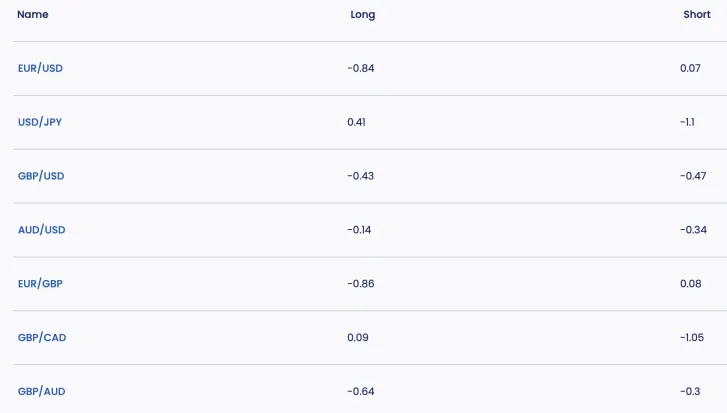
- Costs: The Standard or Spread-Only account charges no separate commission, while RAW Pricing uses spreads as low as 0.0 pips on major pairs plus a $7 commission per $100,000 traded per side. FOREX.com distinguishes its published minimum and typical spreads, with actual pricing varying by market conditions.
- Platforms: FOREX.com proprietary web and mobile platforms, MT4, MT5 and TradingView are available depending on the account and region. API and additional tools are also offered in eligible markets.
- Leverage: US retail clients can receive up to 50:1 on major currency pairs under CFTC rules, while UK and EU retail clients generally face lower limits. Offshore entities can offer higher leverage subject to their own regulatory frameworks.
7. OANDA
Score: 86.5/100
Best For: Beginners and traders who want flexible position sizing.
Founded in 1996, OANDA has spent 30 years in the foreign exchange market, beginning with online currency data before launching its fxTrade platform in 2001. That history gives it a longer operating record than many modern retail brokers, while its business has expanded into multi-asset trading, analytics and global brokerage services.
OANDA holds ground elsewhere through established infrastructure, education, research and access to MetaTrader and TradingView in eligible markets, which make it friendlier to beginners than the pricing alone suggests.
Main strengths: Flexible position sizing, accessible account structure, education, research and an established regulatory presence.
Main weakness: Wider spreads than the leading low-cost brokers.
Why It Ranks Seventh: OANDA gives newer traders an accessible starting point for newer traders, though its pricing keeps it off the pace of the strongest low-cost brokers.
Key Details
- Regulation: OANDA operates through separate entities regulated by the CFTC and NFA in the US, FCA in the UK, KNF in Poland for its European operations, ASIC in Australia, MAS in Singapore, CIRO in Canada and JFSA in Japan, among others. The contracting entity determines the applicable investor protection and leverage rules.
- Clients: OANDA does not currently disclose a single, recent global client figure that is directly comparable with the client figures published by IBKR, Saxo or Pepperstone, so no unsupported number is included.
- Minimum deposit: There is no general minimum deposit on several OANDA accounts, although premium account tiers can impose funding or trading-volume requirements. The US Standard account, for example, has no minimum deposit, while Premium status requires either $20,000 or qualifying monthly trading volume.
- Accounts: Standard and Elite Trader are the main US structures, while OANDA Global Markets offers Standard, Premium and Premium Plus tiers in eligible markets. Demo accounts, business accounts and other account structures are available depending on region.
- Instruments: Forex pairs, indices, commodities, metals, bonds, shares and cryptocurrencies are available across different OANDA entities, although the exact product range varies by jurisdiction.
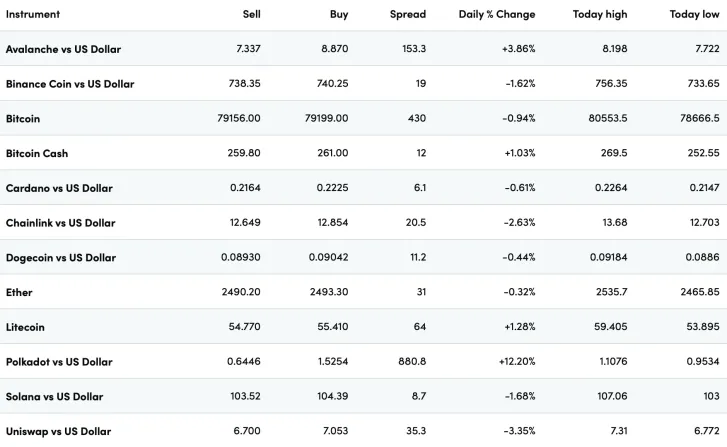
- Crypto: OANDA provides crypto exposure through CFDs in many markets, while US customers can access spot cryptocurrency through Paxos on a state-dependent basis. Bitcoin, Ethereum, Litecoin, Bitcoin Cash and other digital assets are among the products available in relevant markets. The US Paxos arrangement is distinct from OANDA’s CFD offering, and OANDA states that it does not custody customers’ virtual currencies itself.
- Costs: Standard spread-only pricing is around 1.4 pips for EUR/USD in the US, while Core pricing adds a commission in exchange for tighter spreads. Pricing varies by region, account and market conditions.
- Platforms: OANDA Trade, its web and mobile platforms, MT4 and TradingView are available in eligible markets, with API trading also supported. Some regions additionally offer MT5.
- Leverage: Leverage varies substantially by jurisdiction, with US retail limits at 50:1 for major currency pairs, lower limits in the UK and EU, and higher limits available through certain international entities.
Category Winners And Why
Best For Experienced Traders — Interactive Brokers: Professional tools, API access and a broad asset range across 100-plus currency pairs, stocks, ETFs, options, futures and bonds, all priced competitively, reward traders who already understand market mechanics and want deep market access from a single account.
Best Overall Retail Experience — IG: IG combines market access, regulation, research and platform usability into the strongest all-round package for the broader retail audience, without the complexity of a professional multi-asset system.
Best For Forex Range And Platform — CMC Markets: Over than 300 forex pairs sit inside the Next Generation platform, which pulls advanced charting, research and broad market coverage into one proprietary environment.
Best For Active And High-Volume Traders — Pepperstone: The Raw-spread Razor accounts pair tight pricing with modest commissions and MetaTrader, cTrader and TradingView support, which suits scalpers, algorithmic traders and anyone pushing heavy volume.
Best For Multi-Asset Traders — Saxo: It offers more than 71,000 instruments across forex, stocks, bonds, options and futures, wrapped in a bank-backed structure and the SaxoTrader platform, suit sophisticated traders who want currencies to sit inside a wider portfolio.
Best For Dedicated Forex Traders — FOREX.com: It has a strong currency focus, proprietary platforms alongside MT4, MT5 and TradingView, and Trading Central research make it a natural home for traders centred on the FX market.
Best For Beginners — OANDA: It provides flexible position sizing, an accessible account structure and solid educational resources let newer traders start small and learn as they go.
Jurisdiction Still Matters
The regulatory name of a broker does not tell the whole story, because the entity holding the account decides which regulator oversees the relationship and what protections apply. A broker can hold an FCA, ASIC or other major licence while serving customers elsewhere through a separate entity under a different framework.
The same split runs through leverage, spreads and available products, where regional rules change what a trader can actually access. A UK pricing figure should never be read as the cost facing a customer in the US, Australia or another market. Before opening an account, traders should pin down the legal entity they will contract with and verify that entity through the relevant regulator’s database. Doing this beats counting the licences displayed on a broker’s website.
Conclusion
Depending on your priorities, choosing a preferred forex broker should be a more informed decision after this comparison, especially heading into the final weeks of the year when economic activity and forex trading typically pick up around major data releases and central bank decisions.
Whether regulation is your main concern, you want lower trading costs, broader market access or a broker that provides detailed research and guidance, the right choice ultimately depends on what suits your trading approach. A broker that ranks highly overall may not necessarily be the best fit for every trader, particularly when account types, pricing and available protections vary by jurisdiction.
This also does not mean a particular broker is a poor choice if you are already using one. If its regulation, costs, platform and available markets meet your needs, there may be little reason to switch simply because another broker ranks higher. What matters is understanding the terms attached to your account and the protections available in your jurisdiction before making a decision.
Frequently Asked Questions
What Is The Best Forex Broker In 2026?
Interactive Brokers takes the highest score at 96.5/100 on its combination of pricing, market access, professional infrastructure and regulatory strength. Traders who value ease of use and a broader retail experience may find IG the better fit.
Which Forex Broker Has The Lowest Spreads?
Pepperstone ranks among the strongest low-cost choices through its Razor account, although the raw spread is not the final cost once commission is added. Interactive Brokers, CMC Markets, IC Markets and FP Markets also price competitively depending on the account, trade size and jurisdiction.
Does A Low Minimum Deposit Make A Broker Better?
A low minimum deposit lowers the barrier to entry, particularly for beginners, without making the account cheaper or safer. Trading costs, regulation, execution quality and investor protection carry more weight in a comparison.
Are Forex Brokers Regulated In Every Country?
Forex brokers do not accept customers from every country, and a broker in several regulated markets may use different entities for different regions. Checking the country-specific website and the relevant regulator’s database matters before opening an account.
Which Forex Broker Is Best For Beginners?
OANDA and IG rank among the stronger beginner options, combining accessible platforms with educational resources and established infrastructure. AvaTrade is another route for traders who lean on copy trading and structured beginner education.