For years, millimeter wave (mmWave) spectrum has been positioned as the frontier of 5G, promising speed, ultra-low latency, and bandwidth capacity that low- and mid-band spectrum simply cannot match. Yet for many operators, especially across Africa, mmWave has remained more of a long-term bet than a near-term revenue driver. As networks mature and use cases multiply, the conversation is shifting: it’s no longer just about acquiring high-band spectrum, but about monetizing it effectively.
The Promise of High-Band Spectrum
As of 2026, 5G networks are live in 22 African countries, with commercial services available in South Africa, Nigeria, Kenya, Egypt, Morocco, Ghana, and several smaller markets, and the installed base of 5G base stations is estimated at only 10,000–15,000 units, compared to over 5 million in the Asia Pacific. Against that backdrop, mmWave—which needs dense, closely-spaced sites—has lagged mid-band as the priority.
In the near term, the use cases for sub-Saharan Africa favor 5G applications that are less dependent on mmWave spectrum, with 4G rollout expected to remain the primary driver of economic benefit in the medium term. Sub-Saharan Africa, Central Asia, and Latin America could see GDP contribution from mmWave 5G applications grow by over 65% per year from 2026 to 2034—the fastest growth curve of any region, precisely because it’s starting from such a low base.
According to the GSMA, the sub-Saharan African region is projected to generate USD 5.2 billion in GDP from mmWave 5G, with Nigeria and South Africa together accounting for roughly half of that total. Notably, professional and financial services are expected to be the largest contributors, at 31% of that value, closely followed by manufacturing and utilities, a signal that monetization here won’t come primarily from consumer handset traffic, but from enterprise and fixed wireless use cases.
The regulatory environment is also shifting favorably. Type-approval and spectrum-allocation frameworks across the continent—governed by regulators such as ICASA in South Africa, the NCC in Nigeria, and the CA in Kenya—increasingly define n257 (26 GHz mmWave) bands alongside mid-band n78 and n1 allocations, giving operators clearer licensing pathways. And market dynamics are opening up further: Ghana’s regulator recently revoked a monopoly wholesale 5G arrangement in favor of competitive spectrum licensing, a pattern likely to repeat as governments look to accelerate returns on high-band investment.
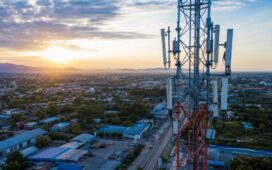
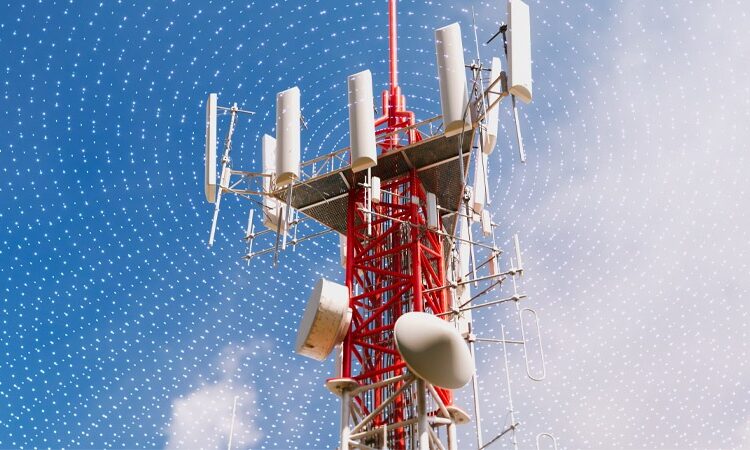
Operating at frequencies between 24 GHz and 52 GHz, mmWave offers exceptional bandwidth and data speeds, however, signals travel shorter distances and struggle to penetrate buildings, trees, and other obstacles, meaning mmWave networks require denser infrastructure to deliver consistent coverage.
This has made the business case for mmWave deployment more complex than for traditional bands, particularly in markets where capital efficiency is critical.
Where the Revenue Is Actually Coming From
mmWave’s value lies in specific use cases rather than broad consumer rollout. Fixed wireless access (FWA) remains one of the clearest monetization paths, allowing operators to deliver fiber-like speeds to homes and businesses without the cost of trenching cable, particularly valuable in dense urban pockets where fiber deployment is either too slow or too expensive.
Enterprise and industrial applications are proving similarly lucrative. ZTE and MTN’s deployment of a 5G-Advanced Integrated Sensing and Communication (ISAC) solution in Hout Bay, South Africa, built on mmWave technology, demonstrates how high-band spectrum can extend beyond connectivity into value-added services like real-time vessel sensing and geofencing, opening entirely new revenue categories tied to smart infrastructure and public safety.
Looking ahead, integrated sensing and communication is emerging as one of the more promising frontiers for mmWave monetization. ISAC allows mmWave-enabled networks to double as sensing platforms, supporting applications in logistics, transportation, and environmental monitoring, though the technology’s rollout across Africa is still constrained by the fact that most networks are only just transitioning from 4G to 5G, limiting mmWave’s availability in the first place.
Indoor and stadium-style deployments represent another monetization avenue. Given that a substantial share of wireless traffic originates indoors, mmWave-enabled small cell and distributed antenna solutions allow operators to deliver ultra-high capacity in venues, offices, and transport hubs, environments where premium connectivity can be packaged and sold as a differentiated enterprise offering rather than a flat-rate consumer service.
The underlying tension between the promise of high-band spectrum and the practical realities of deploying it runs through the broader spectrum debate on the continent. African operators are having to balance acquisition of low-band, mid-band, and high-band frequencies simultaneously, each serving a different strategic purpose, while regulators in several markets continue to treat spectrum auctions primarily as a revenue tool rather than a lever for network expansion. That dynamic can inadvertently discourage the very high-band investment operators need to make in order to unlock new revenue streams down the line.
From Speculative Bet to Genuine Revenue Driver
Globally, mmWave has already proven itself as a revenue-generating technology. Qualcomm and Ericsson’s economic modelling across 30 European markets found that 5G mmWave deployment would generate a cumulative GDP uplift of over EUR 140 billion by 2040. In the U.S., Verizon’s 5G Ultrawideband service saw fans consume 47.8 TB of data in and around the venue during the Super Bowl, a 57% year-on-year increase, demonstrating mmWave’s unmatched capacity in high-density, high-value environments.
Even more instructively, the UAE offers a template directly relevant to African terrain. etisalat by e& achieved a world-first 26 GHz mmWave deployment covering more than 10 kilometers, explicitly targeting FWA and private industrial networks across sectors like healthcare, manufacturing, and public safety—proof that mmWave’s traditional “short range” limitation can be engineered for exactly the kind of dispersed, infrastructure-light coverage many African markets need.
Africa already has the demand-side conditions that made these markets work, including underserved households priced out of fiber, cost-sensitive operators seeking fiber-like speeds without fiber-like CapEx, and growing enterprise and industrial hubs (ports, mines, campuses, financial districts) in need of guaranteed low-latency capacity.
Ultimately, turning mmWave into a profitable asset requires operators to move beyond viewing it as a coverage technology and instead treat it as a platform for differentiated services: enterprise connectivity, fixed wireless access, sensing-as-a-service, and venue-specific capacity deals. For African operators, mmWave has the potential to move from a speculative investment to a genuine revenue driver in the years ahead.
Read More: Harnessing 5G Fixed Wireless Access (FWA) in Africa