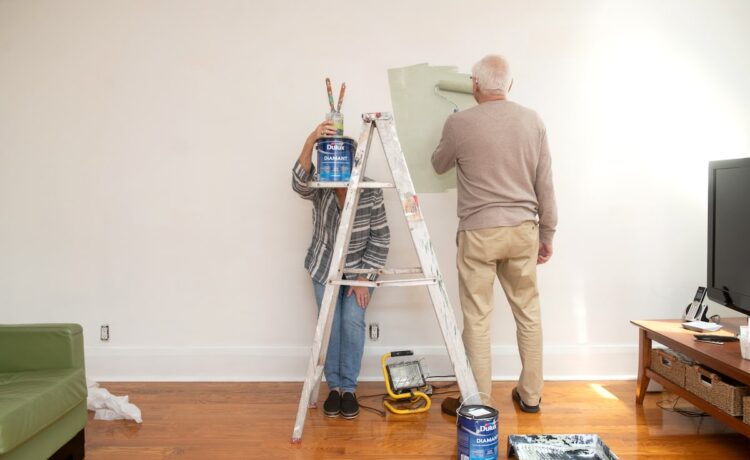
Amit, 75, and his wife, Keira, 76, retired in their early 60s and don’t have any work pensions.Galit Rodan/The Globe and Mail
Amit, 75, and his wife, Keira, 76, retired in their early 60s. But with no work pensions, they’re beginning to worry whether their savings will last.
“I expect to live to 85,” Amit writes in an e-mail. “Keira has relatives who lived to 100-plus so I expect her to live as long.”
They want to leave a “reasonable” inheritance to their son, who is 41 and has a well-paying government job.
Their financial success hinges on the future rate of return on their investments.
“I don’t believe in reducing investment risk in retirement because inflation will reduce your purchasing power very quickly, especially with a 30- to 40-year investment horizon,” Amit writes. He uses a professional money manager and insists on an asset mix of at least 80 per cent stocks and 20 per cent bonds.
Are Einar and Jamila saving enough to retire and ensure their disabled child’s financial security?
“I have been through many market corrections since I started investing, but the market always comes back,” Amit says.
They want to stay in their comfortable Toronto house for as long as possible. Their desired after-tax income is $95,000 a year.
“Will we run out of money in retirement assuming I live to 85 and Keira lives to 100 and we leave a modest inheritance to our son?” Amit asks.
We asked Warren MacKenzie, an independent Nova Scotia-based financial planner, to look at Amit and Keira’s situation. Mr. MacKenzie holds the chartered professional accountant designation.
What the expert says
Amit and Keira have managed their finances wisely but now they wonder if they might run out of money if Keira lives to be 100, Mr. MacKenzie says. It depends on the rate of return on their investments.
“If inflation averages 2 per cent and the rate of return on their investments averages 5 per cent, they could run out of investable assets about the time they are 90,” he says. If they continue to enjoy the same high returns they have over the past five years, then they will not run out of savings even if they both live to be 100 years old.
Mr. MacKenzie’s forecast assumes both Amit and Keira live to be 100, their investments return 5 per cent a year on average, based on a balanced portfolio, and inflation averages 2 per cent a year.
“If they earn the rate of return consistent with a moderate-risk portfolio, they would still own their home,” he says. But by the time they are in their early 90s, they will not have enough income to maintain their lifestyle.
Can Tripti retire at 63, travel and still leave something for her children and grandchildren?
The couple has decided that if Keira makes it to age 100, they would like to be able to leave their son an estate of $500,000 with today’s purchasing power, Mr. MacKenzie notes.
“The main problem they need to address is that although they have a net worth of nearly $2.5-million, most of it is tied up in their home,” the planner points out. “Based on their desired level of spending, by the time they turn 90, they might have used up almost all their investment capital. Their only source of income would be Canada Pension Plan and Old Age Security benefits, which would not be enough to maintain their home and lifestyle.”
In 2027, their total cash inflow will be about $110,000, consisting of about $19,500 of combined CPP, $20,000 of combined OAS, Amit’s mandatory withdrawals from his life income fund (LIF) and registered retirement income fund (RRIF) of $38,000 and Keira’s RRIF withdrawal of $32,500. Cash outflow will be about $13,000 for income tax and $97,000 for basic lifestyle expenses.
By 2042, with inflation their cash flow will be $53,000 from CPP and OAS and their spending will be about $133,000 a year, leaving them with an $80,000 a year shortfall.
To solve their cash flow problem, they could choose one of three strategies, he says.
Can Clement and Uma, both in their mid-40s, afford to buy a $2-million cottage?
Option 1: They could begin reducing their recreation, entertainment and discretionary spending, cutting their outlays to no more than $65,000 per year after tax.
“If they do this, their investments will last until they are 100 years old and they will be able to stay in their home,” Mr. MacKenzie says.
Option 2: They could sell their house and move into a rental apartment, ideally in the same neighbourhood. By doing this, they could pay their rent and also continue to spend $95,000 per year, he says.
“But selling and moving to a new home is stressful,” Mr. MacKenzie notes. “If they decide to move, they should do so before they are in their 80s.” If they sell their home, invest the proceeds at 5 per cent and rent at a cost of $50,000 a year, the planner estimates they will eventually leave an estate of about $2-million.
Option 3: They could continue their desired lifestyle and if they run out of liquid resources at age 90, they could tap into the equity in their home by way of a reverse mortgage. By then, their home could be worth close to $2-million, Mr. MacKenzie says. The other alternative – a home equity line of credit – likely isn’t suitable in their case because HELOCs tend to be short term and require regular monthly interest payments.
“If they use a reverse mortgage, they could cover the annual shortfall by adding $80,000 per year to their mortgage,” he says.
In 10 years, by age 100, the principal and interest owing on the mortgage would be about $900,000, he says. After inflation the net equity in their home would be reduced to about $1.5-million, which would still be substantially more than they want to leave their son.
Can Dana, 63, afford to retire again and still give money to her five kids?
Again, the future rate of return Amit and Keira hope to earn from their investments is key.
Amit and Keira have about 80 per cent of their investments in stocks or stock funds and 20 per cent in income-generating investments. Over the past five years, their average annual return has been 7.8 per cent.
Mr. MacKenzie argues that their exposure to stocks is higher than it needs to be given their age and the length of time it could take the stock market to recover from a big drop.
Stock markets are near their record highs, he notes. “Because Amit and Keira could achieve their goals with an average annual return of 5 per cent, they are exposed to more stock market risk than is necessary.” It is reasonable to expect they could achieve a 5 per cent rate of return with a balanced portfolio of half stocks and half fixed income.
“If stock markets were to drop substantially, they would have to cut back on their spending in order to leave their son the desired inheritance,” Mr. MacKenzie says.
Amit has more than $600,000 in registered investments while Keira has about $300,000. “For income tax purposes, Amit should split his RRIF withdrawal with Keira in order to make their taxable incomes roughly equal,” he says. “They will not be in a high income-tax bracket so OAS clawback will not be an issue unless they sell their home and invest the proceeds.”
With a $1.3-million inheritance coming, can Ennis, 61, and Kara, 54, retire soon?
Client situation
(Income, expense, asset and liabilities provided by applicant)
The people: Amit, 75, Keira, 76, and their son, 41.
The problem: Can they afford to stay in the family home, live to be 100 years old and still leave an inheritance?
The plan: If they are still living at home at age 90, they could consider taking out a reverse mortgage to cover the annual shortfall.
The payoff: They’d be able to keep the family home and still leave a generous estate.
Monthly after-tax income: $8,100.
Assets: Cash $14,000; Amit’s RRIF $449,155; Amit’s LIF $198,660; Keira’s RRIF $331,150; Keira’s TFSA $45,000; residence $1,400,000. Total: $2,437,965.
Monthly outlays: Property tax $500; water, sewer, garbage $115; home insurance $140; electricity $125; heating $135; maintenance $200; garden $165; transportation $580; groceries $1,100; clothing $210; gifts, charity $345; vacation, travel $900; cottage rental $335; dining, drinks, entertainment $700; personal care $200; club memberships $130; sports, hobbies $300; subscriptions $60; other personal $100; doctors, dentists $400; drugstore $155; life insurance $185; communications $275. Total: $7,355.
Liabilities: None.
Want a free financial facelift? E-mail [email protected].
Some details may be changed to protect the privacy of the people profiled.